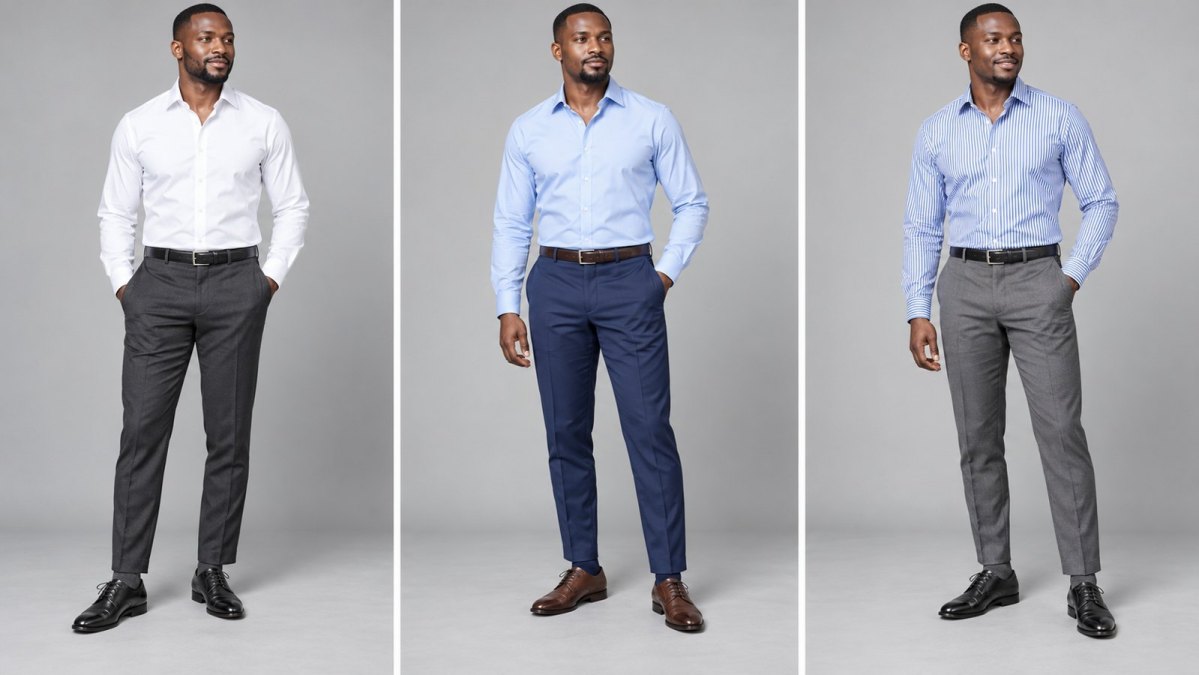
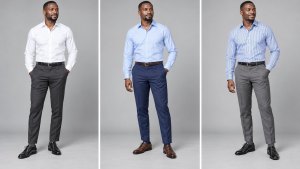
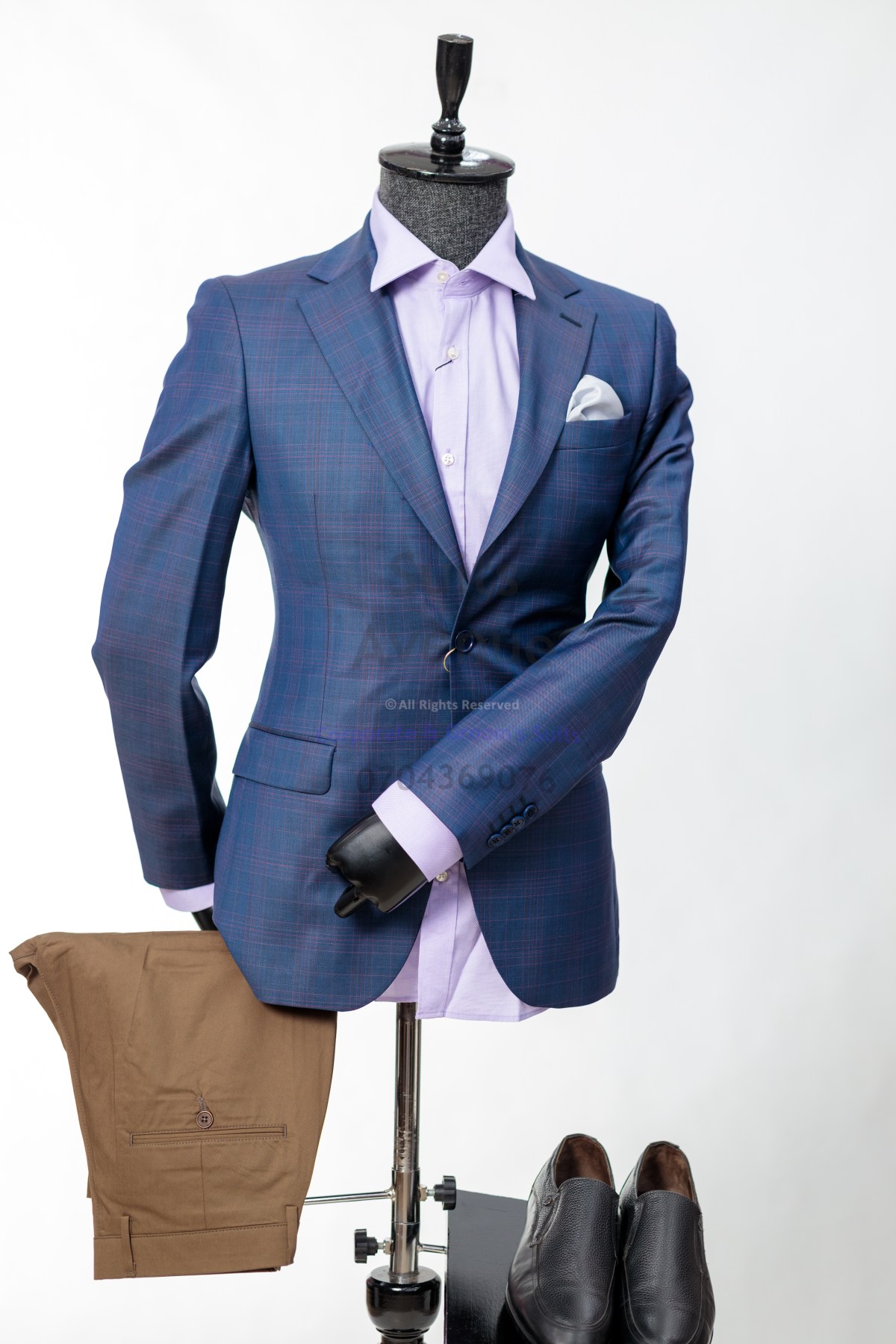
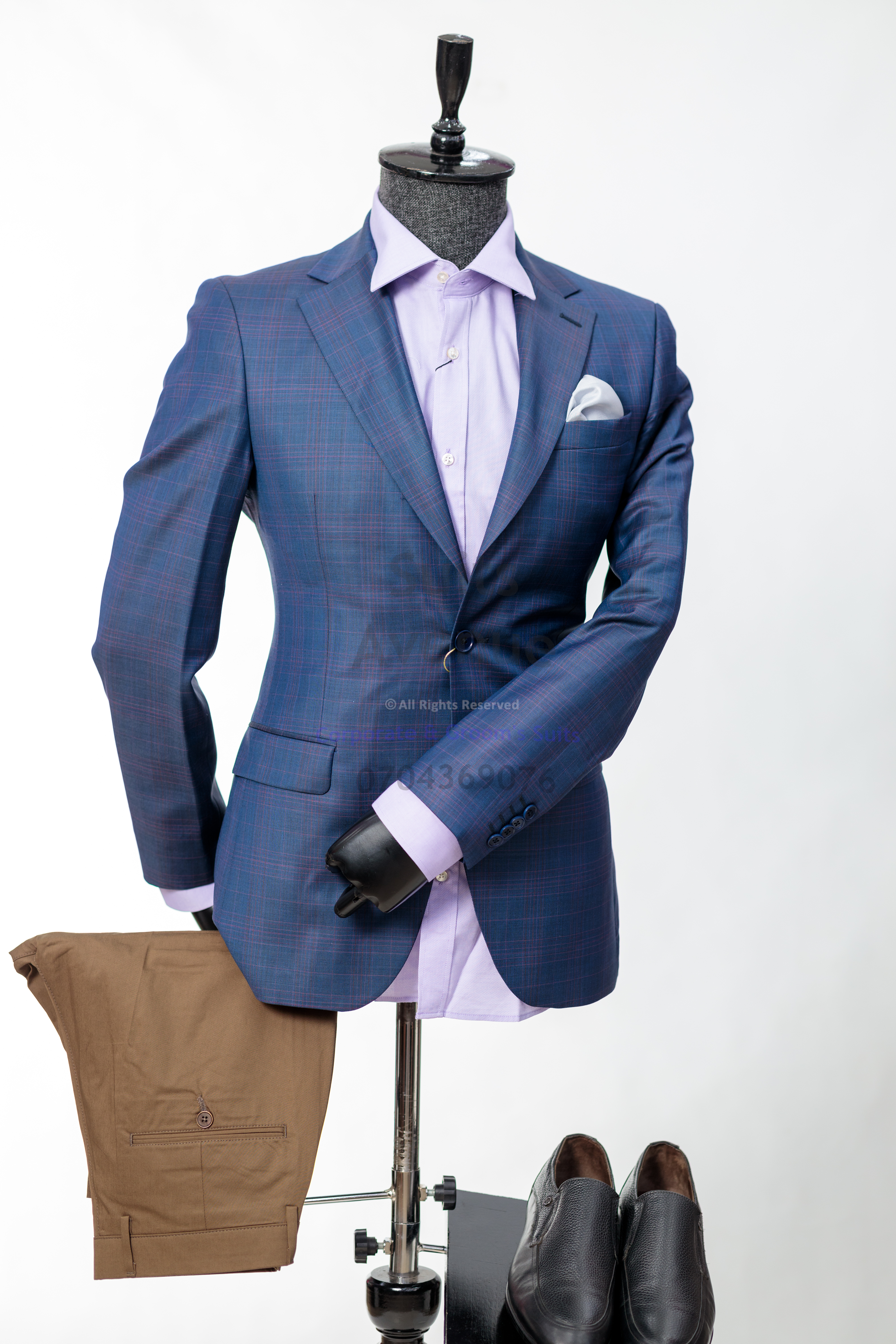
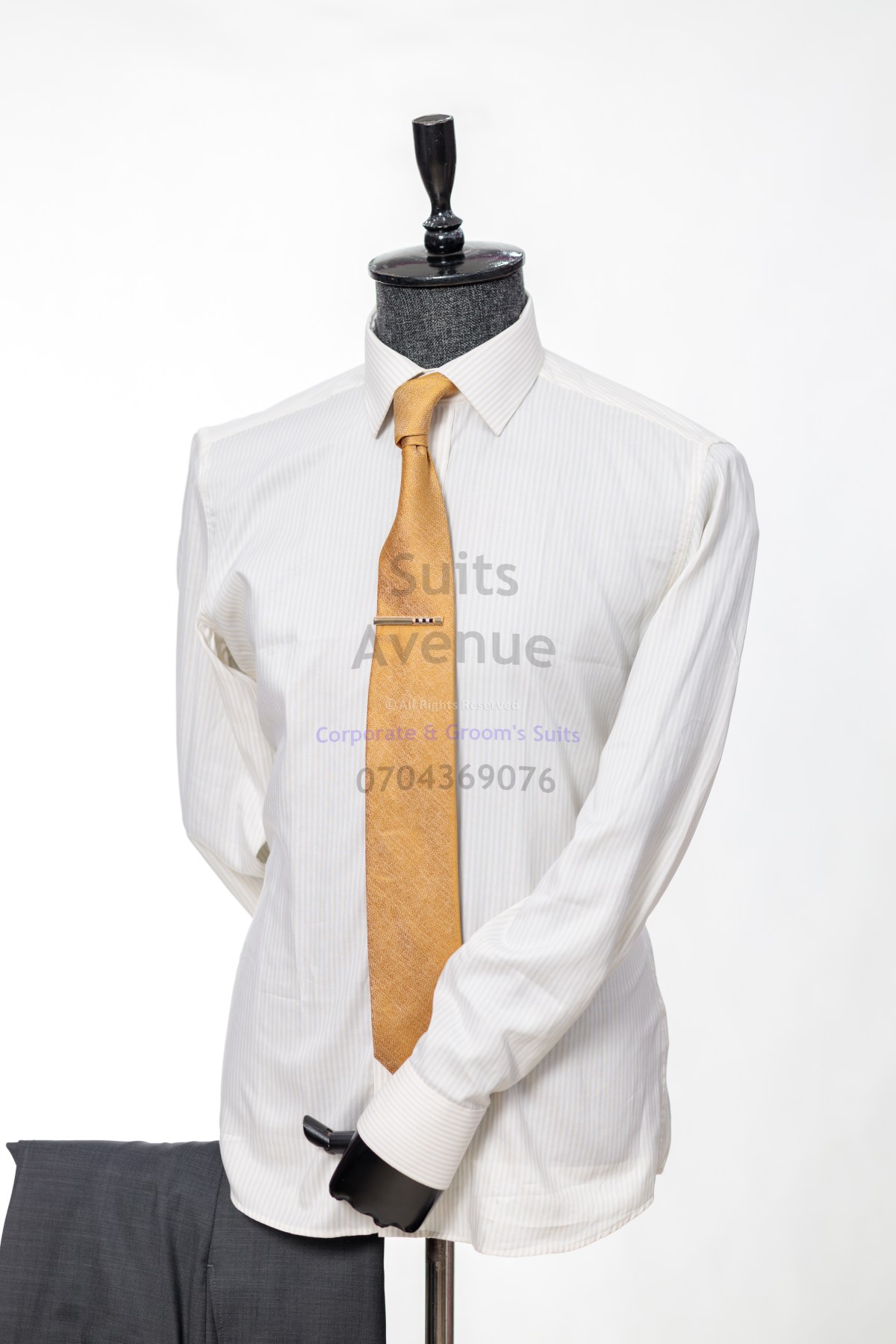
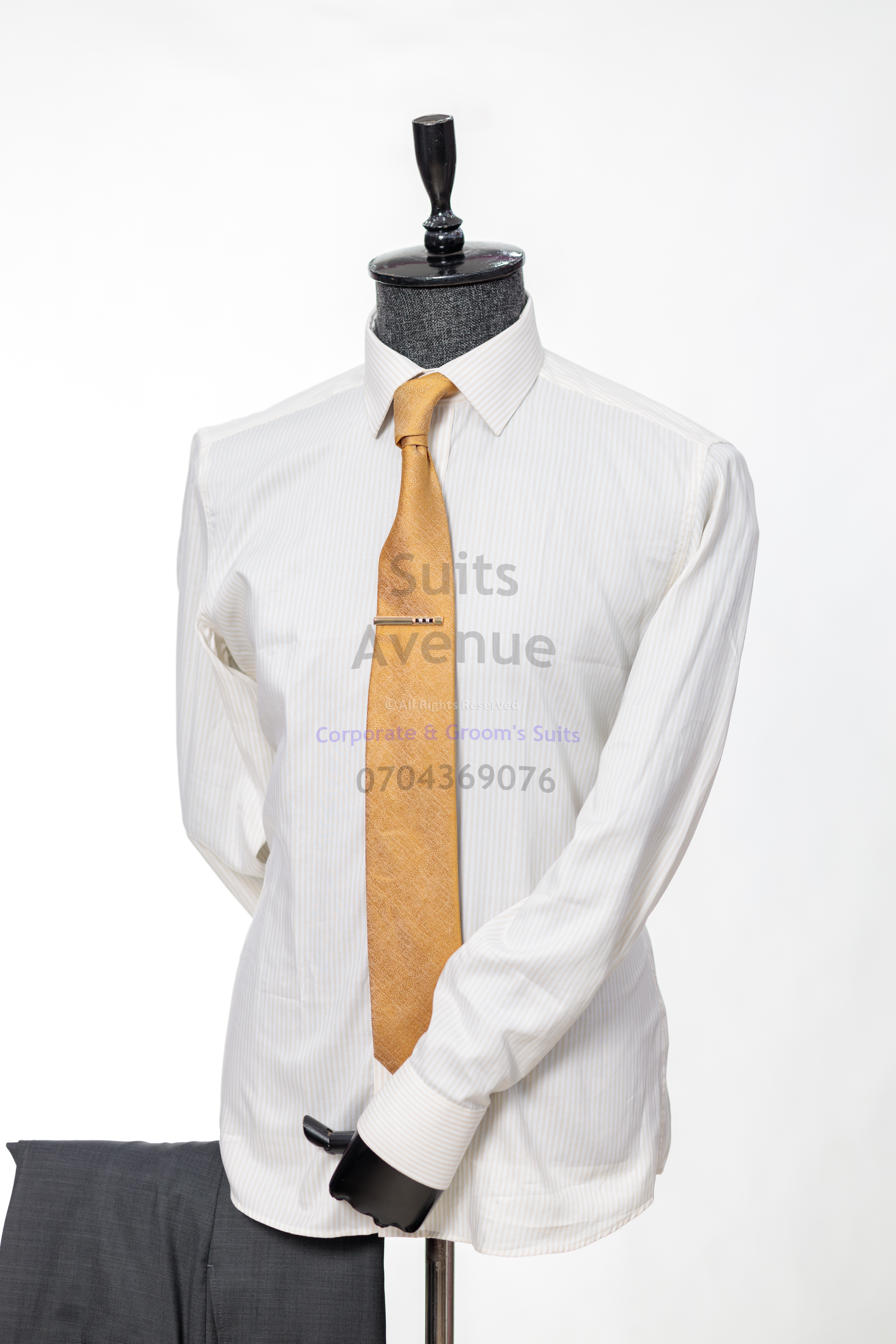
Three complete shirt-and-trouser outfits for Kampala offices, with clear advice on fit, socks, shoes, belts and when you still need a jacket.
Smart office outfits without a jacket start with a well-fitting shirt, clean trousers and polished shoes. The key is to make the whole outfit look finished. When there is no jacket covering your waist or shoulders, shirt fit, a neat tuck and the right belt become easier to notice.
These three combinations suit workplaces that allow a shirt and trousers. If your employer, client or event requires a suit, follow that dress code. A careful shirt-and-trouser combination does not replace a required jacket.
Outfit 1: White shirt, charcoal trousers and black shoes
Wear a plain white long-sleeve shirt with charcoal dress trousers, black leather lace-up shoes, a black leather belt and charcoal socks. Keep the belt buckle small and simple. This is an easy starting point for a normal office day when you want a clean, restrained appearance.
The white shirt gives a clear contrast against the dark trousers. Keeping the belt and shoes black brings the lower half together without adding another strong color. Charcoal socks continue the trouser color when you sit down.
Choose a shirt that sits smoothly across the chest. If the buttons pull or leave gaps when you sit, try a different size or cut. Tuck the shirt evenly around the waistband, then raise your arms and settle the fabric so you can move comfortably.
Start with our office shirts guide if you need help choosing the shirt. For this outfit, a plain collar and clean fabric do more useful work than extra decoration.
Outfit 2: Pale-blue shirt, navy trousers and brown shoes
Combine a pale-blue shirt with navy dress trousers, dark-brown leather shoes, a dark-brown belt and navy socks. Choose trousers dark enough to give a clear difference from the shirt. The outfit should read as two deliberate pieces, rather than nearly matching blues.
This combination brings a little more color into your workday while staying easy to wear. Dark brown gives a softer finish than black here. Your belt and shoes do not need identical grain, but keep them in a similar shade of brown.
Look at the outfit in daylight before leaving. A belt that appears dark brown indoors may look much lighter beside your shoes outside. You can use our leather shoes guide to think through the footwear that suits your workday.
Outfit 3: Blue-striped shirt, mid-grey trousers and black shoes
Choose a white shirt with fine blue stripes, plain mid-grey dress trousers, black leather shoes, a black belt and mid-grey socks. Let the shirt provide the pattern. Keep the trousers and socks plain so the outfit stays easy to follow.
Small stripes offer variety without requiring a different wardrobe. Avoid adding a bold patterned tie or bright socks just to make the outfit interesting. The striped shirt already handles that job.
Check the collar with the top button open. It should sit neatly rather than collapse or spread widely. Usually, opening one collar button gives enough room for a relaxed office look; keep the opening appropriate for your workplace.
Check the fit from shoulders to shoes
With your arms relaxed, the shoulder seams should sit near the edge of your shoulders. Sleeves should finish near the wrist without covering your hands. The shirt should allow comfortable movement without leaving a large balloon of fabric above the belt.
Next, sit down. Your waistband should feel secure without digging in, and the trousers should not strain across your thighs. Stand again and look at the hem. Avoid a pile of fabric resting over the shoes. Our dress trousers guide is a useful next step when the trouser fit needs attention.
Before you leave, remove lint, smooth obvious creases and wipe your shoes. For more combinations involving ties and suits, use the complete clothing-matching guide.
Common questions
Do I need a tie without a jacket?
Only if your workplace or occasion calls for one. These three outfits work with an open collar in a business-casual setting. If you add a tie, fasten the collar button and check that the collar fits comfortably.
Can I roll my sleeves?
If your office permits it, yes. Make both rolls even and keep the cuffs neat. For a formal meeting, lower the sleeves and fasten the cuffs. Check the dress code before assuming rolled sleeves are suitable.
Which outfit should I try first?
Begin with the pieces you already own. White with charcoal is a simple first choice, but a good fit matters more than choosing that exact combination.
Want help putting your outfit together? Message Suits Avenue on WhatsApp at +256 704 369 076 and tell us your occasion and the pieces you already own. Visit Insurance House, at the Kampala Road and Entebbe Road traffic lights, across from Absa Bank.
Use simple rules to match your suit, shirt, tie, belt and shoes. Includes colour combinations, outfit examples and current Kampala prices.
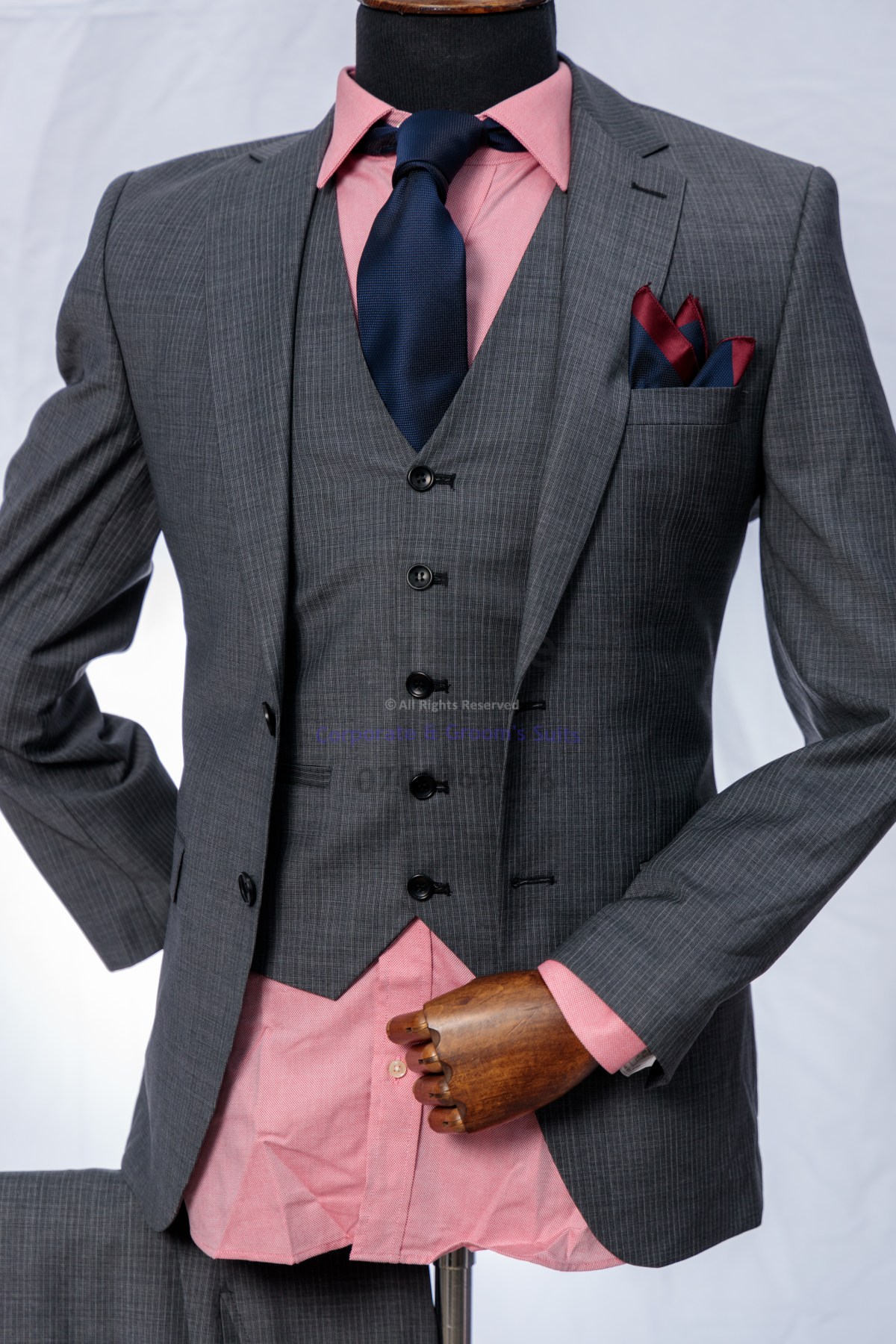
To match a suit correctly, choose the suit first, add a lighter shirt, select a tie that connects with both, then match the belt to the shoes. Keep the main colours controlled. For most professional outfits, navy, charcoal, grey, white, light blue, black and dark brown are easier to combine than several bright colours.
The goal is not to make every item the same colour. The goal is to make each piece support the others. A good combination looks settled and intentional, allowing your face, fit and presence to remain more important than the accessories.
This guide explains how to match a suit and shoes, choose the correct shirt and tie, coordinate the belt, build outfits for work and weddings, and avoid common colour mistakes.
Use this five-step suit-matching order
Choose the suit. The occasion and level of formality decide the main colour.
Add the shirt. White and light blue create a dependable base.
Select the tie. It should be darker than the shirt and work with the suit.
Choose the shoes. Black is more formal; dark brown gives more flexibility with navy and grey.
Match the belt to the shoes. Black with black, brown with brown.
Follow this order instead of starting with a bright tie or pair of shoes and forcing the rest of the outfit around it.
How to match a navy suit
A navy suit is one of the easiest suits to match. It works for office days, interviews, weddings, church, meetings and leadership functions.
Item
Safe navy-suit choices
Shirt
White, light blue, pale pink or a subtle blue stripe
Tie
Navy, burgundy, charcoal, dark green or a restrained pattern
Shoes
Black for formal use; dark brown for business and weddings
Belt
Match the shoe colour closely
Pocket square
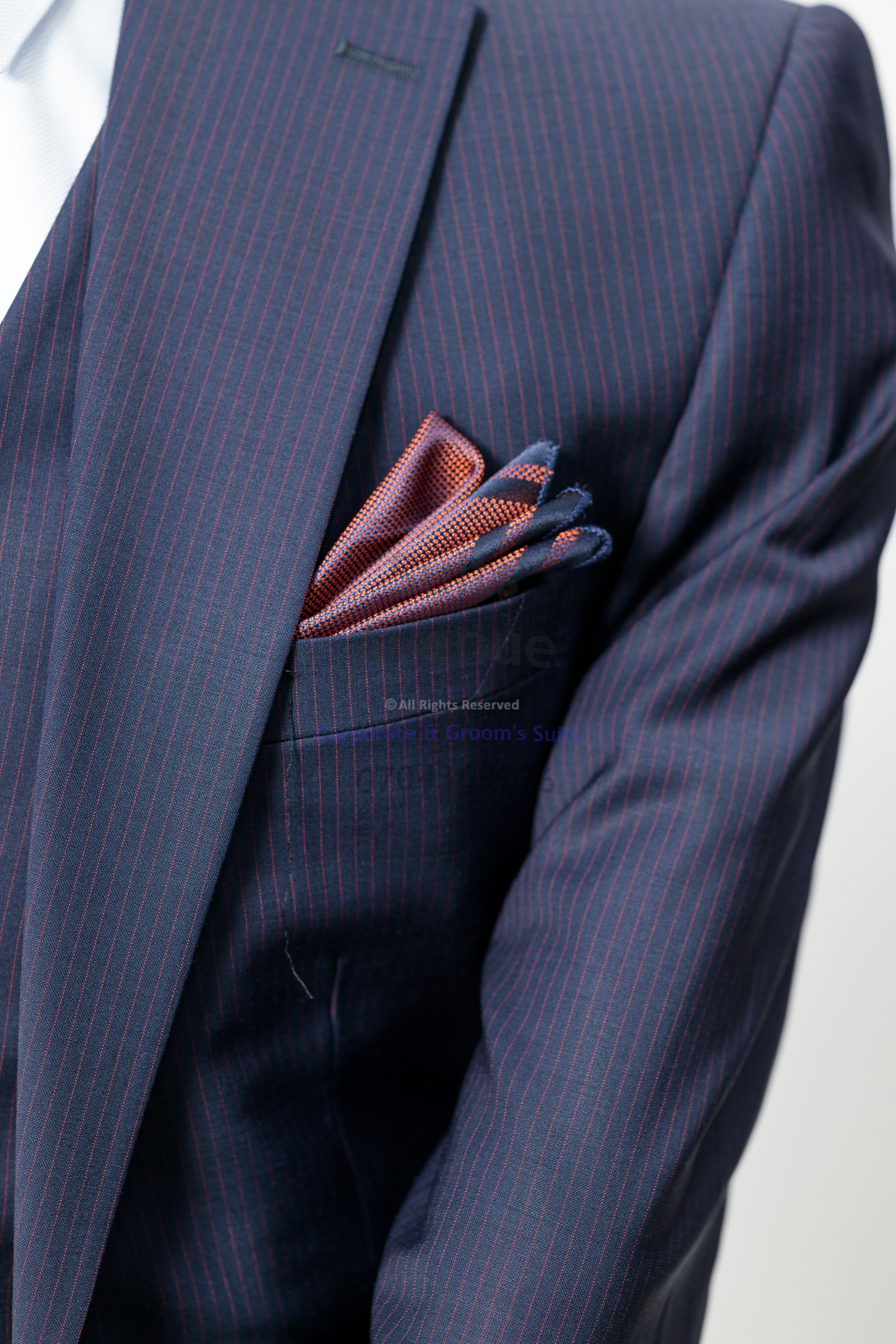
White or a controlled pattern that supports the tie without copying it exactly
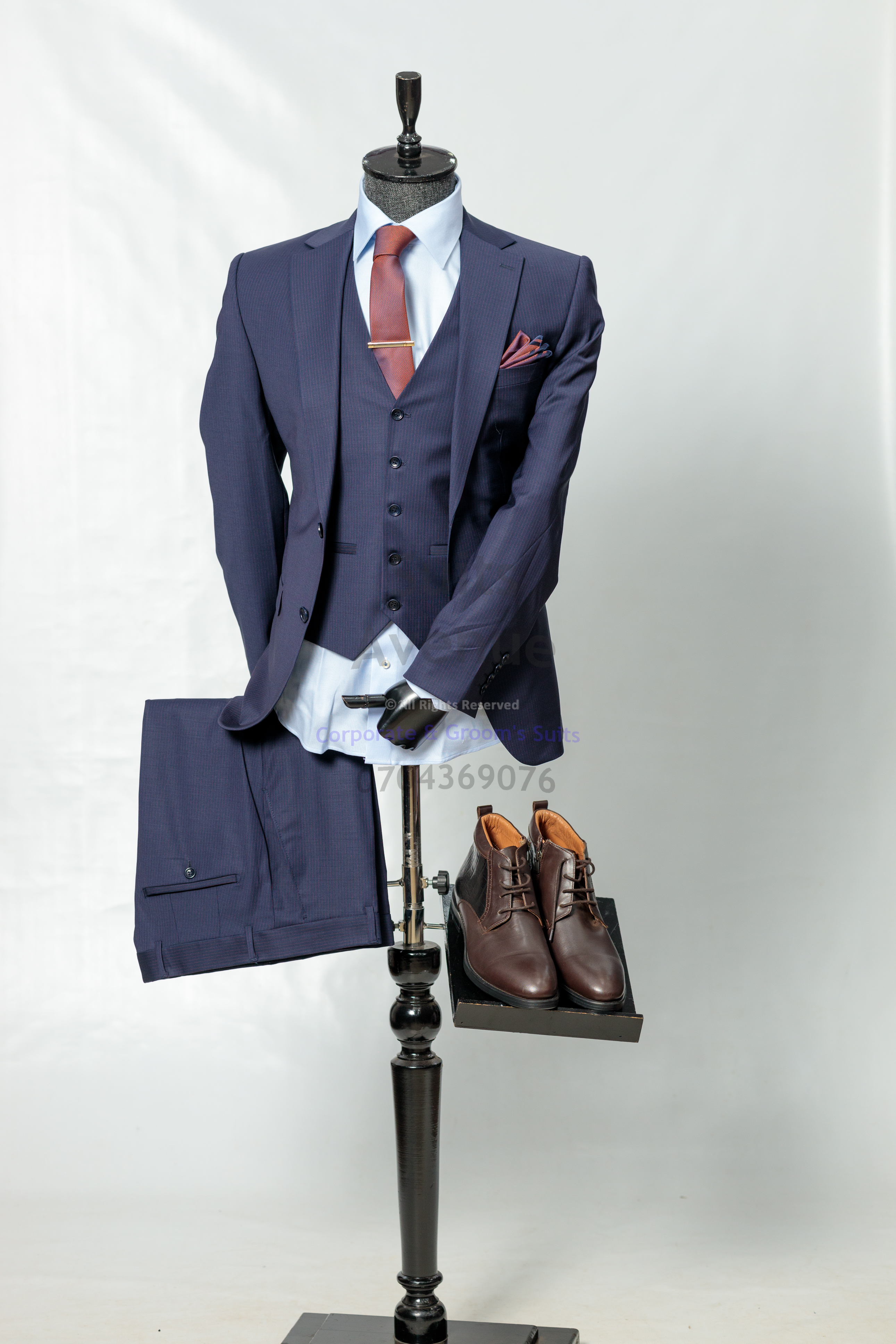
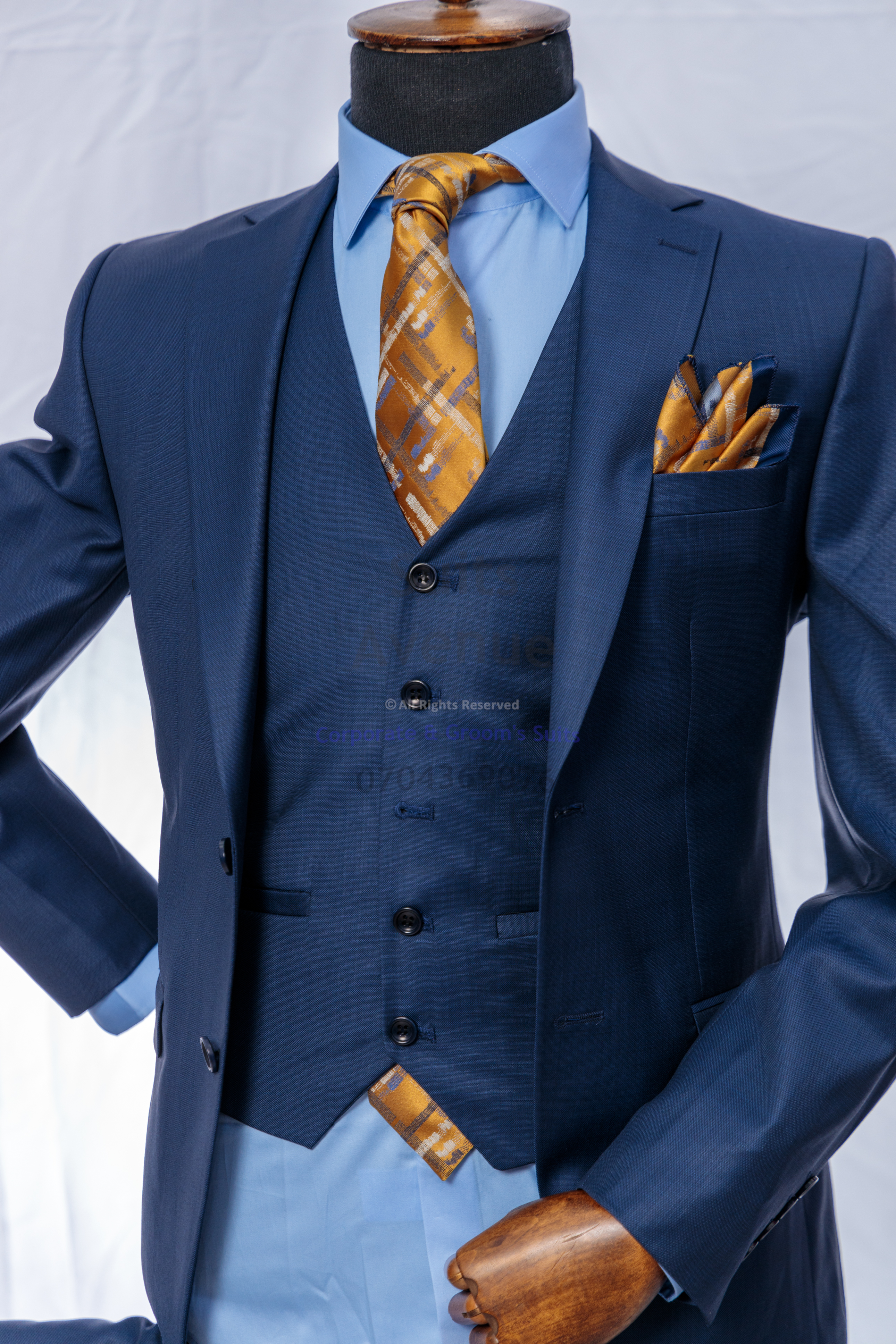
For the safest professional combination, wear a navy suit, white shirt, burgundy or navy tie, black shoes and a black belt. For a slightly warmer look, use a light-blue shirt with dark-brown shoes and a matching belt.
How to match a charcoal suit
Charcoal has a serious and calm appearance. It works especially well for formal offices, interviews, presentations, leadership and evening functions.
White shirt: The strongest formal option.
Light-blue shirt: Professional but slightly softer.
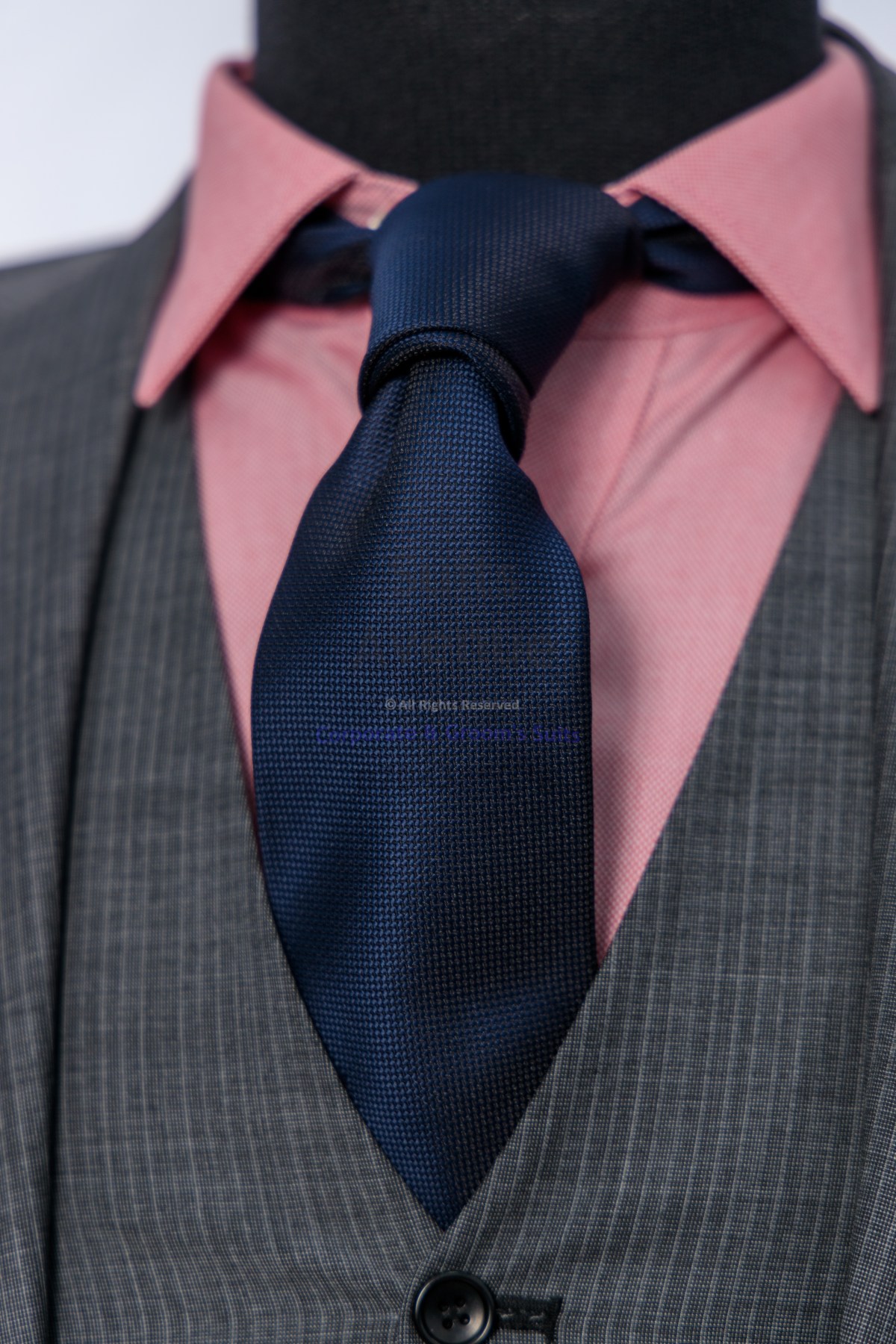
Navy tie: A dependable choice for business.
Burgundy tie: Adds controlled colour.
Black shoes and belt: The safest formal finish.
Dark-brown shoes can work with some charcoal outfits, but black is easier when the event is highly formal. If the charcoal suit is very dark, avoid shoes that are too light.
How to match a grey suit
Mid-grey and light-grey suits allow more flexibility. They can work for office, daytime weddings, graduations and smart professional events.
Look
Combination
Formal grey
White shirt, navy tie, black shoes and black belt
Warm business look
Light-blue shirt, burgundy tie, dark-brown shoes and brown belt
Daytime wedding
White shirt, soft patterned tie, brown shoes and matching belt
Simple office look
White or pale-blue shirt, charcoal tie, black shoes
Grey is neutral, so it can support both black and brown shoes. The darker and more formal the grey suit, the stronger the case for black shoes.
How to match a black suit
Keep a black suit simple. Use a white shirt, black shoes and a black belt. Suitable tie colours include black, charcoal, silver, burgundy and some dark patterns.
Brown shoes normally weaken a black suit because the contrast feels disconnected. Black shoes are the correct choice for formal black outfits.
A black suit works well for evening functions, highly formal ceremonies and organisations where black is standard. For general office use, navy and charcoal are often more flexible. Our wool suit guide for Kampala men explains how to choose the right first suit.
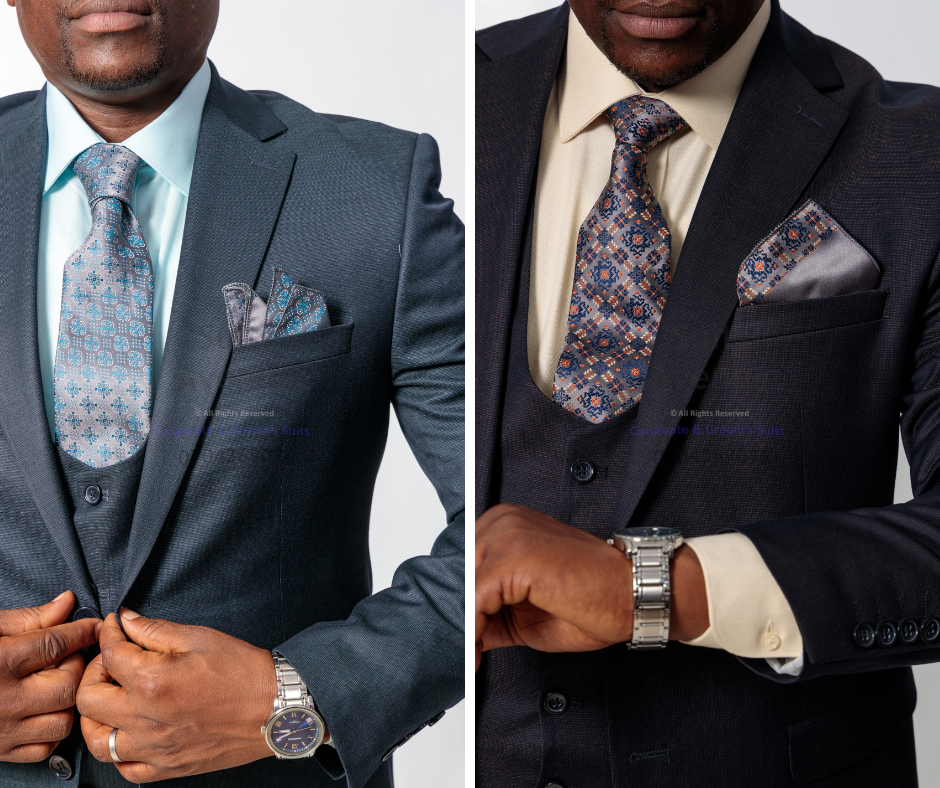
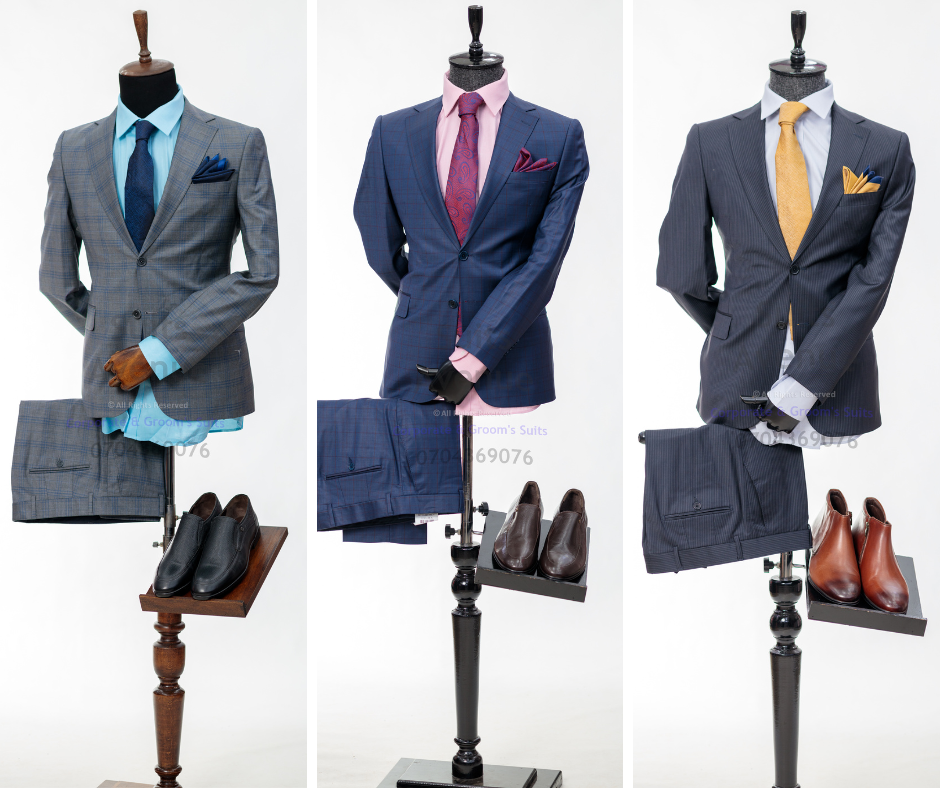
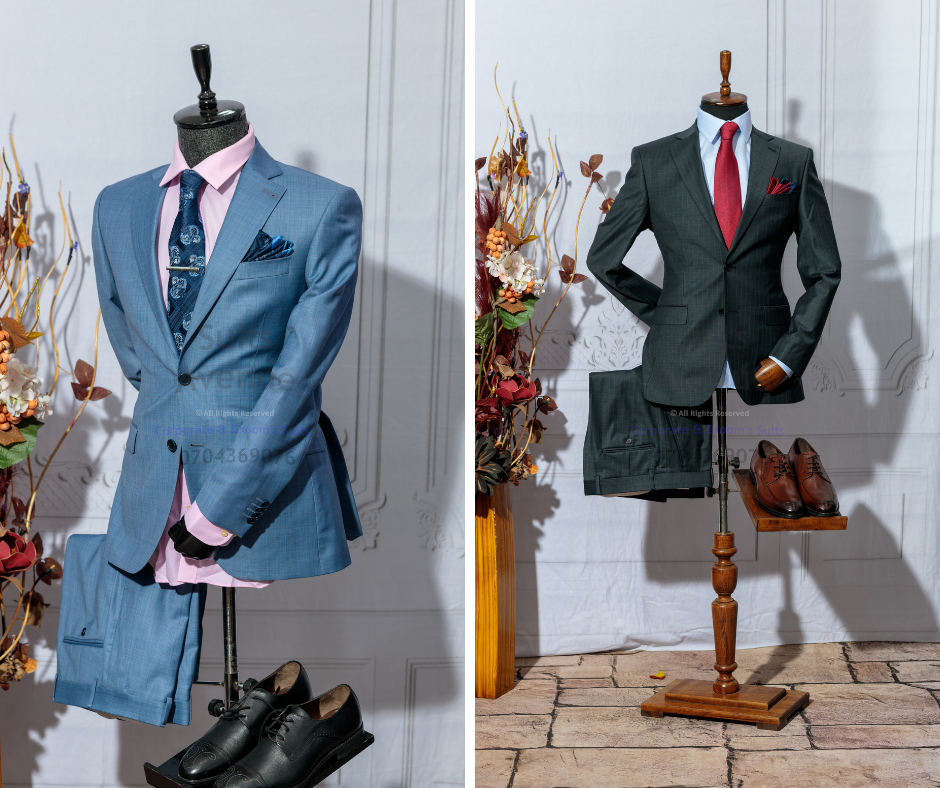
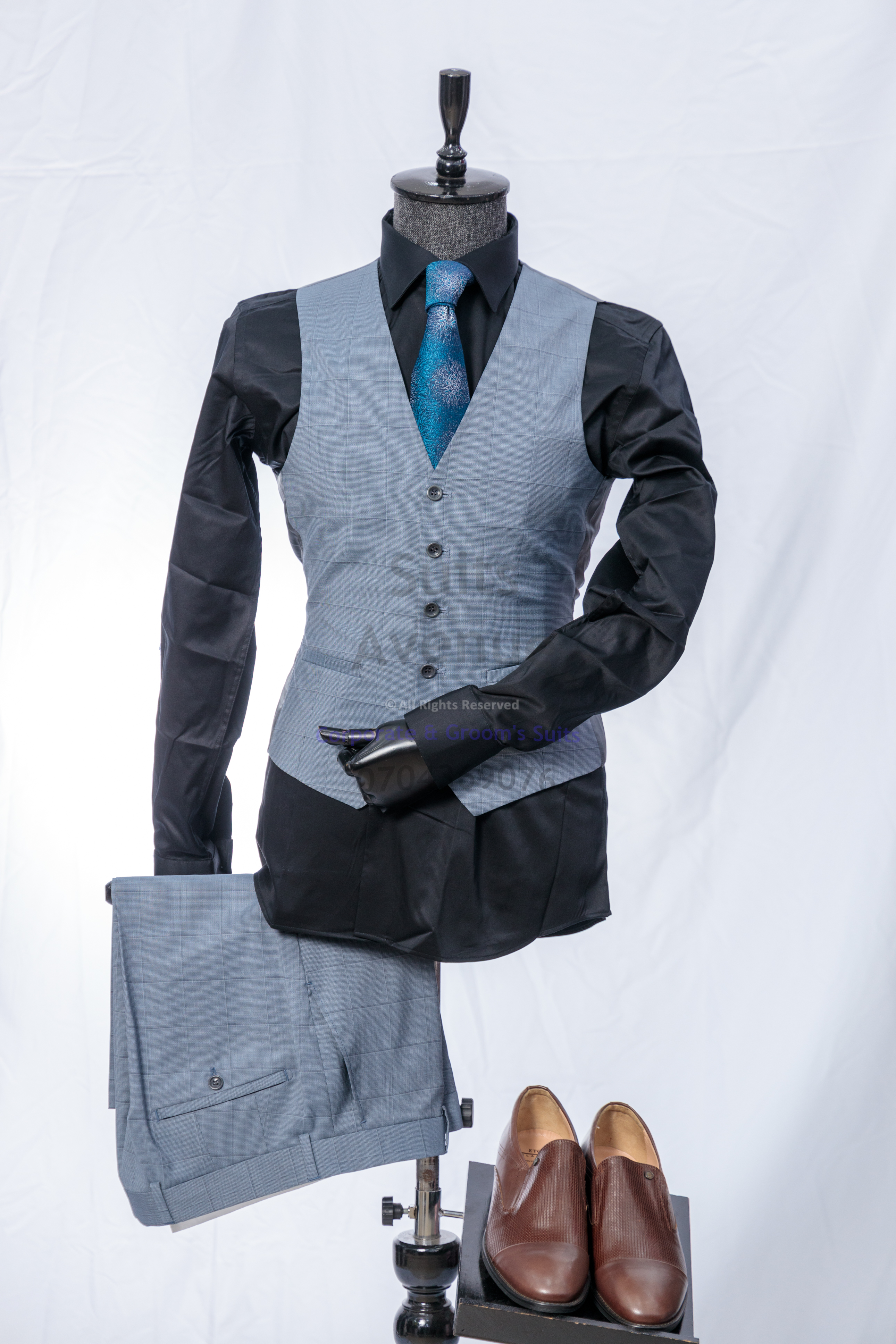
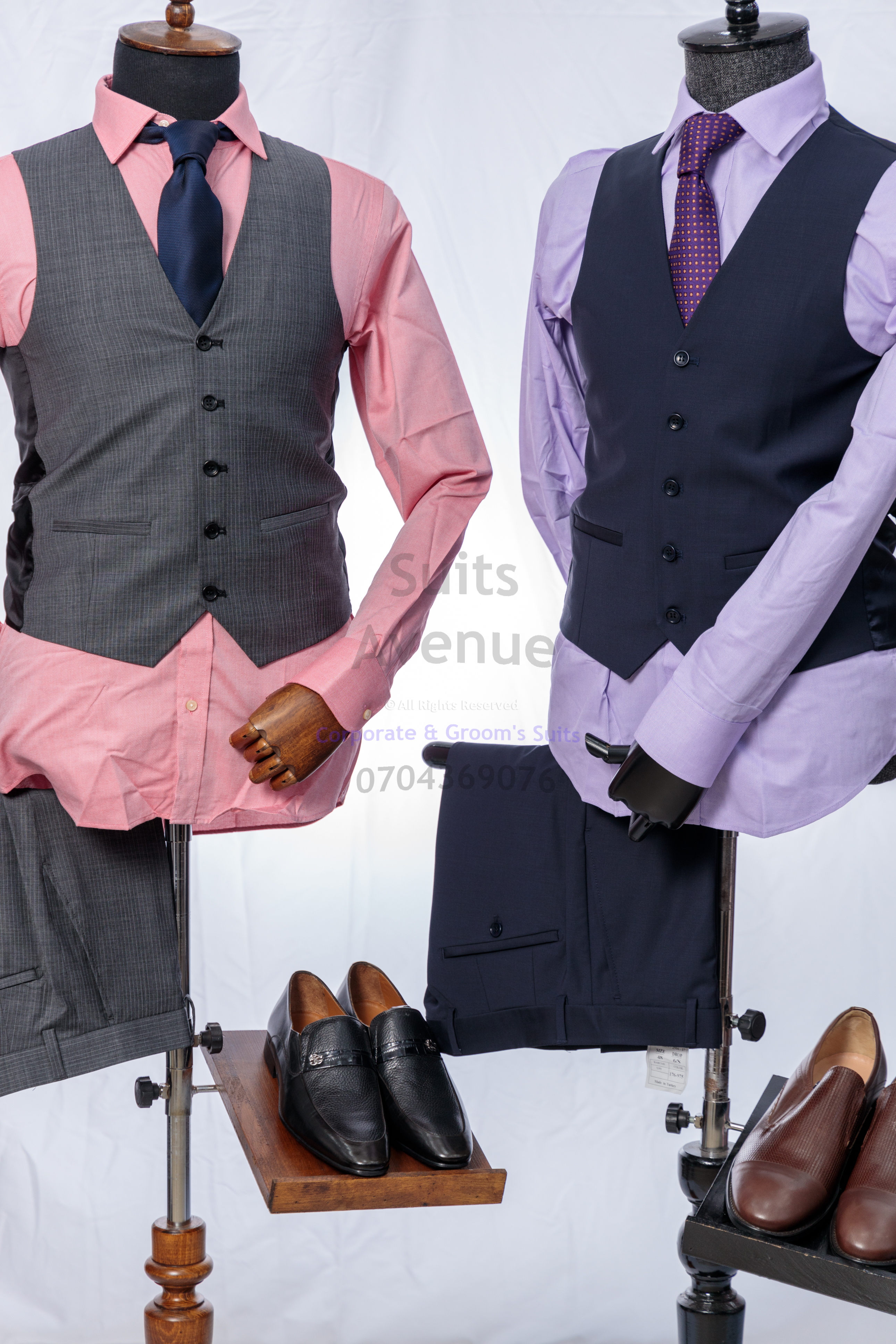
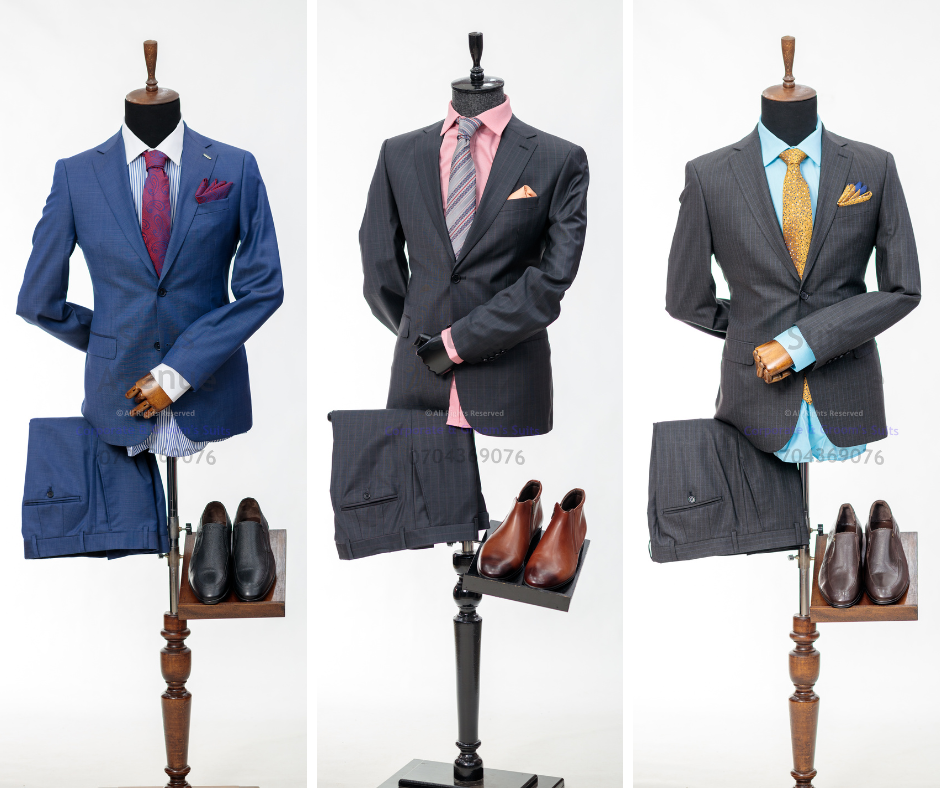
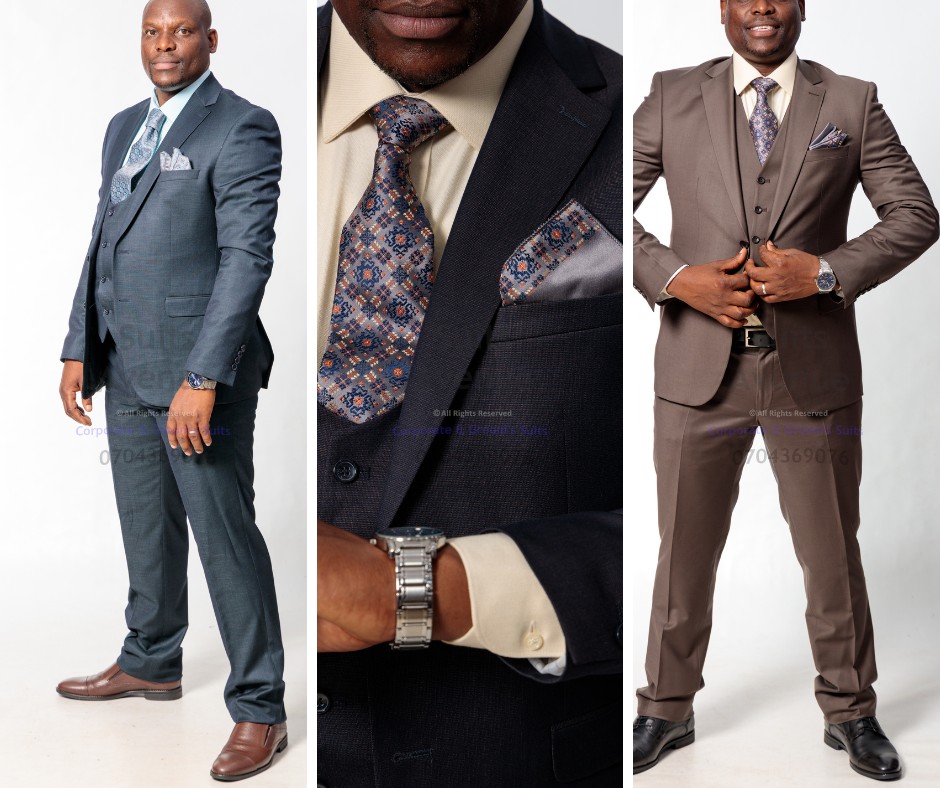
A complete outfit should connect the suit, shirt, tie, belt and shoes through simple, controlled colours.
How should the shirt and tie work together?
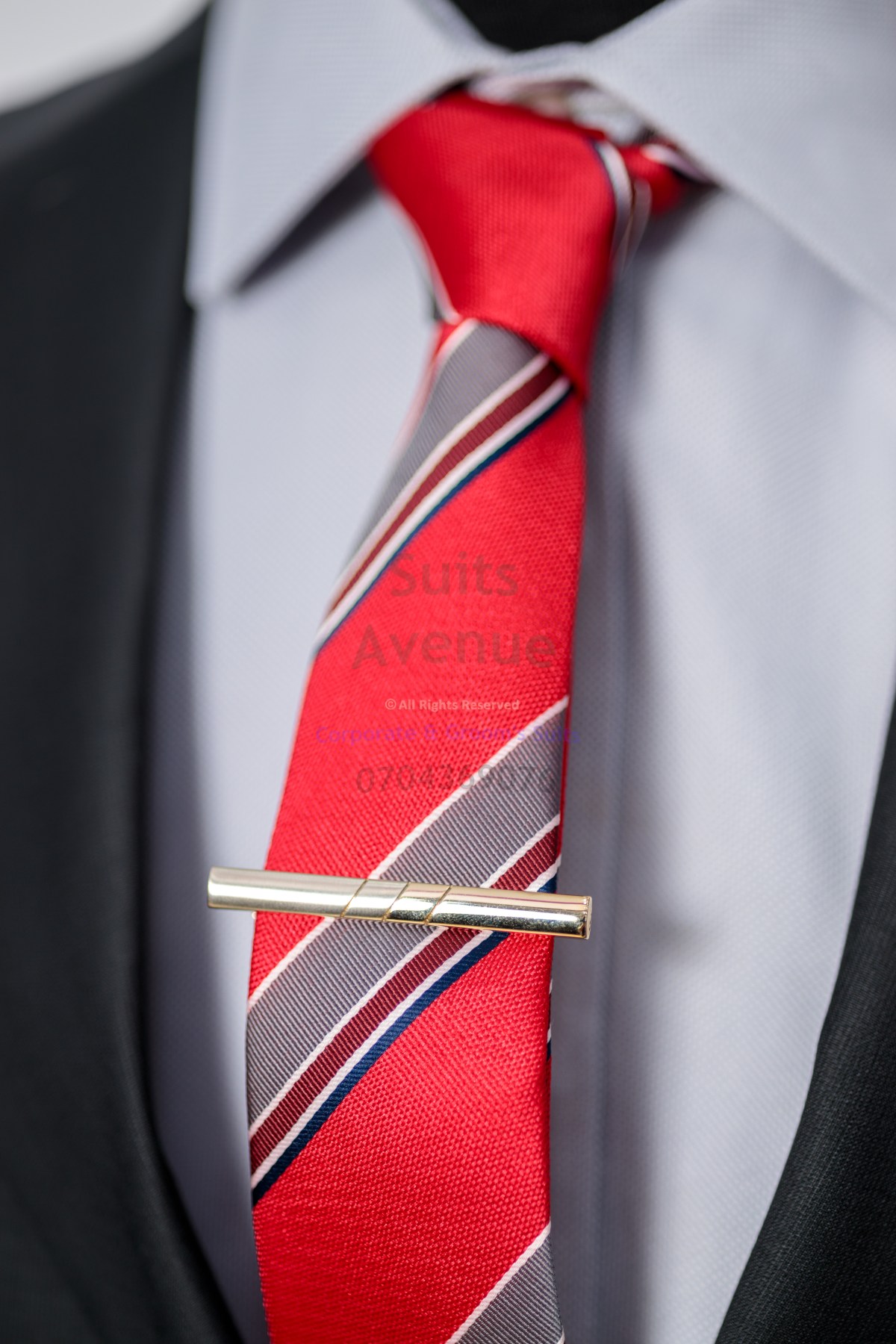
The shirt is the background. The tie is the controlled point of interest. When both are loud, they compete.
Plain shirt with patterned tie: The safest way to introduce pattern.
Patterned shirt with plain tie: Keep the tie simple and darker than the shirt.
Striped shirt with patterned tie: Use different pattern sizes so they do not visually fight.
White shirt: Works with nearly every professional tie colour.
Light-blue shirt: Works well with navy, burgundy, charcoal and dark-green ties.
The tie does not need to be the same colour as the suit. It only needs to sit comfortably within the colour family. A burgundy tie, for example, can work with both navy and charcoal.
Office shirts cost UGX 180,000–250,000. Ties cost UGX 60,000–100,000. Read our guide to office shirts in Kampala for more advice on colour, collar and fit.
Should the tie and pocket square match exactly?
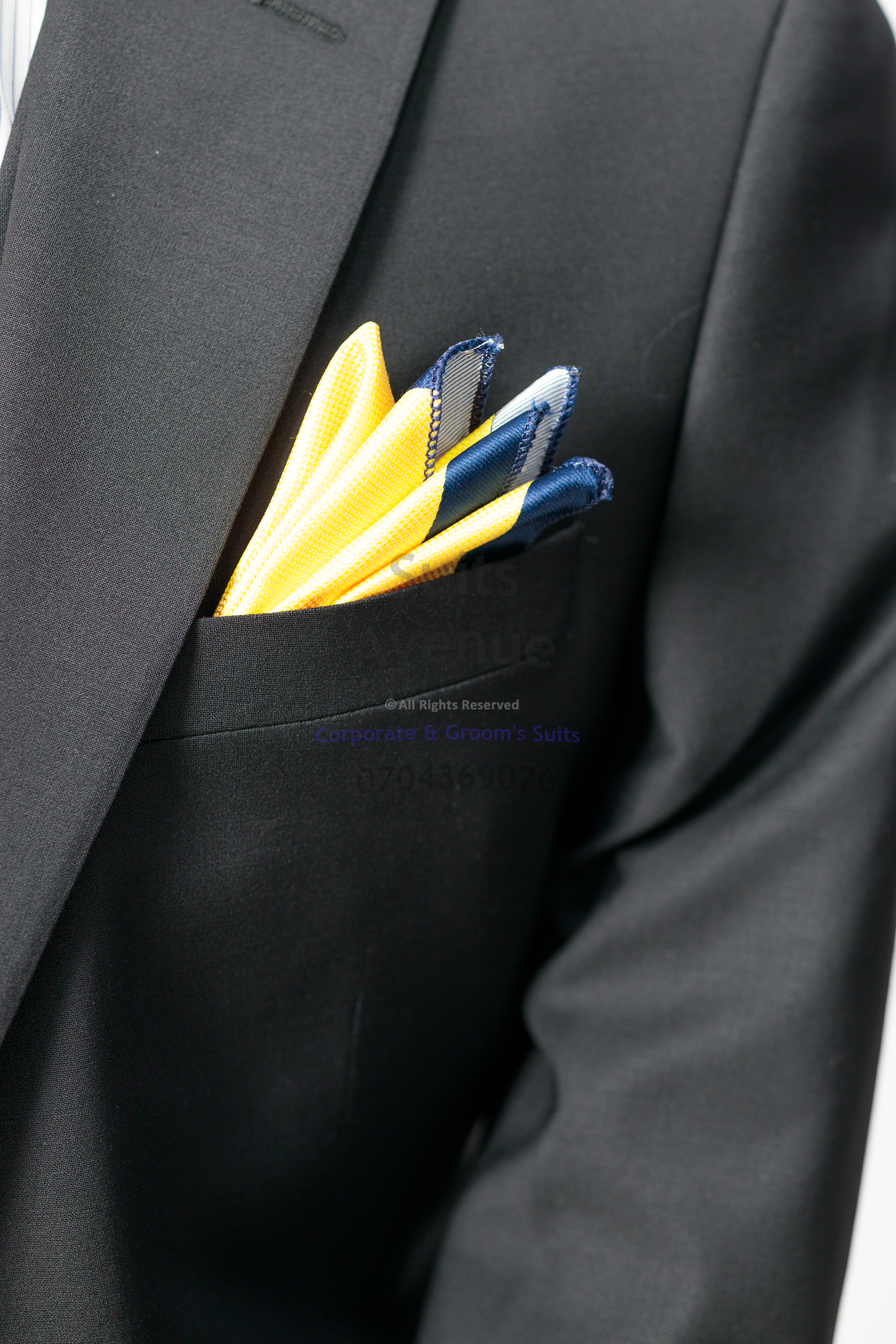
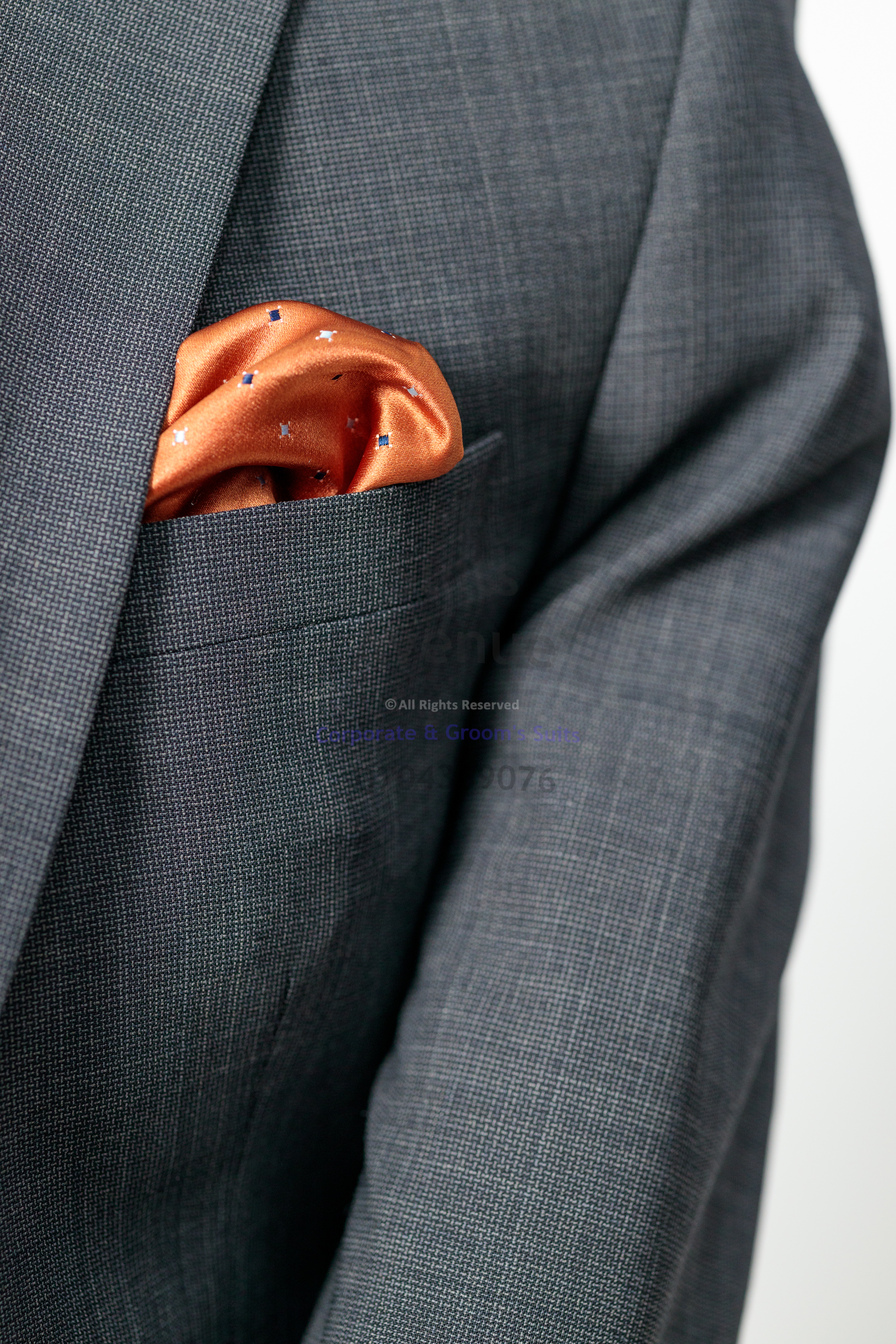
No. The pocket square should support the tie, not look like the same fabric was cut into two pieces. A plain white pocket square is always safe. A patterned square can repeat one small colour from the tie or shirt without copying the full design.
Silk pocket squares cost UGX 30,000. Use them as a finishing detail for weddings, leadership events and formal functions. They are optional for many daily office outfits.
How to match a suit and shoes
Suit colour
Black shoes
Dark-brown shoes
Best formal choice
Navy
Yes
Yes
Black
Charcoal
Yes
Sometimes
Black
Mid-grey
Yes
Yes
Black
Light grey
Yes
Yes
Depends on occasion
Black
Yes
No
Black
Black shoes make an outfit more formal. Brown shoes can make navy and grey feel warmer and slightly less severe. Avoid very light brown shoes with dark formal suits unless the whole event is clearly less formal.
The belt and shoes frame the outfit from top and bottom. When they are in different colour families, the look can feel unfinished.
Black shoes require a black belt.
Dark-brown shoes require a dark-brown belt.
The colours do not need to be perfectly identical, but they should be close.
Keep the buckle simple for office, interview and formal use.
Belts cost UGX 50,000–150,000. Reversible options can help when you need both black and brown, but check that the finish and buckle suit the outfit.
Five complete outfit combinations
Occasion
Complete combination
Job interview
Navy suit, white shirt, navy tie, black shoes and black belt
Daily office
Charcoal suit, light-blue shirt, burgundy tie, black shoes and black belt
Leadership meeting
Premium navy suit, white shirt, dark patterned tie, black shoes and black belt
Daytime wedding
Mid-grey suit, white shirt, burgundy or patterned tie, dark-brown shoes and brown belt
Formal evening wedding
Black or midnight-blue tuxedo, white shirt, black bowtie and black leather shoes
Common matching mistakes
Using three or four strong colours in one outfit.
Wearing a tie that is lighter than the shirt and disappears into it.
Combining a heavily patterned shirt with an equally strong patterned tie.
Wearing brown shoes with a black suit.
Matching black shoes with a brown belt.
Choosing good colours but ignoring poor suit and shirt fit.
Fit remains the foundation. A perfectly matched outfit still looks weak when the jacket pulls, the shirt collar is too large or the trousers bunch heavily over the shoes.
Current prices for a complete outfit
Wool blend suits: UGX 400,000–800,000
100% wool suits: UGX 800,000–2,000,000
Office shirts: UGX 180,000–250,000
Ties: UGX 60,000–100,000
Belts: UGX 50,000–150,000
Leather shoes: UGX 400,000–800,000
Silk pocket squares: UGX 30,000
Complete outfit
Estimated range
Wool blend suit, shirt, tie, shoes and belt
UGX 1,090,000–2,100,000
100% wool suit, shirt, tie, shoes and belt
UGX 1,490,000–3,300,000
Final cost depends on the exact pieces selected. A pocket square or other accessories can be added separately.
Build the wardrobe around combinations instead of isolated products. Our complete professional wardrobe guide explains what to buy first and how the pieces work together over time.
Frequently asked questions
Do black shoes go with a navy suit?
Yes. Black shoes make a navy suit more formal and are a safe choice for interviews, serious meetings and conservative workplaces.
Can brown shoes be worn with a grey suit?
Yes. Dark-brown shoes work well with mid-grey and light-grey suits. Choose black shoes when the grey suit or occasion is highly formal.
Should a tie match the suit colour?
It can, but it does not have to. The tie should coordinate with the suit and remain darker than the shirt. Burgundy, navy and charcoal ties work across several suit colours.
Should a belt match the shoes exactly?
The colours should be close and in the same family. Match black with black and brown with brown. Exact shade matching is less important than avoiding a clear colour conflict.
Where can I get help matching a complete outfit in Kampala?
Visit Suits Avenue at Insurance House, across from Absa Bank, at the Kampala Road / Entebbe Road junction. The store carries original Turkish and Italian menswear, never copies, and in-store designers help match the fit, shirt, tie, shoes and accessories.
Get the complete combination checked
The store is at the traffic lights. Free basement parking is available through the entrance opposite Cham Towers. Opening hours are Monday–Saturday, 7:00am–8:00pm, and Sunday, 9:00am–5:00pm.
Choose the right job interview suit in Kampala. Compare navy and charcoal, check fit, match your shirt and shoes, and see current prices.
For most job interviews in Kampala, wear a well-fitted navy or charcoal suit with a white or light-blue office shirt, a simple tie, polished leather shoes and a matching belt. Navy is usually the safest first choice because it looks professional without feeling too severe. Charcoal is ideal when the role calls for a more serious, senior or formal appearance.
Your interview outfit should not be the loudest thing in the room. Its job is to show preparation, good judgment and respect for the opportunity. Correct fit, calm colours and clean shoes matter more than flashy details.
This guide explains how to choose a job interview suit in Kampala, match the shirt, tie and shoes, plan your budget and avoid mistakes that can weaken an otherwise strong first impression.
What is the best job interview suit colour?
Navy is the best all-round interview colour for most men. It works for banking, telecom, government, NGO, legal, sales, management and graduate interviews. It also remains useful after the interview for office work, meetings, weddings and church.
Charcoal is the second strong choice. It communicates calm authority and works especially well for finance, law, senior management, government and formal corporate settings.
Suit colour
Best for
Recommended combination
Navy
Most industries and career levels
White or light-blue shirt, navy or burgundy tie, black or dark-brown shoes
Charcoal
Formal, technical, financial and leadership roles
White or light-blue shirt, navy or grey tie, black shoes
Mid-grey
Creative, consulting and less formal offices
White or pale-blue shirt, navy tie, black or brown shoes
Black
Very formal roles or organisations where black is standard
White shirt, restrained tie, black shoes
Black is not automatically wrong, but it can look more suited to evening events, security work, funerals or highly formal functions. When you are uncertain, navy or charcoal is easier to use correctly.
Should you choose a wool blend or 100% wool suit?
Choose a wool blend suit when you need strong value, durability and a professional outfit that can continue serving you after the interview. Wool blend suits cost UGX 400,000–800,000.
Choose a 100% wool suit when you want a more refined drape and premium finish for senior interviews, leadership roles or regular formal use. 100% wool suits cost UGX 800,000–2,000,000.
Fabric alone does not create a strong interview look. The suit must sit correctly on your body. Read our guide to choosing wool suits in Kampala for more detail on fabric weight, fit and office colours.
How should an interview suit fit?
A suit that is too tight can look forced. A suit that is too large can make you look unprepared. Check these five areas:
Shoulders: The jacket shoulder should end where your natural shoulder ends, without dents or overhang.
Jacket closure: The jacket should button without strong pulling lines across the front.
Sleeves: A small amount of shirt cuff should show when your arms rest naturally.
Waist and seat: The trousers should remain clean without squeezing or hanging loosely.
Trouser length: The hem should meet the shoe neatly without heavy folds.
A clean suit fit, calm shirt colour and polished shoes create a professional interview appearance.
Choose slim or classic fit according to your body and comfort. The goal is not to force every man into the same cut. In-store designers should check the final fit while you stand, sit and move.
What shirt should you wear to an interview?
A white shirt is the safest formal option. It creates a clean contrast with navy, charcoal and grey suits. A light-blue shirt is also professional and can feel slightly softer, especially with a navy suit.
Choose white for highly formal interviews or when you are uncertain about the dress code.
Choose light blue for a polished but approachable appearance.
Avoid loud prints, very bright colours and collars that collapse under the jacket.
Make sure the collar closes comfortably and the sleeve reaches the wrist.
When the organisation is formal or you do not know the dress code, a tie is the safer choice. Choose navy, burgundy, charcoal or a small restrained pattern. The tie should support the outfit, not demand attention.
Ties cost UGX 60,000–100,000. A simple navy tie works with both navy and charcoal suits. Burgundy adds controlled colour without looking loud.
What shoes should you wear to a job interview?
Black leather shoes are the safest formal option. They work with charcoal, black and navy suits. Dark-brown leather shoes can also work well with navy or mid-grey when the workplace is not extremely formal.
Polish the shoes before the interview.
Match a black belt with black shoes.
Match a brown belt with brown shoes.
Avoid sports shoes, damaged soles and colours that compete with the suit.
Navy wool blend suit, white shirt, navy tie, black shoes and black belt
Banking, legal or finance role
Charcoal suit, white shirt, navy or burgundy tie, black shoes and black belt
Management or leadership role
Premium navy or charcoal 100% wool suit, white shirt, restrained tie and polished leather shoes
Creative or smart-casual workplace
Navy or mid-grey suit, light-blue shirt, optional simple tie and dark-brown shoes
How much should you budget for an interview outfit?
Outfit level
Includes
Estimated range
Professional foundation
Wool blend suit, office shirt, tie, leather shoes and belt
UGX 1,090,000–2,100,000
Premium interview outfit
100% wool suit, office shirt, tie, leather shoes and belt
UGX 1,490,000–3,300,000
These estimates use current category price ranges. The final total depends on the exact pieces selected.
You do not need to buy an outfit that you will never use again. A navy or charcoal suit should continue working for office days, meetings, church, weddings and other serious functions. See our complete professional wardrobe guide for a longer-term buying plan.
Interview outfit mistakes to avoid
Buying the suit without checking how it looks while sitting and moving.
Wearing a jacket that pulls strongly at the button.
Using too many bright colours or large patterns.
Wearing unpolished shoes or a belt that does not match them.
Trying a completely new outfit for the first time on interview morning.
What should you do before interview day?
Try on the complete outfit several days before the interview.
Sit, walk and raise your arms to confirm comfort.
Prepare the shirt, tie, belt, socks and shoes together.
Polish the shoes and remove visible dust or marks.
Leave enough travel time for Kampala traffic.
Frequently asked questions
Is a navy suit good for a job interview?
Yes. Navy is one of the safest interview colours because it looks professional, works across many industries and remains useful after the interview.
Can I wear a black suit to an interview?
You can, especially when the organisation is very formal or black is standard in that field. Navy or charcoal is usually more versatile when you are uncertain.
Should I wear brown shoes with a navy suit?
Dark-brown leather shoes can work well with navy. Choose black shoes when the interview is highly formal or conservative.
Where can I buy an interview suit in Kampala?
Visit Suits Avenue at Insurance House, across from Absa Bank, at the Kampala Road / Entebbe Road junction. The store carries original Turkish and Italian menswear, never copies, and in-store designers help with fit, colour and complete interview combinations.
Get fitted before the interview
The store is at the traffic lights. Free basement parking is available through the entrance opposite Cham Towers. Opening hours are Monday–Saturday, 7:00am–8:00pm, and Sunday, 9:00am–5:00pm.
Call or WhatsApp: +256704369076. Come get fitted before the interview and choose a professional outfit you can continue wearing after the opportunity is won.
Choose wool suits for men in Uganda with smart fit, fabric weight, and lining tips for office comfort in Kampala, UG—stay sharp and comfortable.
How to Choose Wool Suits for Men in Uganda: Best Fits in Kampala
Learn how to pick the right wool suit for office wear in Kampala, with guidance on fit, fabric weight, and lining suited to Uganda’s climate. This guide helps you make a confident Suits Avenue choice for style and comfort. Wool suits Kampala office fit
How to Choose Wool Suits for Men in Uganda: Best Fits in Kampala — Suits Avenue Kampala
How to Choose a Wool Suit for Kampala
A wool suit can look polished in the morning and still feel comfortable by the end of a long day. In Kampala, the challenge is choosing wool that breathes well, holds its shape, and matches your work and social schedule.
Many men buy a suit based on the first look in the mirror, then later discover it feels too warm, the jacket pulls when they move, or the trousers lose their clean line after a few wears. That usually comes down to three things: the wrong fabric weight, the wrong fit, or heavy construction.
In this guide, you will learn how to choose wool suits for men in Uganda with a focus on Kampala life—how to pick the right fabric weight and weave, how a suit should fit, what lining and construction to look for, and the most common mistakes to avoid.
Wool Suits — Suits Avenue Kampala
Practical Guidance: Fabric, Fit, and Construction That Work in Uganda
1) Start with the wool itself: weight and weave
Wool is not “one thing.” It comes in different weights and weaves, and that decides how warm it feels and how well it breathes.
Fabric weight (important in Kampala): Lighter and medium-weight wool often feels more comfortable for day-to-day office wear. Very heavy wool can feel warm and stiff during busy days.
Weave and airflow: Some weaves allow better airflow, while others feel tighter and warmer. If you commute, walk between meetings, or spend time outdoors, breathability matters.
Use this article to learn the difference between Super 180s and 100s wool, which makes it easier to pick the right weight and feel for Kampala weather. https://suitsavenue.blog/super-180s-vs-100s-wool/
2) Choose a fit that stays sharp, not just tight
A good fit should look clean when you stand and still feel natural when you sit, walk, and raise your arms.
Jacket fit checkpoints:
Shoulders: The shoulder line should sit flat and clean. If it extends past your shoulder or collapses inward, the suit will never look right.
Chest: You should be able to button the jacket without pulling lines across the chest.
Waist: A slight taper is smart, but avoid an aggressive squeeze. You need room to breathe and move.
Sleeves: The sleeve should allow natural arm movement without the jacket riding up.
Trouser fit checkpoints:
Waist and seat: Comfortable when sitting, without needing a tight belt to “hold it up.”
Thigh and knee: Enough space to walk normally. If the trouser pulls when you step, it will wear out faster.
Length (break): A clean, modern line usually comes from a controlled break at the shoe, not a long stack of fabric. Wool suits for Kampala office fit
3) Lining and structure: comfort matters in warm weather
Two suits can look similar, but feel very different because of what is inside.
Lining choice: A lighter lining can help the suit feel cooler. Heavy lining can trap heat.
Construction and shape: The suit should keep a clean chest line and smooth lapels. If the front looks wrinkled or puffy, it can feel less refined.
4) Color and pattern for Kampala office and events
If you want a suit that works for many settings, start simple.
Best versatile colors: Navy and charcoal are strong choices for office wear, presentations, and formal events.
Black: Best kept for very formal moments. For daily office use, navy or charcoal often looks more natural.
Patterns: Fine checks or subtle stripes can be elegant, but keep them quiet if you need maximum versatility.
5) Common mistakes to avoid
Buying based on “Super numbers” only: A higher number is not automatically better for your daily routine.
Choosing a suit that is too tight: It may look sharp for one photo, but it will feel uncomfortable and can pull at stress points.
Ignoring heat and movement: Kampala days can be long. If it is uncomfortable, you will stop wearing it.
Over-styling: Loud patterns and extreme cuts limit how often you can use the suit.
If you focus on fabric weight, a clean fit, and lighter construction choices, you will get a suit that looks premium and feels right for Kampala.
Kampala,UG — Suits Avenue Kampala
Quick Checklist and Smart Next Steps
Use this checklist before you decide:
Purpose: Office wear, events, or a mix of both?
Wool comfort: Does the fabric feel breathable and suitable for warm days?
Click the WhatsApp button to speak with Suits Avenue and get help choosing the right piece.
How to Choose Wool Suits for Men in Uganda: Best Fits in Kampala — Suits Avenue Kampala
Q: Is wool too hot for Kampala?
A: Not always. The comfort depends on the wool’s weight, weave, and lining. Lighter, breathable options can work well for Kampala.
Q: What suit color is most useful for work in Kampala?
A: Navy and charcoal are the most versatile. They work for office days, meetings, and many formal events.
Q: How should a suit jacket fit at the shoulders?
A: The shoulder line should sit flat and match your natural shoulder edge, without dents or overhang.
Q: What is the biggest fit mistake men make with suits?
A: Buying a suit that is too tight. A suit should look clean and also allow comfortable movement.
Q: Should I choose a fully lined or lightly lined suit for Uganda?
A: For warmer conditions, a lighter lining often feels more comfortable. The goal is comfort without losing structure.
Q: Are patterned suits good for office wear?
A: Subtle patterns can work, but simple solids are easier to rewear and match with different shirts and ties.
Q: How do I know if trousers are the right length?
A: The hem should sit neatly on the shoe with a controlled break, not bunching heavily at the ankle.
Q: Can one wool suit work for both office and events?
A: Yes. A well-fitted navy or charcoal wool suit with simple styling can cover both settings easily.
Choose the best wool suits for men in Kampala with clear fit checks, wool weight tips, and tailoring basics for a sharp, comfortable office look.
Best Wool Suits for Men in Kampala: How to Choose the Right Fit
This post shows how to pick the best wool suits for men in Kampala, covering fit, fabric weight, and tailoring for the office. You will learn clear, practical steps to choose a suit that looks professional, feels comfortable, and lasts longer.
Best Wool Suits for Men in Kampala: How to Choose the Right Fit — Suits Avenue Kampala
Best Wool Suits for Men in Kampala: What to Get Right First
A wool suit can be one of the smartest pieces a man owns, but only if it fits well and suits your daily life. In Kampala, many men buy a suit that looks good on the hanger, then feel uncomfortable in meetings, overheat during the day, or end up with a jacket that pulls at the shoulders.
This guide focuses on practical decisions that help you choose the best suits for men in Uganda—especially if you want a wool suit that looks professional, feels comfortable, and holds its shape for years. You will learn how to judge fit, pick the right wool weight, understand simple quality markers, and know when tailoring is necessary.
By the end, you should be able to walk into a fitting with clear priorities—and avoid the common mistakes that make a suit look “almost right” instead of truly sharp.
Wool Suits — Suits Avenue Kampala
How to Choose a Wool Suit That Works for Kampala Office Life
1) Fit comes first: the suit should follow your body, not fight it
A good wool suit should feel clean and easy when you move. Use these quick checks:
Shoulders: The shoulder seam should sit right at the edge of your shoulder bone. If it hangs over or bites in, the whole jacket will look off.
Chest and buttons: When buttoned, the jacket should not pull into an “X” shape. That pulling means the chest or waist is too tight.
Jacket length: A balanced jacket covers the seat and looks proportional from the side.
Sleeve length: A small amount of shirt cuff should show. Too long makes you look shorter; too short looks unfinished.
Trousers: Aim for a clean line from hip to ankle. Too tight shows every crease; too loose looks untidy.
If you are unsure where to begin, start by comparing the main suit types, cuts, and use-cases. Read this next to compare suit options in Kampala and understand what to look for before you choose your wool suit. https://suitsavenue.blog/mens-suits-in-kampala/
2) Choose the right wool weight for your day
Wool is not “one feel.” Some wool is lighter and more breathable, while other wool is heavier and holds structure more strongly.
For Kampala workdays:
If you move between meetings, car rides, and indoor spaces, a mid-weight wool is often the safest choice because it keeps shape and still breathes.
If you are often outdoors or walking between locations, avoid very heavy cloths that can feel too warm.
If you want the suit to look crisp for long hours, look for wool that has enough body to resist wrinkling.
The goal is simple: choose a weight that matches your real schedule, not only how the suit looks under shop lighting.
3) Understand wool quality without overthinking it
Many men hear “100% wool” and assume all wool suits are the same. They are not. Two suits can both be wool, yet feel different and perform differently.
What to check:
Fibre feel: Wool can feel smooth and refined, or slightly more textured. Both can be good, depending on the finish and intended use.
Durability: Very soft cloth can feel luxurious, but it may need more care if you wear it often.
Recovery: Quality wool springs back better after sitting, helping the suit look fresh through the day.
4) Pick office-ready colours and patterns that stay useful
If you want maximum value, choose colours that work across meetings, client dinners, and formal events:
Navy: dependable and professional in almost any setting
Charcoal: sharp, serious, and easy to match with many shirts
Medium grey: versatile and lighter in appearance
Patterns (keep them subtle):
Solid is safest for daily office wear
Fine pinstripes or small checks can work, but should be understated to stay professional
5) Tailoring: small adjustments make the suit look custom
Even a good suit can look average if the details are off. Common helpful adjustments include:
Taking in the waist for a cleaner jacket line
Adjusting sleeve length so the proportions look right
Refining trouser taper for a modern, professional shape
A suit should look smooth when you stand and still look neat when you sit. That is the real test.
Common mistakes to avoid
Buying tight because it “looks slim” (it will pull and crease)
Ignoring shoulders (hard to fix, and the suit will never sit right)
Choosing extreme fabric choices for daily office use
Picking loud patterns that limit where you can wear the suit
Skipping a proper fitting and relying on guesswork
Kampala,UG — Suits Avenue Kampala
Quick Checklist Before You Buy Your Next Wool Suit
Use this final checklist to keep your choice simple and correct:
Fit: shoulders sit clean, jacket does not pull when buttoned, sleeves and trousers look balanced
Comfort: you can sit, walk, and raise your arms without strain
Wool weight: suits your real Kampala schedule (meetings, travel, indoor/outdoor time)
Quality: cloth feels refined and holds shape, not just “soft” on the first touch
Colour: navy, charcoal, or grey for the most professional and repeatable looks
Tailoring: plan for small adjustments to finish the fit
If you want to go deeper on fabric numbers and what they mean in real life, use this guide to understand wool numbers and fabric feel, so you can pick the right weight and finish for office wear in Kampala. https://suitsavenue.blog/super-180s-vs-100s-wool/
Click the WhatsApp button to speak with Suits Avenue and get help choosing the right piece.
Best Wool Suits for Men in Kampala: How to Choose the Right Fit — Suits Avenue Kampala
Q: What makes a wool suit better than a blended suit for office wear? A: Wool usually breathes better, holds shape well, and recovers from wrinkles more easily, which helps you look neat through a full workday.
Q: How should a suit jacket fit at the shoulders? A: The shoulder seam should sit at the edge of your shoulder. If it drops past the shoulder or creates dents, the jacket will look wrong even after tailoring.
Q: How do I know if a suit jacket is too tight? A: If the jacket forms an “X” pull at the button, feels restrictive in the upper back, or creases heavily around the chest, it is too tight.
Q: Is lighter wool always better for Kampala? A: Not always. Very light cloth can wrinkle faster. A balanced weight often gives the best mix of comfort and a crisp professional look.
Q: What colours are safest for a first wool suit? A: Navy and charcoal are the most flexible for work, formal events, and smart occasions.
Q: Can tailoring fix any suit? A: Tailoring can improve many areas, but it cannot fully correct poor shoulder fit or a jacket that is the wrong size overall.
Q: What is the most common mistake men make when buying a wool suit? A: Choosing a suit that is too tight because it looks slim at first. It usually becomes uncomfortable and looks strained in real use.
Q: How many wool suits should a professional man in Kampala start with? A: Start with one versatile suit (navy or charcoal). If you wear suits often, add a second in a different neutral colour for rotation.
Learn what type of attire a suit is and how to choose a wool suit for office wear in Kampala, Uganda—fit, fabric, and simple styling tips.
What Type of Attire Is a Suit: How to Choose Wool Suits in Kampala. Understand what makes a suit formal or casual and why wool suits work best for office wear in Kampala. This short guide explains fit, fabric, and styling so you can choose a comfortable, professional suit from Suits Avenue. Wool suits in kampala office guide.
What Type of Attire Is a Suit: How to Choose Wool Suits in Kampala — Suits Avenue Kampala
What Type of Attire Is a Suit?
A suit is a matching set of tailored clothing—usually a jacket and trousers made from the same fabric. It is most often considered formal attire, but it can also be worn in a smart, relaxed way depending on the fabric, color, and how you style it.
For men in Kampala, the question matters because many days include both business and social moments: office meetings, client visits, dinners, weddings, and church. A suit that is too formal can feel stiff, and a suit that is too casual can look unprepared.
In this guide, you will learn what makes a suit formal or more relaxed, why wool suits work well for professional life in Kampala, and how to choose a fit and styling that looks sharp and feels comfortable. To learn more about shoes: https://suitsavenue.blog/match-leather-shoes-suits-kampala/
Wool Suits — Suits Avenue Kampala
How to Choose and Wear a Suit the Right Way (Especially Wool)Wool suits in kampala office guide.
A suit is “formal” or “less formal” based on a few clear factors. If you understand them, it becomes easy to pick the right suit for work in Kampala.
1) Fabric: the biggest driver of formality
Wool (especially smooth, worsted wool): This is the classic business choice. It drapes well, holds shape, and looks clean in professional settings.
Textured fabrics (heavy tweeds, very rough weaves): These often look more casual and are usually better for cool-weather styling.
Why wool works for Kampala office wear: wool can breathe and manage moisture better than many people expect. A good wool suit feels refined, and it keeps its shape through long workdays.
2) Structure and details: keep it clean for business
If you want a suit that reads as professional:
Choose a jacket with a clean shoulder and a neat chest shape (not overly puffy).
Keep details simple. Very loud patterns or shiny finishes can look less business-ready.
3) Color: make it easy to wear often
For office and meetings, these are the safest and most versatile:
Navy: professional, flexible, and easy to style
Charcoal: serious and formal
Mid-grey: smart and wearable
A very bright color can work for events, but it is harder to repeat at work without people noticing it often.
4) Fit: the suit should look sharp without fighting your body
Fit is where many men lose the polished look. Use these checkpoints:
Shoulders: the jacket shoulder seam should sit at your natural shoulder edge. If it hangs over, it looks oversized; if it pulls, it looks tight.
Chest: you should be able to button the jacket without strain. No “X” pulling lines across the button.
Waist: a slight shape is good, but it should not feel tight when you sit.
Sleeves: cuffs should show a little shirt (a small, clean amount).
Trousers: the waist should sit securely without needing a tight belt, and the legs should fall cleanly without bunching.
In Kampala, comfort matters because you will walk, sit in traffic, and move between places. A well-fitted wool suit keeps its shape while still allowing easy movement.
5) Styling: how to make the same suit more formal or more relaxed
To look more formal:
Wear a crisp long-sleeve shirt
Choose a conservative tie
Add a simple pocket square (optional)
Wear classic leather shoes (clean and polished)
To look slightly more relaxed (still professional):
Swap the tie for an open-collar shirt
Choose a softer shirt color
Keep shoes simple and neat
Common mistakes to avoid
Buying too big “for comfort”: it usually looks heavy and untidy. Correct fit is more comfortable over a full day.
Over-shiny fabric: it can look cheap and photographs poorly.
Wrong jacket length: very short jackets can look trendy but less professional. Aim for balance and coverage.
Ignoring alterations: small adjustments can change everything—especially sleeves, trouser length, and waist shaping.
Kampala,UG — Suits Avenue Kampala
Quick Checklist for Choosing a Wool Suit in Kampala
Use this simple checklist before you buy or wear your suit:
Purpose: office, meetings, events, or mixed use?
Fabric: choose wool for a clean, professional drape and all-day structure
Color: navy, charcoal, or grey for the most repeatable work wardrobe
Jacket fit: shoulders sit clean; button closes without pulling
Trouser fit: sits well at the waist; legs fall straight with a clean finish
Styling: formal with tie; more relaxed with open collar—always neat
Finishing: press the suit, check the hem, and keep shoes well maintained
A suit is best understood as formal attire that can shift toward smart-casual when you change the styling. If you want one suit that works hard for you in Kampala, a well-fitted wool suit in a classic color is a reliable choice.
Click the WhatsApp button to speak with Suits Avenue and get help choosing the right piece.
What Type of Attire Is a Suit: How to Choose Wool Suits in Kampala — Suits Avenue Kampala
Q: Is a suit always formal attire?
A: A suit is generally formal, but it can look less formal if you choose relaxed styling, softer colors, and minimal accessories.
Q: What makes a suit “a suit” and not just smart clothing?
A: The jacket and trousers must match in fabric and color and be designed as a set.
Q: Why do many professionals prefer wool suits?
A: Wool drapes well, holds its shape, and keeps a clean, professional look through long workdays.
Q: Which suit colors are best for office wear in Kampala?
A: Navy, charcoal, and mid-grey are the most versatile and easy to repeat.
Q: How should a suit jacket fit at the shoulders?
A: The shoulder seam should sit at the natural shoulder edge without overhang or pulling.
Q: Should I buy a larger suit for comfort?
A: No. A correct fit is usually more comfortable and looks sharper than an oversized suit.
Q: Can I wear a wool suit without a tie and still look professional?
A: Yes. Choose a neat shirt, keep the collar clean, and make sure the suit fits well.
Q: What is the most common suit mistake men make?
A: Wearing the wrong fit—especially a jacket that is too tight in the chest or too loose in the shoulders.
What is the 5-suit rule? Learn a simple wool suit rotation for office wear in Kampala, with the right colours, fit tips, and easy pairing rules.
What Is the 5-Suit Rule: How to Choose Wool Suits for Office in Kampala
This post explains the 5-suit rule and shows how to build a practical wool-suit rotation for the office. You will learn which five wool suits to own, how to mix colours and fabrics, and how a simple rotation keeps your look sharp and stress-free.
What Is the 5-Suit Rule: How to Choose Wool Suits for Office in Kampala — Suits Avenue Kampala
What is the 5-suit rule, and why does it matter in Kampala?
The 5-suit rule is a simple wardrobe idea: own five solid, office-ready suits that you can rotate across the work week. Instead of scrambling each morning, you know you have enough variety to look professional from Monday to Friday.
For men working in Kampala, this matters because your schedule can move fast. One day may be client meetings, the next may be office work, and another may be a formal event after hours. A dependable suit rotation keeps you prepared without overbuying or repeating the same look too often.
In this guide, you will learn what the five suits should be, how to choose wool that feels comfortable in Kampala, and how to mix shirts and ties so each suit works harder for you.
Wool Suits — Suits Avenue Kampala
How to build a practical five-suit wool rotation for the office
1) The goal of the 5-suit rule
A five-suit rotation should do three things:
Cover different levels of formality (from normal office days to important meetings)
Create variety through colour and texture, not loud patterns
Give each suit a rest between wears so it keeps its shape
2) The five wool suits to own (simple and reliable)
Here is a practical set that works for most Kampala professionals:
Navy wool suit (solid)
Your most flexible suit
Works for meetings, presentations, and smart dinners
Charcoal grey wool suit (solid)
Looks serious and polished
Great for interviews, boardrooms, and formal days
Mid-grey wool suit (solid or very subtle texture)
Slightly lighter than charcoal, still professional
Easy to pair with many shirt colours
Dark brown or deep olive wool suit (solid, conservative tone)
Adds variety without looking flashy
Strong choice when you want a rich, mature look
Blue-grey or subtle pinstripe suit (keep it quiet)
Adds a second “power” option beyond navy
If you choose pinstripes, keep them fine and understated
If you prefer an even simpler wardrobe, you can start smaller and build up. Read this next to see how a smaller wool-suit rotation works, so you can compare it to the 5-suit rule and plan your weekly outfits. https://suitsavenue.blog/three-wool-suits-kampala-men/
3) How to get more outfits from the same five suits
You do not need many suits to look varied. You need controlled combinations.
Shirt plan (simple):
White
Light blue
Light grey (optional)
Soft pink (optional, for confident but still professional variety)
Tie plan (simple):
Navy
Burgundy
Dark green
Brown
A quiet pattern (small dots or small geometric)
Easy pairing rules:
Navy suit: white or light blue shirt; burgundy or navy tie
Charcoal suit: white shirt; navy or dark green tie
Mid-grey suit: white, light blue, or soft pink shirt; many tie colours work
Brown/olive suit: white or light blue shirt; brown, green, or burgundy tie
Blue-grey/pinstripe: keep the shirt plain; keep the tie quiet
4) Wool choices that suit Kampala office life
Wool is a smart choice because it can breathe, hold shape, and look refined when it fits well. The key is choosing the right fabric feel and structure for your day.
Focus on:
Breathability: wool that does not feel heavy or sticky
A clean drape: the suit should fall neatly from shoulder to trouser
Texture over shine: avoid fabrics that look overly glossy
A rotation only works if every suit looks like it belongs to you.
Shoulders: the jacket shoulder should sit cleanly, not collapse or extend past your shoulder
Chest and waist: comfortable when standing and when seated; no pulling at the button
Sleeves: show a small amount of shirt cuff
Trouser break: keep it neat; too much fabric at the ankle looks untidy
6) Common mistakes that weaken the 5-suit rule
Avoid these:
Buying five similar suits: five near-identical navy suits is not a rotation
Starting with loud patterns: strong checks and bold stripes limit your shirt and tie options
Ignoring fabric feel: a suit that feels uncomfortable will stay in the wardrobe
Weak care routine: wearing the same suit too often without rest shortens its life
Trying to “fix” poor fit with accessories: fit is the foundation; accessories are the finishing touch
Kampala,UG — Suits Avenue Kampala
Quick checklist and how to use the 5-suit rule this week
Quick checklist (keep it simple)
Choose your five suits: navy, charcoal, mid-grey, dark brown/olive, blue-grey or subtle pinstripe
Keep patterns minimal and colours controlled
Build a small shirt set: white and light blue first
Keep ties classic: navy, burgundy, green, brown
Rotate suits so each one rests between wears
Prioritise fit at the shoulders, chest, and trouser line
Styling and formality tips for Kampala offices
Your workplace may shift between formal and business-casual depending on the day. Use this office dress code guide to match your five suits to the right level of formality for Kampala workplaces. https://suitsavenue.blog/kampala-office-dress-code-guide/
If you follow the checklist above, the 5-suit rule becomes easy: you look consistent, prepared, and professional without overthinking each morning.
Click the WhatsApp button to speak with Suits Avenue and get help choosing the right piece.
What Is the 5-Suit Rule: How to Choose Wool Suits for Office in Kampala — Suits Avenue Kampala
Q: What is the 5-suit rule? A: It is a plan to own five office-ready suits so you can rotate them across the work week with less stress.
Q: Do all five suits need to be wool? A: Not strictly, but wool is a strong base because it drapes well and stays sharp with regular rotation.
Q: Which suit colour should I buy first? A: Start with a solid navy suit because it is versatile for most office and meeting settings.
Q: Can I replace one suit with a blazer and trousers? A: Yes, but keep the rotation balanced. A blazer helps, but you still want enough full suits for formal days.
Q: Should I choose patterns for my five suits? A: Keep patterns minimal. Solid suits are easier to pair; if you add a pattern, make it subtle.
Q: How do I avoid looking like I am wearing the same thing every week? A: Change shirts and ties, and vary your shoes and pocket square (if you use one) while keeping the suits classic.
Q: How often can I wear the same suit? A: Try not to wear the same suit on back-to-back days. Rotating helps the fabric recover and keeps the suit looking better.
Q: What is the biggest mistake when building a suit rotation? A: Buying before confirming fit and comfort. A suit you do not enjoy wearing will not serve the rotation.
What is the dress code in Uganda? Learn practical wool suit tips for Kampala, UG offices—fabric, fit, colours, and simple mistakes to avoid.
What Is the Dress Code in Uganda? Office Wool Suits Guide in Kampala
This post explains the office dress code in Uganda and how wool suits fit into professional settings. You will get clear, practical tips on fabric, fit, and colours to help you dress confidently for Kampala workplaces. kampala office dress code guide
What Is the Dress Code in Uganda? Office Wool Suits Guide in Kampala — Suits Avenue Kampala
What Is the Dress Code in Uganda? Why Kampala Office Style Matters
In Uganda, “dress code” usually means dressing with respect for the place you are going and the people you will meet. In many Kampala workplaces, the expectation is smart and tidy: clean clothes, good grooming, and a professional look that suits your role.
For men, a wool suit is often the safest choice for meetings, presentations, interviews, and client-facing work. It signals seriousness and good judgment without saying too much.
In this guide, you will learn what office dress code commonly looks like in Uganda, when a wool suit fits best, and how to choose fabric, fit, and colours that work well for Kampala professional life.
Wool Suits — Suits Avenue Kampala
How to Wear Wool Suits – Office Dress Code in Uganda (Practical Rules)
1) Match your suit to the workplace and the day
Not every office is the same. Some workplaces expect full formal wear daily, while others are business-casual except on meeting days. When in doubt, dress one level more formal than you think is needed—especially if you are meeting clients, leaders, or new partners.
A simple rule:
Formal meetings, interviews, official events: suit and tie
Normal office day: suit or blazer with smart trousers (depending on the office)
Field work or very casual offices: smart trousers and a neat shirt may be enough
2) Choose wool that feels comfortable in warm weather
Many men avoid wool because they think it must be heavy. In reality, wool can be breathable and comfortable when you choose the right type.
Look for:
Lighter wool (often described as lightweight or tropical wool)
Smooth weaves that breathe well
Minimal or partial lining if you run warm
Avoid:
Very heavy wool for long, hot days
Thick padding that traps heat
3) Pick office-safe colours first
If your question is “What is the dress code in Uganda?” for Kampala offices, the safest colours are the ones that look clean and serious in almost any professional setting.
Strong starting colours:
Navy (reliable, modern, easy to match)
Charcoal grey (very professional, good for leadership roles)
Medium grey (a balanced daily option)
Use black carefully:
Black can look sharp, but in daytime offices it can also feel too severe. It is best for formal events, evening occasions, or when the office culture clearly supports it.
Patterns:
Solid colours are simplest
Fine pinstripes or subtle checks can work if they are not loud
4) Fit matters more than brand labels
A well-fitted wool suit looks more expensive and more professional than an expensive suit with a poor fit.
Focus on these fit checks:
Shoulders: the jacket should sit flat (no bumps or hanging edges)
Chest: you should be able to button without pulling
Sleeves: shirt cuff should show slightly when your arms are relaxed
Trousers: clean line on the leg, no heavy bunching at the ankle
Waist: comfortable when sitting and walking
5) Keep the shirt, tie, and shoes simple
For most Kampala offices, simple combinations look best.
Shirts:
White and light blue are safest
Keep patterns subtle
Ties (when needed):
Solid or small patterns
Avoid very shiny ties for daytime office wear
Shoes:
Black or brown leather shoes with a clean finish
Match your belt to your shoes
Common mistakes to avoid
Wearing a suit that is too tight (it looks uncomfortable and distracts)
Choosing very bright colours for serious meetings
Wearing worn-out shoes with a good suit
Mixing too many strong patterns at once
Ignoring ironing and grooming (details matter in professional settings)
Kampala,UG — Suits Avenue Kampala
Quick Checklist for Dressing Well in Kampala Offices
Before you leave home, use this simple checklist:
Suit colour is office-safe (navy, charcoal, grey)
Fabric feels comfortable for the day
Jacket fits cleanly at the shoulders and chest
Trousers sit well and break neatly at the shoe
Shirt is clean, pressed, and simple
Shoes are polished; belt matches
You look neat from head to toe (hair, nails, overall grooming)
If you are building a small suit wardrobe for Kampala work, start with one navy suit and one charcoal suit. From there, add shirts in white and light blue, plus two ties that work with both suits. This keeps your choices easy while still looking sharp.
Click the WhatsApp button to speak with Suits Avenue and get help choosing the right piece.
What Is the Dress Code in Uganda? Office Wool Suits Guide in Kampala — Suits Avenue Kampala
Q: What is the dress code in Uganda for office work?
A: In many Kampala offices, it is smart and professional: neat grooming, clean clothes, and formal or business wear depending on the workplace.
Q: Do I need a suit every day in Kampala?
A: Not always. Some offices require daily suits, while others need suits mainly for meetings, presentations, and client days.
Q: Is wool too hot for Kampala weather?
A: Not if you choose lighter wool and breathable construction. Lightweight wool can be comfortable and still look formal.
Q: What suit colours are safest for Ugandan offices?
A: Navy, charcoal, and grey are the safest because they look professional and match easily with shirts and shoes.
Q: Can I wear black to the office?
A: Yes, but use it carefully. Black is often best for formal settings or evening occasions unless your office culture prefers it.
Q: What is the most important part of a professional suit look?
A: Fit. A suit that fits well at the shoulders, chest, and sleeves will look cleaner and more confident.
Q: What shoes go best with wool suits?
A: Clean leather shoes in black or brown, matched with a similar belt, work best for professional settings.
Q: What are common suit mistakes men make at work?
A: Wearing the wrong size, choosing loud colours or patterns, neglecting shoes, and skipping basic grooming and pressing.
Discover why Suits Avenue blazers are Kampala’s top choice for success and style. Tailored quality, European inspiration, and versatile designs for every occasion.
Why Choose Blazers from Suits Avenue in Kampala?
Blazers from Suits Avenue are the statement of confidence for Kampala’s modern man. Each blazer is tailored with precision and style, inspired by European craftsmanship. Explore the full collection at Suits Avenue.
What Makes These Blazers Stand Out
Expertly tailored for a modern, sharp silhouette.
Quality wool fabrics deliver structure, breathability, and comfort.
European-inspired details for timeless sophistication.
Versatile designs for Kampala’s dynamic professional and social life.
Durable construction ensures your blazer maintains its edge every day.
How & When to Wear It
Suits Avenue blazers suit every facet of Kampala life. Pair with trousers for the office or style down with chinos for weekends. Perfect for business, events, or evening gatherings. Want more style direction? Discover tips in our Comprehensive Suit Shopping Guide or browse the blazers category.
Discover Suits Avenue office shirts for Kampala—tailored for style, comfort, and all-day performance. Affordable quality at 230k Ugx.
Why Choose Office Shirts for Kampala Professionals?
Command respect in Kampala’s business scene with Suits Avenue office shirts. Impeccable tailoring, comfortable fit, and accessible pricing make them essential for city professionals. See the full office shirts collection →
What Makes These Shirts Stand Out
Tailored for a sharp, confident silhouette.
Fabrics chosen for Kampala’s climate and daily demands.
Versatile design transitions from boardroom to after-work events.
Durable stitching and reliable construction.
Attractive value at 230k Ugx.
How & When to Wear It
Ideal for meetings, presentations, and daily office life in Kampala.
Suits Avenue is Kampala’s home for original Turkish and Italian menswear, expertly fitted for local professionals. New arrivals weekly. Get more inspiration for your office wardrobe from our style versatility guide or see a complete guide to work outfits here.
Visit & Order
Location: Suits Avenue, Insurance House, across from Absa Bank, Kampala Road/Entebbe Road junction.