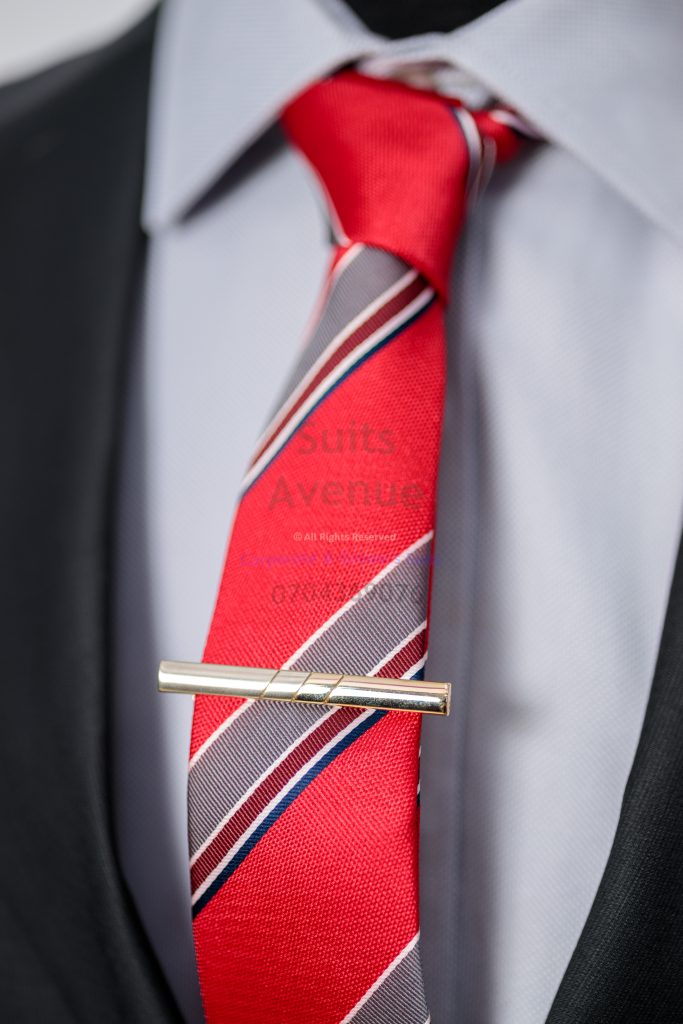
For most job interviews in Kampala, wear a well-fitted navy or charcoal suit with a white or light-blue office shirt, a simple tie, polished leather shoes and a matching belt. Navy is usually the safest first choice because it looks professional without feeling too severe. Charcoal is ideal when the role calls for a more serious, senior or formal appearance.
Your interview outfit should not be the loudest thing in the room. Its job is to show preparation, good judgment and respect for the opportunity. Correct fit, calm colours and clean shoes matter more than flashy details.
This guide explains how to choose a job interview suit in Kampala, match the shirt, tie and shoes, plan your budget and avoid mistakes that can weaken an otherwise strong first impression.
What is the best job interview suit colour?
Navy is the best all-round interview colour for most men. It works for banking, telecom, government, NGO, legal, sales, management and graduate interviews. It also remains useful after the interview for office work, meetings, weddings and church.
Charcoal is the second strong choice. It communicates calm authority and works especially well for finance, law, senior management, government and formal corporate settings.
| Suit colour | Best for | Recommended combination |
|---|---|---|
| Navy | Most industries and career levels | White or light-blue shirt, navy or burgundy tie, black or dark-brown shoes |
| Charcoal | Formal, technical, financial and leadership roles | White or light-blue shirt, navy or grey tie, black shoes |
| Mid-grey | Creative, consulting and less formal offices | White or pale-blue shirt, navy tie, black or brown shoes |
| Black | Very formal roles or organisations where black is standard | White shirt, restrained tie, black shoes |
Black is not automatically wrong, but it can look more suited to evening events, security work, funerals or highly formal functions. When you are uncertain, navy or charcoal is easier to use correctly.
Should you choose a wool blend or 100% wool suit?
Choose a wool blend suit when you need strong value, durability and a professional outfit that can continue serving you after the interview. Wool blend suits cost UGX 400,000–800,000.
Choose a 100% wool suit when you want a more refined drape and premium finish for senior interviews, leadership roles or regular formal use. 100% wool suits cost UGX 800,000–2,000,000.
Fabric alone does not create a strong interview look. The suit must sit correctly on your body. Read our guide to choosing wool suits in Kampala for more detail on fabric weight, fit and office colours.
How should an interview suit fit?
A suit that is too tight can look forced. A suit that is too large can make you look unprepared. Check these five areas:
- Shoulders: The jacket shoulder should end where your natural shoulder ends, without dents or overhang.
- Jacket closure: The jacket should button without strong pulling lines across the front.
- Sleeves: A small amount of shirt cuff should show when your arms rest naturally.
- Waist and seat: The trousers should remain clean without squeezing or hanging loosely.
- Trouser length: The hem should meet the shoe neatly without heavy folds.
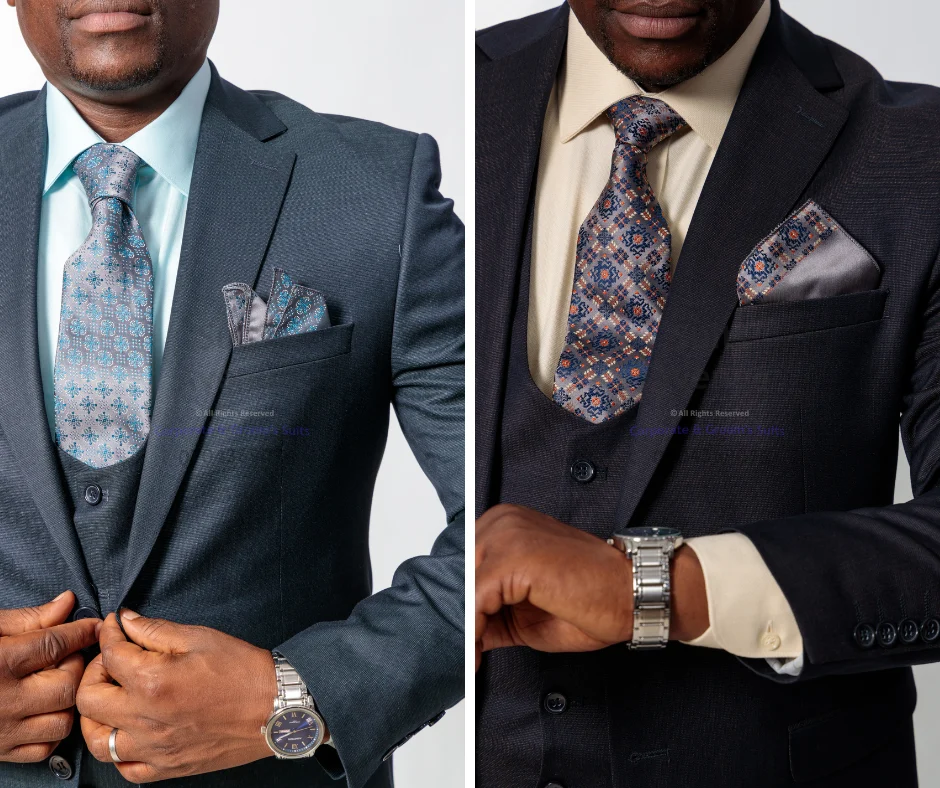
Choose slim or classic fit according to your body and comfort. The goal is not to force every man into the same cut. In-store designers should check the final fit while you stand, sit and move.
What shirt should you wear to an interview?
A white shirt is the safest formal option. It creates a clean contrast with navy, charcoal and grey suits. A light-blue shirt is also professional and can feel slightly softer, especially with a navy suit.
- Choose white for highly formal interviews or when you are uncertain about the dress code.
- Choose light blue for a polished but approachable appearance.
- Avoid loud prints, very bright colours and collars that collapse under the jacket.
- Make sure the collar closes comfortably and the sleeve reaches the wrist.
Office shirts cost UGX 180,000–250,000. Our office shirt guide for Kampala professionals explains fit, colours and pairing in more detail.
Do you need a tie?
When the organisation is formal or you do not know the dress code, a tie is the safer choice. Choose navy, burgundy, charcoal or a small restrained pattern. The tie should support the outfit, not demand attention.
Ties cost UGX 60,000–100,000. A simple navy tie works with both navy and charcoal suits. Burgundy adds controlled colour without looking loud.
What shoes should you wear to a job interview?
Black leather shoes are the safest formal option. They work with charcoal, black and navy suits. Dark-brown leather shoes can also work well with navy or mid-grey when the workplace is not extremely formal.
- Polish the shoes before the interview.
- Match a black belt with black shoes.
- Match a brown belt with brown shoes.
- Avoid sports shoes, damaged soles and colours that compete with the suit.
Leather shoes cost UGX 400,000–800,000. Belts cost UGX 50,000–150,000. Use our guide to matching leather shoes with suits for practical colour combinations.
Complete interview outfit examples
| Interview setting | Recommended outfit |
|---|---|
| Graduate or entry-level corporate role | Navy wool blend suit, white shirt, navy tie, black shoes and black belt |
| Banking, legal or finance role | Charcoal suit, white shirt, navy or burgundy tie, black shoes and black belt |
| Management or leadership role | Premium navy or charcoal 100% wool suit, white shirt, restrained tie and polished leather shoes |
| Creative or smart-casual workplace | Navy or mid-grey suit, light-blue shirt, optional simple tie and dark-brown shoes |
How much should you budget for an interview outfit?
| Outfit level | Includes | Estimated range |
|---|---|---|
| Professional foundation | Wool blend suit, office shirt, tie, leather shoes and belt | UGX 1,090,000–2,100,000 |
| Premium interview outfit | 100% wool suit, office shirt, tie, leather shoes and belt | UGX 1,490,000–3,300,000 |
You do not need to buy an outfit that you will never use again. A navy or charcoal suit should continue working for office days, meetings, church, weddings and other serious functions. See our complete professional wardrobe guide for a longer-term buying plan.
Interview outfit mistakes to avoid
- Buying the suit without checking how it looks while sitting and moving.
- Wearing a jacket that pulls strongly at the button.
- Using too many bright colours or large patterns.
- Wearing unpolished shoes or a belt that does not match them.
- Trying a completely new outfit for the first time on interview morning.
What should you do before interview day?
- Try on the complete outfit several days before the interview.
- Sit, walk and raise your arms to confirm comfort.
- Prepare the shirt, tie, belt, socks and shoes together.
- Polish the shoes and remove visible dust or marks.
- Leave enough travel time for Kampala traffic.
Frequently asked questions
Is a navy suit good for a job interview?
Yes. Navy is one of the safest interview colours because it looks professional, works across many industries and remains useful after the interview.
Can I wear a black suit to an interview?
You can, especially when the organisation is very formal or black is standard in that field. Navy or charcoal is usually more versatile when you are uncertain.
Should I wear brown shoes with a navy suit?
Dark-brown leather shoes can work well with navy. Choose black shoes when the interview is highly formal or conservative.
Where can I buy an interview suit in Kampala?
Visit Suits Avenue at Insurance House, across from Absa Bank, at the Kampala Road / Entebbe Road junction. The store carries original Turkish and Italian menswear, never copies, and in-store designers help with fit, colour and complete interview combinations.
Get fitted before the interview
The store is at the traffic lights. Free basement parking is available through the entrance opposite Cham Towers. Opening hours are Monday–Saturday, 7:00am–8:00pm, and Sunday, 9:00am–5:00pm.
Use Google Maps for directions. To confirm current sizes and colours, message the styling team on WhatsApp.
Call or WhatsApp: +256704369076. Come get fitted before the interview and choose a professional outfit you can continue wearing after the opportunity is won.
