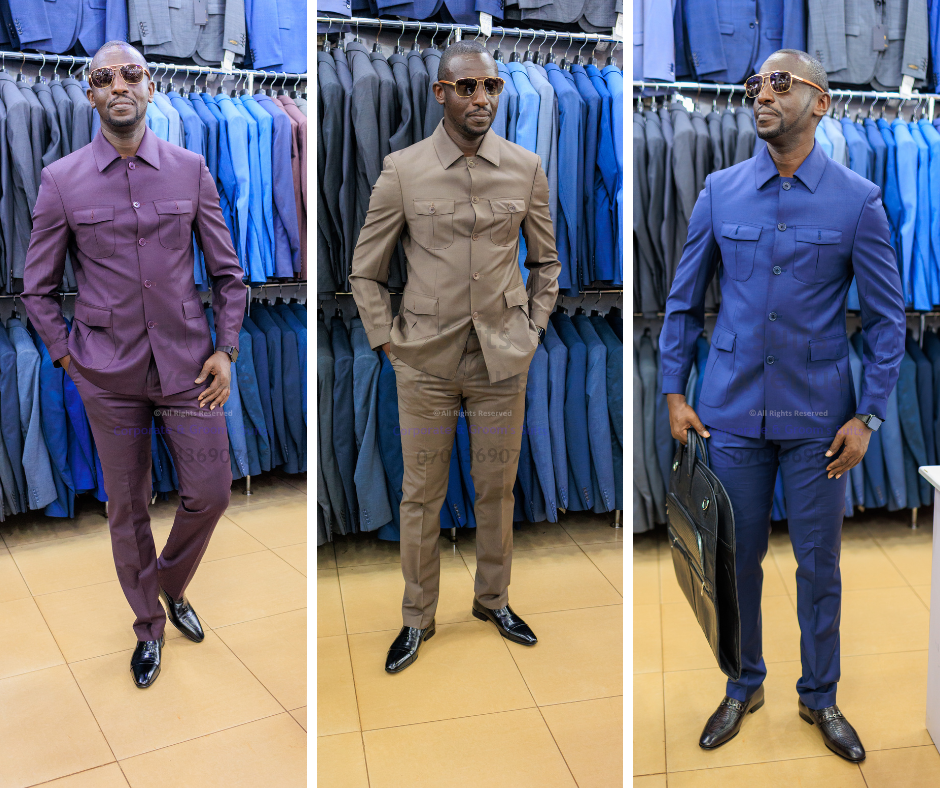
A Kaunda suit and a safari suit can look very similar, and many people use the names for the same type of coordinated outfit. Both normally include a shirt- or jacket-style top with matching trousers.
The main difference is how the terms are used. “Safari suit” is the older general name for a safari-style jacket and matching trousers. “Kaunda suit” is the African name commonly linked to the coordinated style popularised by Zambia’s first president, Kenneth Kaunda.
Because sellers and customers may use the terms differently, do not choose by name alone. Compare the collar, pockets, sleeves, fabric, fit and level of formality.

What is a safari suit?
A safari suit traditionally consists of a safari or bush-style jacket with matching trousers. Older designs often use practical details such as:
- Large patch or flap pockets
- A straight or open collar
- A belt or shaped waist
- Short sleeves or rolled sleeves
- Khaki, tan, olive or other practical colours
The style developed from clothing used for travel and outdoor conditions. Modern safari suits may be more formal and may use darker colours, cleaner pockets and finer finishing.
What is a Kaunda suit?
A Kaunda suit is a matching top and trouser set named after Kenneth Kaunda, who helped popularise the style across Africa. Modern Kaunda suits may have short or long sleeves and can include stand collars, concealed fastenings, embroidery and formal finishing.
In Kampala, the term is often used for coordinated African formalwear worn to weddings, introductions, church, leadership functions and other important occasions.
Read what a Kaunda suit is, its features and how it is worn.
Are Kaunda suits and safari suits the same?
Sometimes. The two categories overlap, and there is no single naming rule followed by every tailor, store or country.
A useful practical distinction is:
- Safari suit: often more utility-inspired, with visible pockets and a relaxed or outdoor character.
- Kaunda suit: often more formal, coordinated and associated with African leadership and ceremonial dressing.
This distinction is not absolute. A garment may be advertised under either name. Inspect the actual outfit instead of assuming its features from the label.
Key differences to compare
| Feature | Kaunda suit | Safari suit |
|---|---|---|
| General character | Often formal or ceremonial | Often practical or smart casual |
| Top design | Clean shirt-style or jacket-style top | Safari or bush-style jacket |
| Pockets | May be hidden, small or decorative | Often larger patch or flap pockets |
| Collar | Stand, shaped, open or concealed front | Often open or shirt-style |
| Decoration | May include restrained embroidery | Usually relies more on pockets and structure |
| Common use | Weddings, introductions, church, leadership functions | Travel, smart casual, work or relaxed formal use |
Which one is better for a wedding?
A Kaunda suit is normally the clearer choice when the groom wants African formalwear, a coordinated entourage or a ceremonial design. The groom can use a distinct colour, embroidery, collar or sleeve style to separate himself from the groomsmen.
A clean safari suit can still work for an outdoor or relaxed wedding, especially when it uses a formal fabric and controlled pocket design. Avoid a heavily utility-based look when the ceremony is highly formal.
See the complete guide to Kaunda suits for weddings in Kampala.
Which one is better for business?
For a leadership function or professional event, choose the cleaner and more restrained garment, regardless of the name.
Navy, charcoal, black and dark grey are dependable. Limit embroidery and oversized pockets. Long sleeves can create more structure, while a well-fitted short-sleeve design can work where African formalwear is accepted.
Which one is better for church or introductions?
Both can work. For church, choose a respectful colour and restrained detail. For introductions, a Kaunda suit often gives more ceremonial presence and can be coordinated with family or event colours.
The occasion should decide the design. Do not wear a heavily pocketed casual safari suit to a formal ceremony simply because the top and trousers match.
Short sleeves vs long sleeves
Short sleeves
Short sleeves can suit daytime events, outdoor functions and more relaxed settings. Check that the sleeve opening sits neatly and the shoulders remain structured.
Long sleeves
Long sleeves create more formality for weddings, leadership functions, evening events and church ceremonies. The cuffs should reach the wrist without covering the hand.
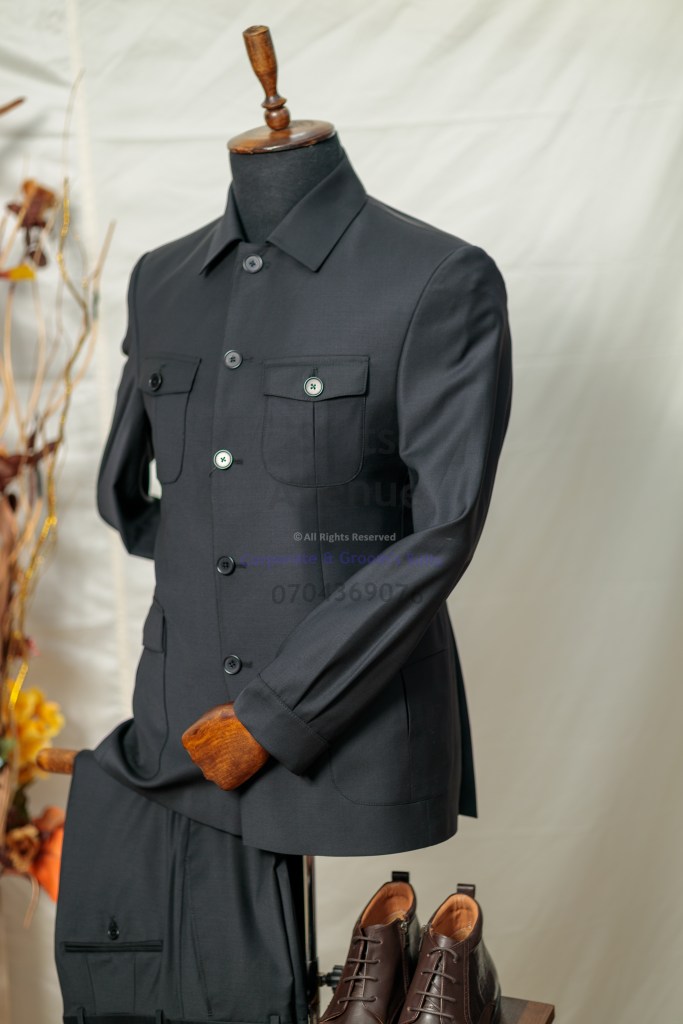
How should either outfit fit?
The shoulder seam should sit close to the natural shoulder. The top should close without pulling across the chest or stomach. It should cover the waistband and remain balanced with the trousers.
Trousers should sit comfortably, fall cleanly through the thigh and break neatly over the shoe. Slim fit should follow the body without restricting movement. Classic fit should provide room without appearing oversized.
What fabrics are used?
Fabric composition varies. A Kaunda suit or safari suit may use wool, a wool blend, cotton or another woven material. The name does not prove the material.
Check the label and ask the designer to confirm the composition of the exact outfit. Fabric weight, lining and fit affect comfort in Kampala’s warm weather.
How do you style the outfit?
Both styles normally work without a tie because the matching top is the main garment.
- Choose black shoes for black, charcoal, navy and other formal dark colours.
- Choose brown or tan shoes for cream, brown, light grey and selected navy outfits.
- Use one simple watch and limited jewellery.
- Match the belt to the shoe when the belt is visible.
- Wear a clean undershirt that does not show above the collar.
Read how to match leather shoes with suits in Kampala.
How to decide between them
Ask these questions:
- Is the occasion formal, ceremonial, professional or relaxed?
- Do I want clean formal lines or a stronger pocketed safari look?
- Will I wear the outfit again after the event?
- Does the colour work with my shoes and other wardrobe items?
- Does the exact garment fit correctly when I sit and move?
For a wedding or introduction, a formal Kaunda design is often the safer choice. For relaxed work, travel or smart-casual use, a safari-style design may be more practical.
Where to compare Kaunda and safari suits in Kampala
For broader help with styles, colours and fit, read the complete guide to Kaunda suits in Kampala.
Suits Avenue carries original Turkish and Italian menswear, never copies. In-store designers help customers compare fit, fabric, sleeve style, colours and footwear according to the occasion.
Location: Insurance House, across from Absa Bank, Kampala Road / Entebbe Road junction, Kampala, Uganda.
Parking: Free basement parking; entrance opposite Cham Towers.
Hours: Monday–Saturday 7:00am–8:00pm. Sunday 9:00am–5:00pm.
Call or WhatsApp: +256704369076
Frequently asked questions
Is Kaunda suit another name for safari suit?
It can be. The terms overlap, but “Kaunda suit” often refers to a cleaner African formal version of the wider safari-suit style.
Which outfit is more formal?
A modern Kaunda suit is often treated as more ceremonial, but the exact fabric, colour, pockets, sleeve style and fit determine formality.
Can I wear either one to a wedding?
Yes. Choose a clean, formal design. The groom should have one clear difference from the entourage.
Are all Kaunda or safari suits made from wool?
No. Materials vary. Confirm the composition of the exact outfit.
Do you wear a tie with them?
Usually not. The coordinated top replaces the normal shirt-and-blazer combination.
Visit today and compare the actual garments rather than choosing by name alone. Call or WhatsApp +256704369076.

2 thoughts on “Kaunda Suit vs Safari Suit: What Is the Difference?”