🤵Everything about suits🤵

Introduction:

Hello everyone, thank you for reading this weeks edition of Suits Avenue’s blog! Today we are going to go over the complete guide to suits! The table of contents is below, feel free to scroll around or  read the whole thing!! Stop on in the store today for all your suit needs!

Table of Content:

  • The fit
    • Shoulders
    • Pant bottoms
    • Jacket Collar
  • Button Rules
  • Types of Suits
    • Single breasted
    • Double breasted
  • Seeing the quality
    • 100% wool
    • The lining
    • The stitching
    • Details
    • Colors
  • The pinch test
  • Properly storing your suit
  • Cleaning & maintaining your suits
  • Folding your suits
  • Conclusion

The Fit:

When you try on a suit, try to stand in your “Natural stance” this would be how you stand the most often. Just let your body stand natural, your muscle memory will help you with this. 

You don’t want the suit to be too loose or too tight, pay extra attention to where your major joints are (Elbows, Shoulders, Hips, Knees, Etc.) If the clothes are too tight you won’t be able to use your full range of motion. If the clothes are too loose, they will be baggy and bunch up in those main key places. You also don’t want the sleeves to pass your wrist too far or the pants to be so long the fabric goes underneath your shoes.

Italian and Turkish Suits

Click here to read more about  our new suits, blazers, & ties! 
Suits Avenue Shoulders first

Shoulders-

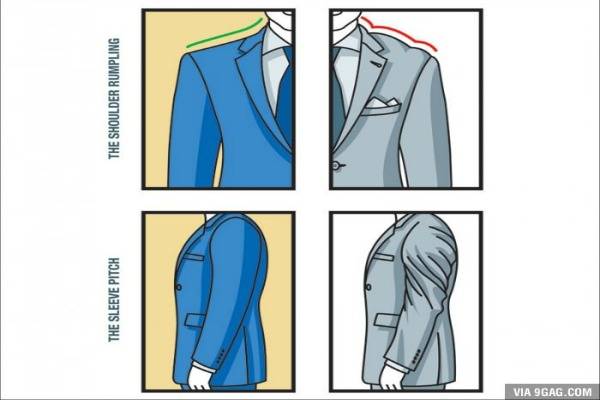
A well-fitted shoulder lies flat. The seam on top of the shoulder should be the same length as the bone under it, and should meet the sleeve of the suit right where your arm meets your shoulder.

If the seam that connects the sleeve to the jacket is hiked up along your shoulder bone, or dangling down on your upper bicep, the jacket is never going to sit properly. In these instances, you’ll see “ripple effects” that create lumps or wrinkles on the sleeve and the top of the jacket. If you can’t move your arms well, or if you cannot pinch just the jacket, it is too small. If the shoulder seam of the jacket is below your shoulder, or the sleeves run farther than 1/2 an inch past your wrist than the jacket is too big.

The shoulder divots will appear on your arms, usually on your biceps if the jacket is too small. The perfect fit jacket will not have any creases.

Click here to read our leather shoe guide!

Pant Bottoms-

The trouser break is the bottom of your pants, below the pants cuff. Pants have a couple signs of them being too big or too small. Sometimes the most obvious one is the trouser break, they should rest slightly on the top of your shoes.  If it doesn’t go to the top of your shoes it is too small, and if it goes below the middle of your heel it is too big. You don’t want your pant bottoms to drag on the ground, you will step on them, they will rip and tear and it looks tacky. Looking Tacky isn’t ideal when wearing a suit!

Jacket Collar-

The jacket collar should rest easily on the back on your neck and shoulders. If it hangs farther back, or is bunched up causing “ripples” behind your neck, the jacket is too big. If it is tight and has little scrunches the jacket is too small. 

When your jacket is buttoned make sure it isn’t making an “x” as shown above. This means the jacket is too tight! It is pulling all the extra fabric it can find to make the button fit.

Click here to read about being the BEST best man 

Button Rules-

  • The one-button single-breasted suit jacket: Generally used on a tuxedo. These jackets are suited to lean men and worn for black tie events. They are not versatile.
  • The two-button single-breasted suit jacket: Is one of the most classic looks in men’s fashion. This style of suit looks good on all body types.
    The cut of the suit makes just about every man’s frame look longer. Two-button suits are great for both social and business events.
  • The three-button single-breasted suit jacket: Because of the arrangement of the buttons – three button suit jackets suit taller men.

A word on the rules of buttoning a single breasted jacket:

  • One button: Always closed except when sitting.
  • Two buttons: Use the top one and leave the second button undone.
  • Three buttons: Button the center and top ones and leave the third button undone.

Never button the bottom button of a suit jacket.

Types of Suits:

Imported Boys Blazers

Single Breasted:

A single–breasted shirt or jacket has a narrow overlap and only one column of buttons. Single-breasted suit jackets and blazers typically have two or three buttons (jackets with one or four buttons are less common), and a notch lapel.

Double Breasted:

A double–breasted garment is a coat, jacket, or vest with wide, overlapping front flaps which has on its front two symmetrical columns of buttons. Double-breasted suits have a more sophisticated look.

Seeing the quality in your suit:

100% Wool:

The first sign to look for regardless of where you buy your suit from is the fabric quality.  The only words you want to see are “100% Wool.” If you do not recognize the name of the fabric it is being made of or if it is a concoction of multiple different fabrics, RUN! If you buy something with multiple different fabrics together the chances are it is going to fall apart quickly and last you about 1 nice event… maybe 2.

Click here to read all about wool!

The Lining:

Look at the lining- A fused lining that’s held together with glue is about as bad as going for a $99 polyester suit. The cheapest quality suits will have a fused lining. The highest quality suits will have a full canvas or at least a half canvas.

Stitching:

Check out the stitching- The ability for mass-manufacturers to replicate what used to be hallmarks of a custom suit has never been greater. With that said, you still want to examine the quality of the craftsmanship and look to see how the suit comes together.

You do not want a suit with jagged, loose, crooked stitching. If the stiching is messy and loose it was probably made quickly and it will not last very long. If you are in a tight spot and can’t afford a high quality suit, just make sure to be careful. Cheaper suits will not last going to the dry cleaners.

PAY ATTENTION TO THE DETAILS:

 From the way the pockets come together, to the drape, the buttonholes, and the boutonniere loop. Each of these small details often have the biggest impact when it comes to how you look. Machine-sewn pockets aren’t as sturdy and will wear quickly when utilized. Stiff lapels without a slight roll are a hallmark of a cheap suit. Plastic buttons can break, and even horn buttons that use plastic anchors can fall off in the middle of your board meeting.

PAY ATTENTION TO HOW IT WAS COLORED:

The last thing you want is to leave the store with a great navy suit and have it look four shades of blue by next summer. Look at the design. How is it dyed? Is it even and are the colors vivid? Will they fade? Is the pattern perfectly done across the suit, or are they misaligned where the fabric was cut?

Bottom line: look closely and pay attention.

Click here to read about seeing quality in your suit!  

HOW TO TELL A CANVASSED VS. FUSED JACKET – THE “PINCH TEST”

It’s easy to check whether the suit jacket you’re looking at is fused or canvassed. Simply pinch the chest fabric and lining between the fingers of each hand and pull them apart slightly. If it’s canvassed, you should be able to feel three distinct layers: the outside fabric, the canvas, and the lining. If it’s fused, you’ll only feel two layers. To distinguish between Full and Half Canvassing, perform the same pinch test down by the buttons.

Click here to read about matching a suit and a tie.

How to Store your suits:

Rotate:

If you wear the same suit every day, all day long it will never give the fibers time to relax or air out. It will always stay loose and never have the great “first fit” like it did when you first bought it.

Round, wood hanger:

Using round, wood hangers will give the suit enough space for air to flow through and getting the smells of your every day out. It also helps keep the suit fitting nice and tight. The rounded edges mock the shoulder make so it won’t stretch the suit out, only create enough space for it to relax in the natural form.

Cover it up:

When you aren’t wearing the usit, it should be on the wood hanger as discussed earlier, as well as in an appropriate suit bag. This will keep any bugs or dust from getting into the bag or onto your suit. It also protects it from any unfortunate events that may happen, and makes it easier to travel with. 

How to Clean/Maintaine your suits:

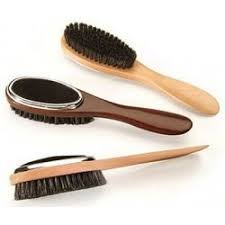
Brush your suit with a clothing brush:

This will extend the natural fibers in the suit, allowing it to last longer. It also helps keep the fibers up allowing it to breathe more and not hold in strong odors from the day.
Roll your suit:

Do this after brushing it. Rolling your suit will grab any loose fabric pieces or hair stuck on your suit. It is a little extra step that takes your look a long way!

Steam your suit regularly:

Steaming your suit opens up the fibers, removes stains and marks, as well as the smells from throughout the day. Dry ironing your suit will push the fibers down trapping all stains and stenches, so try to avoid ironing your suits!

Avoid the dry cleaners:

Dry cleaners shorten the lifespan of suits. They use strong chemicals to treat the suits so they are clean. It is only necessary to take your suit to the dry cleaners if you absolutely cannot get the stain or smell out of your suit by brushing it, airing it, or steaming it.

How to fold your suit:

Step one:

Lay the suit face down on a flat surface with the front up.

STEP 2

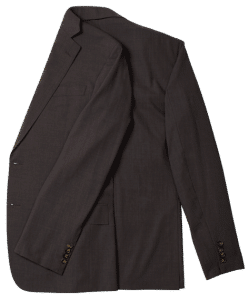
Flip the jacket over and fold the left shoulder back. towards the right.
STEP 3:

Turn the right shoulder inside out, then tuck left shoulder into the right.

STEP 4: 

Fold it in half lengthwise,  then fold it horizontally.

STEP 5: 

Place the folded jacket in the center of the outstretched trousers.

STEP 6:

Fold the trouser bottoms over the jacket and repeat with the top of the trousers.

Conclusion:

Thank you for reading our whole blog! Today we wen’t over the in’s and out’s of owning a suit. We talked about the different types, how they should feel if they fit correctly and how to clean, store, and fold the suits! Following all of these steps doesn’t mean your suit will last forever, but it will help extend the lifetime of your suit! If you have any other questions or have a request for what type of blog you’d like to read next, please leave us a message below and we will get it taken care of for you! 🙂

“THEY HELPED ME MATCH SHIRT AND TIE… I FEEL CONFIDENT.”
MUGISHAAttoreny
“THESE GUYS ARE THE BEST IN TOWN, REAL REAL IMPORTED CLOTHES”
KITAKUYIOffice
I am slide content. Click edit button to change this text. Lorem ipsum dolor sit amet, consectetur adipiscing elit. Ut elit tellus, luctus nec ullamcorper mattis, pulvinar dapibus leo.
John DoeCEO
30 days before wedding Suits Avenue saved my neck, QUALITY and customer care
RobertCEO
The gals made look smart for my job interview..AND i won the position…Thx Suits Avenue
SimonEmployeed

Find us, Follow us, and like us on FACEBOOK for latest fashion Trends…


Facebook

Click and SHARE…We would love to help your friends look smart…🕺💃 

If you have any questions

Our Blogs on Fashion…

✅ Making sure your Suit matches✅

Introduction:

Hello! Welcome to Suits Avenue’s blog! Today we are going to go over all of the fundamentals of putting your outfit together! We will go over everything in the outfit. From your socks and shoes, to your ties and cuff links, and everything in between! Check out the table of contents below to see our general overview! Check out the links, pictures, and videos through out the blog as well! 

Table of Contents:

  • General Tips
  • Jacket & Bottoms
  • Matching your shirt
  • Adding in a tie
  • Pocket Square
  • Socks
  • Bring on the shoes

General Tips:

  • Don’t go crazy with color. If you haven’t experimented with color before then stick with less intense colors like your Blues, Blacks, and Greens before expanding into bolder, brighter colors.
  • Understand color scheme. A simple way to keep track of color to pair lighter and darker versions of the same color. This is a monochromatic color scheme and its a simple way to add some flair to your look. Another color scheme involves pairing colors that fall next to each other on the color wheel, such as wearing a dark purple shirt with a blue tie. On the other end you could also pair colors that fall completely opposite each other on the color wheel, such as a blue shirt and a red tie, a classic look that provides great visual contrast.
  • Be careful with patterns. You don’t need to be scared of patterns and now that you have a better understanding of color, adding a pattern to your wardrobe is the next logical step. There are many different options – shirt and tie with a pattern, solid tie and patterned shirt, etc. – but the one rule of thumb to have when using multiple patterns is to vary the proportions of each design.If you decide you want patterns you need to keep these things in mind:
    1. Pattern- The pattern shouldn’t be too distracting. The pattern on your shirt should not be the same pattern on your tie.
    2. Size- The size of your patterns should not be the same. Go with a bigger pattern on your shirt and a smaller pattern on your tie, or vice-versa.

    If you decide to go with patterns keep in mind they should ALWAYS vary in size and design.

Jacket & Bottoms:

First, we are going to start with the basics! Every suit needs a jacket and bottoms! Of course, you can always play it safe by having them be the same color, or you can venture out of your bubble! We will give some great examples and help give you confidence as you pick out your outfit for the day! You can have a dark version of a color jacket and a light version of the same color as your pants, or vice-versa! Dark neutrals (first picture) scream confidence. As long as you follow those few rules and don’t use extreme colors, you really can’t go wrong.

Once you have your pants and jacket, we can move onto your shirt!

Shirt:

A classic white shirt will never fail and it sits with all suit colors and tones. Lilac and purple are just two tones that work well with grey or navy suits, while soft greys and periwinkle are great choices with black or charcoal. You can always play it safe by keeping things neutral!

Now that you have a matching jacket, bottoms, and shirt…we move onto the tie!

Click here to learn how to see the quality in your suit before you buy it!

Tie:

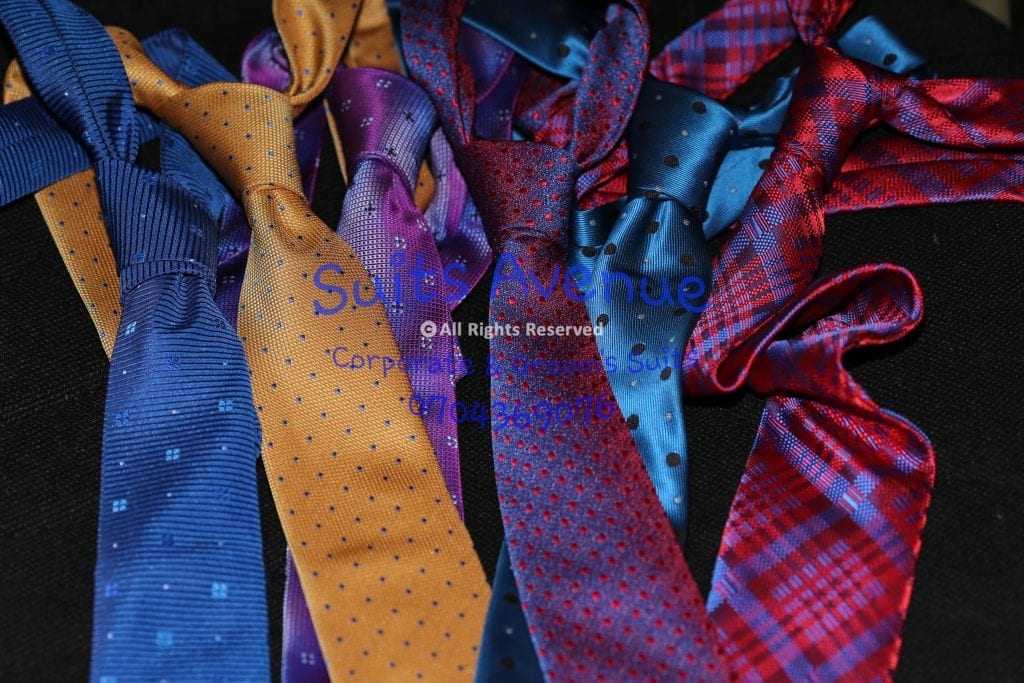
There are so many colors, fabrications, patterns and textures, but it doesn’t have to be this way. Once you’ve confirmed the general dress code of the event, identify the overall  color: your tie should, ultimately, complement the dominate shade with an overall color or patter. Try matching a rich blue tie with a sky-blue shirt and dark navy suit for a tonal look, or a red tie for some color-pop and contrast. If you’re wearing grey, stick with muted tones such as brown or burgundy, or choose a black tie for a sharp salt-and-pepper effect. 

Try to avoid any pairings that invoke thoughts of a specific holiday; while it is possible to pull off such combos, it’s a delicate balancing act that can come across as costumey as opposed to polished and sophisticated. 

If your occasion is more than business casual, than you should also have a pocket square in your jacket pocket.

Pocket Square:

For most cases, your pocket square should match your tie. You don’t want to have too many colors and patterns going on or you will just look like a hot mess instead of hot. If you choose to venture out, it is important that the color should complement either the shirt or tie. The safest option is to pair a white shirt with a white pocket square. For a more advanced approach, look for a patterned pocket square where the secondary color matches the tie, or go tonal with a subtle change of shade between the shirt, tie and square.

Click here to read about keep your suit clean!

Socks:

Classic dressers should opt for black, burgundy, or dark grey socks. Of course, you can always play it safe and have your socks match your jacket and bottoms, shirt, or your tie and pocket square!

Shoes:

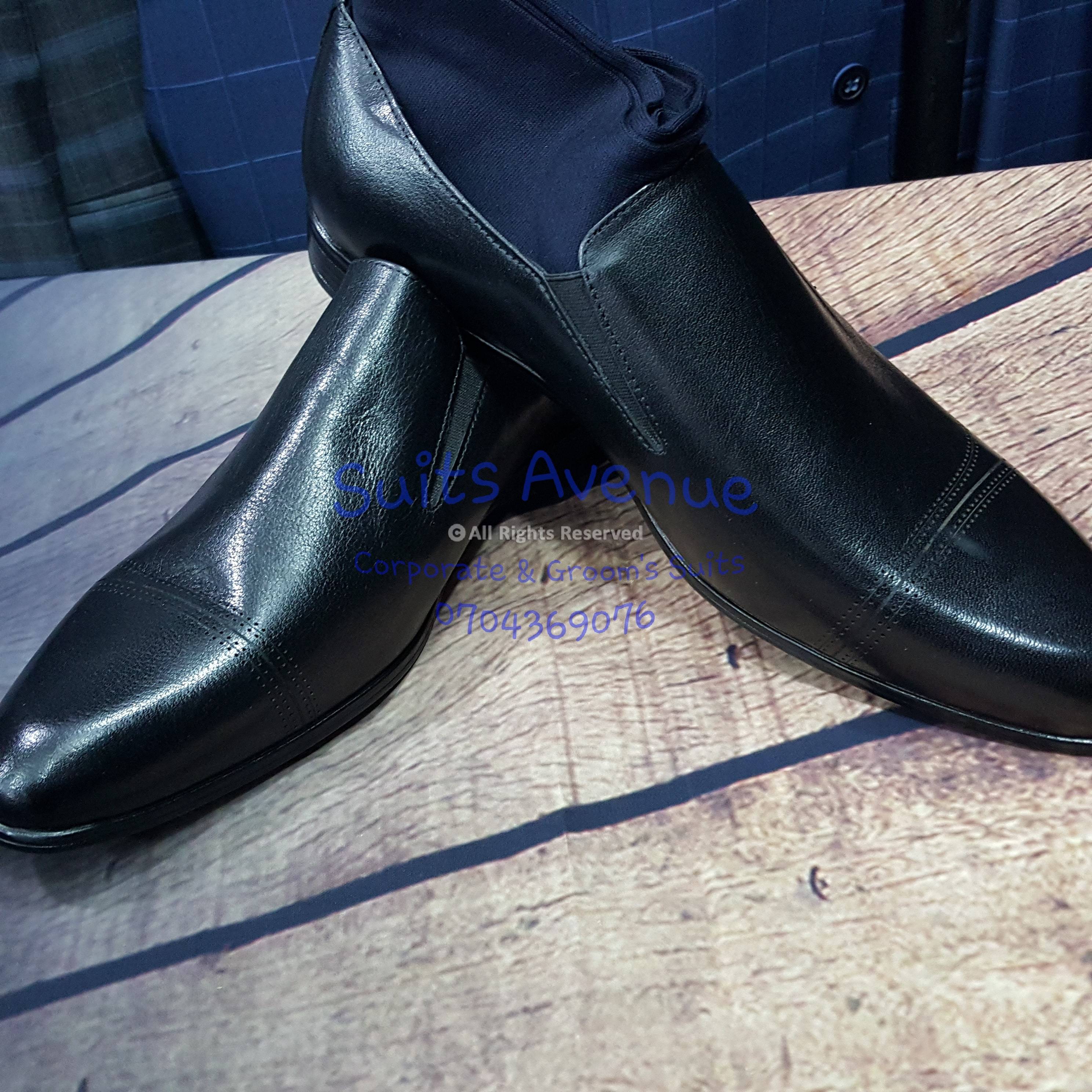
Always wear black shoes with a black suit and recycle them for deep navy business suits when you have a day in the boardroom. Chocolate brown shoes will work with your staple navy and grey tailoring. Our advice, keep it simple. Stick to the neutral colors, black, white, brown, and grey.

Click here to read about leather and leather shoes!

Cuff Links:

Once you’ve got the main show sorted, it’s onto the supportting acts. Some  accessories, like cufflinks, can lift a look from standard to headliner – providing you pick the right ones. When wearing a white shirt, you can experiment with any color, pattern or shape cufflinks, unless you’re in a strict formal environment. Gold designs really stand out against a light blue or navy shirt, while black onyx is better suited to black tie

Conclusion:

Hopefully, after reading this blog you feel more confident going out dressed up! Make sure to click the links within the blog! If you take good care of your suit, keeping it clean, you can add YEARS onto your suits life! Fill out the form below or come into the store if you have any questions!

“THEY HELPED ME MATCH SHIRT AND TIE… I FEEL CONFIDENT.”
MUGISHAAttoreny
“THESE GUYS ARE THE BEST IN TOWN, REAL REAL IMPORTED CLOTHES”
KITAKUYIOffice
I am slide content. Click edit button to change this text. Lorem ipsum dolor sit amet, consectetur adipiscing elit. Ut elit tellus, luctus nec ullamcorper mattis, pulvinar dapibus leo.
John DoeCEO
30 days before wedding Suits Avenue saved my neck, QUALITY and customer care
RobertCEO
The gals made look smart for my job interview..AND i won the position…Thx Suits Avenue
SimonEmployeed

Find us, Follow us, and like us on FACEBOOK for latest fashion Trends…


Facebook

Click and SHARE…We would love to help your friends look smart…🕺💃 

If you have any questions
the form below.

Our Blogs on Fashion…

🤵🏿 How a Suit should fit! Before you buy💰

Welcome! To

Today we are going to talk about the way a suit should fit and what is best for different body types! Different styles of suits will fit on your body differently… and if your suit is just to big or just to small the whole look will be off and unprofessional! Check out our table of contents below to see what all we cover!

Table of Contents:

  • The Fit
  • The way shoulders should feel
  • The way pant bottoms should look
  • The Button Rules
  • The way a jacket collar should work
  • The way arm holes should feel and look.
  • Types of Suits

To really look well, make sure your jacket and pants match. 

The Fit:

When you try on a suit, try to stand in your “Natural stance” this would be how you stand the most often, just let your body stand natural, your muscle memory will help you with this.  Check out the major key points below to look at to really be sure before buying.

Italian and Turkish Suits

Click here to read more about  our new suits, blazers, & ties! 

Suits Avenue Shoulders first

Shoulders-

A well-fitted shoulder lies flat. The seam on top of the shoulder should be the same length as the bone under it, and should meet the sleeve of the suit right where your arm meets your shoulder.

If the seam that connects the sleeve to the jacket is hiked up along your shoulder bone, or dangling down on your upper bicep, the jacket is never going to sit properly. In these instances, you’ll see “ripple effects” that create lumps or wrinkles on the sleeve and the top of the jacket. If you can’t move your arms well, or if you cannot pinch just the jacket, it is too small. If the shoulder seam of the jacket is below your shoulder, or the sleeves run farther than 1/2 an inch past your wrist than the jacket is too big.

The shoulder divots will appear on your arms, usually on your biceps if the jacket is too small. The perfect fit jacket will not have any creases.

Pant Bottoms-

The trouser break is the bottom of your pants, below the pants cuff. Pants have a couple signs of them being too big or too small. Sometimes the most obvious one is the trouser break, they should rest slightly on the top of your shoes.  If it doesn’t go to the top of your shoes it is too small, and if it goes below the middle of your heel it is too big. You don’t want your pant bottoms to drag on the ground, you will step on them, they will rip and tear and it looks tacky. Looking Tacky isn’t ideal when wearing a suit!

Button Rules-

  • The one-button single-breasted suit jacket: Generally used on a tuxedo. These jackets are suited to lean men and worn for black tie events. They are not versatile.
  • The two-button single-breasted suit jacket: Is one of the most classic looks in men’s fashion. This style of suit looks good on all body types.
    The cut of the suit makes just about every man’s frame look longer. Two-button suits are great for both social and business events.
  • The three-button single-breasted suit jacket: Because of the arrangement of the buttons – three button suit jackets suit taller men.

A word on the rules of buttoning a single breasted jacket:

  • One button: Always closed except when sitting.
  • Two buttons: Use the top one and leave the second button undone.
  • Three buttons: Button the center and top ones and leave the third button undone.

Never button the bottom button of a suit jacket.

Click here to read more about how to see the quality in your suit! 

Jacket Collar-

The jacket collar should rest easily on the back on your neck and shoulders. If it hangs farther back, or is bunched up causing “ripples” behind your neck, the jacket is too big. If it is tight and has little scrunches the jacket is too small. The problem is when you stand, most jackets look good, the issue starts when you start moving when you lift your arms and you still want that jacket collar to sit tight against your shirt collar. So your natural movements, sit down, move your arms, drink something from a bottle, maybe eat, and if it stays in the back and it stays by your shirt tips, you know you’ve got a well-fitting collar.

When your jacket is buttoned make sure it isn’t making an “x” as shown above. This means the jacket is too tight! It is pulling all the extra fabric it can find to make the button fit.

Armholes

Most armholes in suits are too big because suits are industrially made and they want to have a one size that fits it all, the problem is if you have huge arm holes, it may seem like it’s more comfortable but it actually isn’t because as soon as you move, your entire jacket moves with you and constricts you. On the other hand, if you have a tight armhole that ends just below your armpit, you can easily move and comfortably wave for a cab and look dapper all day without feeling constricted. If you have an armhole that is too small, you’ll see wrinkles on the sleeve head and it also constricts you when you reach forward because you reach a point here that just makes it impossible to reach forward.

Types of suits-

Imported Boys Blazers

Imported Boys Blazers

A single–breasted item has a narrow overlap and only one column of buttons. 

A double–breasted garment is a coat, jacket, or vest with wide, overlapping front flaps which has on its front two symmetrical columns of buttons. Double-breasted suits have a more sophisticated look.

A lounge suit is basically just a little looser. It is more of a hipster look, you’d wear this to class after stopping and studying for your test at Starbucks drinking a cappuccino.

Italian and Turkish Suits

Business suits are usually a navy blue or a shade of grey, but sometimes on a more serious note they are black. 

Your suit should fit correctly of course, but the color also plays a huge roll in how serious or not you look.

 In a Mandarin collar suit – the collar is a short unfolded stand-up style on a shirt or jacket. … The edges of the collar either barely meet at the center front or overlap slightly. They are usuallly worn by someone with a religious education or responsibility. 

Click here to read more about  how to dress your wedding party!

Italian and Turkish Suits

Wedding suits are commonly known as Tuxedos. Tuxedos are considered evening wear, and if you’re having a brunch or daytime wedding, a suit will be more appropriate. If your wedding starts during the day but ends in the evening, either a suitor a tuxedo will make a fine choice. If the wedding or event is in the evening a tuxedo is a fancy and fine way to make your way into the spot light and impress all.

A dinner suit is also commonly known as “The Black Tie Dress Code” This just means you are dressing up to feast with your friends

Click here to learn more about caring for your clothes!

Conclusion-

In this blog we talked about the main different types of suits and how they should rest on the main parts of your body. Following these tips will help you feel more confident in the way your suits feels and fits!
If you still have more questions feel free to come into the store and one of the girls would love to help you!
“THEY HELPED ME MATCH SHIRT AND TIE… I FEEL CONFIDENT.”
MUGISHAAttoreny
“THESE GUYS ARE THE BEST IN TOWN, REAL REAL IMPORTED CLOTHES”
KITAKUYIOffice
I am slide content. Click edit button to change this text. Lorem ipsum dolor sit amet, consectetur adipiscing elit. Ut elit tellus, luctus nec ullamcorper mattis, pulvinar dapibus leo.
John DoeCEO
30 days before wedding Suits Avenue saved my neck, QUALITY and customer care
RobertCEO
The gals made look smart for my job interview..AND i won the position…Thx Suits Avenue
SimonEmployeed

Find us, Follow us, and like us on FACEBOOK for latest fashion Trends…


Facebook

Click and SHARE…We would love to help your friends look smart…🕺💃 


If you have any questions

🤵🏾 See the quality before you buy!🤵🏾

Introduction:

Today we are going to talk about HOW you can see the quality of your suits!! 

Suits are a big investment, and with the right material and a little extra money, they can last as long as 20 years!!! If you follow these simple steps we are going to share with you today, you can add years, even DECADES onto your suit! For those of you who wear them often: You know how pricey they can get! As we tackle the different signs of a good quality suit, don’t forget the upkeep is just as important!

Check out the table of contents below to see what we cover today!

Table of Contents:

Click here to learn how to take care of your suit, and when to clean it.


Click here for Special FREE offer with purchase…

The Label:

The first sign to look for regardless of where you buy your suit from is the fabric quality.  The only words you want to see are “100% Wool.” If you see a bunch of different types of fabric, then it can’t be good quality. When there are many different fabric pieces, there is a higher chance of them falling apart. If it is all wool, then you know it is good quality. 

Click here to read ALL ABOUT WOOL

Look at the lining-

A fused lining that’s held together with glue is about as bad as going for a $99 polyester suit. The cheapest quality suits will have a fused lining. The highest quality suits will have a full canvas or at least a half canvas.

While suits can be expensive, it may be best to get the pricier one. If you buy the more expensive one you can take proper care of it and it can last YEARS.

Click here to read about proper care and storage for suits.

Check out the stitching-

The ability for mass-manufacturers to replicate what used to be hallmarks of a custom suit has never been greater. With that said, you still want to examine the quality of the craftsmanship and look to see how the suit comes together.

You do not want a suit with jagged, loose, crooked stitching. If the stiching is messy and loose it was probably made quickly and it will not last very long. If you are in a tight spot and can’t afford a high quality suit, just make sure to be careful. Cheaper suits will not last going to the dry cleaners.

Click here for the complete suits guide!

PAY ATTENTION TO THE DETAILS:

 From the way the pockets come together, to the drape, the buttonholes, and the boutonniere loop. Each of these small details often have the biggest impact when it comes to how you look. Machine-sewn pockets aren’t as sturdy and will wear quickly when utilized. Stiff lapels without a slight roll are a hallmark of a cheap suit. Plastic buttons can break, and even horn buttons that use plastic anchors can fall off in the middle of your board meeting.

PAY ATTENTION TO HOW IT WAS COLORED:

The last thing you want is to leave the store with a great navy suit and have it look four shades of blue by next summer. Look at the design. How is it dyed? Is it even and are the colors vivid? Will they fade? Is the pattern perfectly done across the suit, or are they misaligned where the fabric was cut?

Bottom line: look closely and pay attention.

The Fit:

It’s all about the perfect fit. The fit of your suit is arguably the most important aspect of a good quality men’s suit. It’s also the aspect with the most impact on how your suit looks and feels on you. Ask yourself, if the suit doesn’t fit you perfectly, why buy it?

After all, it’s not a cheap purchase. Off-the-rack suits use a “standard sizing,” which is a sort of one-size-fits-all approach to suiting that uses only chest size and jacket length to determine your “ideal” fit.

What about other factors like:

  • Sleeve length
  • Sleeve and trouser circumferences
  • Crotch length

In addition to the above, what about your posture, and the shape of your shoulders? The list goes on. Your body is a unique shape and size so even if you think off-the-rack sizing is ok for you, there will always be one area of fit that’s not quite right.

Getting the perfect suit fit is a game of inches… well 1/4 inches actually! A good quality men’s suit is one that’s made to your exact body measurements. Period.

Click here to read more about different fittings of suits.

The Construction:

The Construction of your suit should be “Half Canvassed” or “Fully Canvassed” and not “Fused.” One of the key differences between premium and low quality suit jackets is their construction. The chest of any jacket should be constructed of three (3) layers of material:

  • The fabric on the outside of the coat
  • The lining that makes up its inside
  • A layer of canvassing in between that gives the coat its shape

HOW TO TELL A CANVASSED VS. FUSED JACKET – THE “PINCH TEST”

It’s easy to check whether the suit jacket you’re looking at is fused or canvassed. Simply pinch the chest fabric and lining between the fingers of each hand and pull them apart slightly. If it’s canvassed, you should be able to feel three distinct layers: the outside fabric, the canvas, and the lining. If it’s fused, you’ll only feel two layers. To distinguish between Full and Half Canvassing, perform the same pinch test down by the buttons.

Click here to read about matching a suit and a tie.

Imported Wool Suit

Lapels:

Make sure to check the lapels before purchasing a new suit! The stitching should be even and equal all throughout. The stitches should also be nice and tight, if they aren’t then it may fall apart easily and fast.


Cuff Links:

The wholes for the cuff links should be equally sized and not loose. You want to make sure the cuff link won’t fall out either.

Conclusion:

Today we explained when you’re buying a new suit, you need to look at the lapel, lining, stitching, details, coloring, fit, construction and a nice little pinch test to see if it quality!

Above is a guide to spotting a quality suit but it also important to mention how to care for and maintain the quality of these suits. Only then can one suit last you as long as you need it to, and only then will a collection of well kept suits be one of your greatest assets in the workplace.

WE WANT TO KNOW, WHAT YOU WANT TO READ!

“THEY HELPED ME MATCH SHIRT AND TIE… I FEEL CONFIDENT.”
MUGISHAAttoreny
“THESE GUYS ARE THE BEST IN TOWN, REAL REAL IMPORTED CLOTHES”
KITAKUYIOffice
I am slide content. Click edit button to change this text. Lorem ipsum dolor sit amet, consectetur adipiscing elit. Ut elit tellus, luctus nec ullamcorper mattis, pulvinar dapibus leo.
John DoeCEO
30 days before wedding Suits Avenue saved my neck, QUALITY and customer care
RobertCEO
The gals made look smart for my job interview..AND i won the position…Thx Suits Avenue
SimonEmployeed

Find us, Follow us, and like us on FACEBOOK for latest fashion Trends…


Facebook

Click and SHARE…We would love to help your friends look smart…🕺💃 

If you have any

🤵🏿 The complete suit guide🤵🏿

Introduction:

Hello everyone, thank you for joining Suits Avenue! Today we are going to go over the complete guide to suits! The table of contents is below, feel free to scroll around or just read the whole thing!!

Table of Content:

  • The fit
    • Shoulders
    • Pant bottoms
    • Jacket Collar
  • Button Rules
  • Types of Suits
    • Single breasted
    • Double breasted
  • Seeing the quality
    • 100% wool
    • The lining
    • The stitching
    • Details
    • Colors
  • The pinch test
  • Properly storing your suit
  • Cleaning & maintaining your suits
  • Folding your suits
  • Conclusion

The Fit:

When you try on a suit, try to stand in your “Natural stance” this would be how you stand the most often, just let your body stand natural, your muscle memory will help you with this. 

You don’t want the suit to be too loose or too tight, pay extra attention to where your major joints are (Elbows, Shoulders, Hips, Knees, Etc.) If the clothes are too tight you won’t be able to use your full range of motion. If the clothes are too loose, they will be baggy and bunch up in those main key places. You also don’t want the sleeves to pass your wrist too far or the pants to be so long the fabric goes underneath your shoes.

Italian and Turkish Suits

Click here to read more about  our new suits, blazers, & ties! 

Suits Avenue Shoulders first

Shoulders-

A well-fitted shoulder lies flat. The seam on top of the shoulder should be the same length as the bone under it, and should meet the sleeve of the suit right where your arm meets your shoulder.

If the seam that connects the sleeve to the jacket is hiked up along your shoulder bone, or dangling down on your upper bicep, the jacket is never going to sit properly. In these instances, you’ll see “ripple effects” that create lumps or wrinkles on the sleeve and the top of the jacket. If you can’t move your arms well, or if you cannot pinch just the jacket, it is too small. If the shoulder seam of the jacket is below your shoulder, or the sleeves run farther than 1/2 an inch past your wrist than the jacket is too big.

The shoulder divots will appear on your arms, usually on your biceps if the jacket is too small. The perfect fit jacket will not have any creases.

Pant Bottoms-

The trouser break is the bottom of your pants, below the pants cuff. Pants have a couple signs of them being too big or too small. Sometimes the most obvious one is the trouser break, they should rest slightly on the top of your shoes.  If it doesn’t go to the top of your shoes it is too small, and if it goes below the middle of your heel it is too big. You don’t want your pant bottoms to drag on the ground, you will step on them, they will rip and tear and it looks tacky. Looking Tacky isn’t ideal when wearing a suit!

Jacket Collar-

The jacket collar should rest easily on the back on your neck and shoulders. If it hangs farther back, or is bunched up causing “ripples” behind your neck, the jacket is too big. If it is tight and has little scrunches the jacket is too small. 

When your jacket is buttoned make sure it isn’t making an “x” as shown above. This means the jacket is too tight! It is pulling all the extra fabric it can find to make the button fit.

Button Rules-

  • The one-button single-breasted suit jacket: Generally used on a tuxedo. These jackets are suited to lean men and worn for black tie events. They are not versatile.
  • The two-button single-breasted suit jacket: Is one of the most classic looks in men’s fashion. This style of suit looks good on all body types.
    The cut of the suit makes just about every man’s frame look longer. Two-button suits are great for both social and business events.
  • The three-button single-breasted suit jacket: Because of the arrangement of the buttons – three button suit jackets suit taller men.

A word on the rules of buttoning a single breasted jacket:

  • One button: Always closed except when sitting.
  • Two buttons: Use the top one and leave the second button undone.
  • Three buttons: Button the center and top ones and leave the third button undone.

Never button the bottom button of a suit jacket.

Types of Suits:

Imported Boys Blazers

Single Breasted:

A single–breasted shirt or jacket has a narrow overlap and only one column of buttons. Single-breasted suit jackets and blazers typically have two or three buttons (jackets with one or four buttons are less common), and a notch lapel.

Double Breasted:

A double–breasted garment is a coat, jacket, or vest with wide, overlapping front flaps which has on its front two symmetrical columns of buttons. Double-breasted suits have a more sophisticated look.

Seeing the quality in your suit:

100% Wool:

The first sign to look for regardless of where you buy your suit from is the fabric quality.  The only words you want to see are “100% Wool.” If you do not recognize the name of the fabric it is being made of or if it is a concoction of multiple different fabrics, RUN! If you buy something with multiple different fabrics together the chances are it is going to fall apart quickly and last you about 1 nice event… maybe 2.

Click here to read all about wool!

The Lining:

Look at the lining- A fused lining that’s held together with glue is about as bad as going for a $99 polyester suit. The cheapest quality suits will have a fused lining. The highest quality suits will have a full canvas or at least a half canvas.

Stitching:

Check out the stitching- The ability for mass-manufacturers to replicate what used to be hallmarks of a custom suit has never been greater. With that said, you still want to examine the quality of the craftsmanship and look to see how the suit comes together.

You do not want a suit with jagged, loose, crooked stitching. If the stiching is messy and loose it was probably made quickly and it will not last very long. If you are in a tight spot and can’t afford a high quality suit, just make sure to be careful. Cheaper suits will not last going to the dry cleaners.

PAY ATTENTION TO THE DETAILS:

 From the way the pockets come together, to the drape, the buttonholes, and the boutonniere loop. Each of these small details often have the biggest impact when it comes to how you look. Machine-sewn pockets aren’t as sturdy and will wear quickly when utilized. Stiff lapels without a slight roll are a hallmark of a cheap suit. Plastic buttons can break, and even horn buttons that use plastic anchors can fall off in the middle of your board meeting.

PAY ATTENTION TO HOW IT WAS COLORED:

The last thing you want is to leave the store with a great navy suit and have it look four shades of blue by next summer. Look at the design. How is it dyed? Is it even and are the colors vivid? Will they fade? Is the pattern perfectly done across the suit, or are they misaligned where the fabric was cut?

Bottom line: look closely and pay attention.

HOW TO TELL A CANVASSED VS. FUSED JACKET – THE “PINCH TEST”

It’s easy to check whether the suit jacket you’re looking at is fused or canvassed. Simply pinch the chest fabric and lining between the fingers of each hand and pull them apart slightly. If it’s canvassed, you should be able to feel three distinct layers: the outside fabric, the canvas, and the lining. If it’s fused, you’ll only feel two layers. To distinguish between Full and Half Canvassing, perform the same pinch test down by the buttons.

Click here to read about matching a suit and a tie.

How to Store your suits:

Rotate:

If you wear the same suit every day, all day long it will never give the fibers time to relax or air out. It will always stay loose and never have the great “first fit” like it did when you first bought it.

Round, wood hanger:

Using round, wood hangers will give the suit enough space for air to flow through and getting the smells of your every day out. It also helps keep the suit fitting nice and tight. The rounded edges mock the shoulder make so it won’t stretch the suit out, only create enough space for it to relax in the natural form.

Cover it up:

When you aren’t wearing the usit, it should be on the wood hanger as discussed earlier, as well as in an appropriate suit bag. This will keep any bugs or dust from getting into the bag or onto your suit. It also protects it from any unfortunate events that may happen, and makes it easier to travel with. 

How to Clean/Maintaine your suits:

Brush your suit with a clothing brush:

This will extend the natural fibers in the suit, allowing it to last longer. It also helps keep the fibers up allowing it to breathe more and not hold in strong odors from the day.

Roll your suit:

Do this after brushing it. Rolling your suit will grab any loose fabric pieces or hair stuck on your suit. It is a little extra step that takes your look a long way!

Steam your suit regularly:

Steaming your suit opens up the fibers, removes stains and marks, as well as the smells from throughout the day. Dry ironing your suit will push the fibers down trapping all stains and stenches, so try to avoid ironing your suits!

Avoid the dry cleaners:

Dry cleaners shorten the lifespan of suits. They use strong chemicals to treat the suits so they are clean. It is only necessary to take your suit to the dry cleaners if you absolutely cannot get the stain or smell out of your suit by brushing it, airing it, or steaming it.

How to fold your suit:

Step one:

Lay the suit face down on a flat surface with the front up.

STEP 2

Flip the jacket over and fold the left shoulder back. towards the right.

STEP 3:

Turn the right shoulder inside out, then tuck left shoulder into the right.

STEP 4: 

Fold it in half lengthwise,  then fold it horizontally.

STEP 5: 

Place the folded jacket in the center of the outstretched trousers.

STEP 6:

Fold the trouser bottoms over the jacket and repeat with the top of the trousers.

Conclusion:

Thank you for reading our whole blog! Today we wen’t over the in’s and out’s of owning a suit. We talked about the different types, how they should feel if they fit correctly and how to clean, store, and fold the suits! If you have any other questions or have a request for what type of blog you;d like to read next, please leave us a message below and we will get it taken care of for you! 🙂

“THEY HELPED ME MATCH SHIRT AND TIE… I FEEL CONFIDENT.”
MUGISHAAttoreny
“THESE GUYS ARE THE BEST IN TOWN, REAL REAL IMPORTED CLOTHES”
KITAKUYIOffice
I am slide content. Click edit button to change this text. Lorem ipsum dolor sit amet, consectetur adipiscing elit. Ut elit tellus, luctus nec ullamcorper mattis, pulvinar dapibus leo.
John DoeCEO
30 days before wedding Suits Avenue saved my neck, QUALITY and customer care
RobertCEO
The gals made look smart for my job interview..AND i won the position…Thx Suits Avenue
SimonEmployeed

Find us, Follow us, and like us on FACEBOOK for latest fashion Trends…


Facebook

Click and SHARE…We would love to help your friends look smart…🕺💃 

If you have any questions

Our Blogs on Fashion…

🤵🏿 The Complete Suits Guide🤵🏿

Introduction:

Hello everyone, thank you for joining Suits Avenue! Today we are going to go over the complete guide to suits! The table of contents is below, feel free to scroll around or just read the whole thing!!

Table of Content:

  • 1. How a suit should fit
  • 2. Button rules
  • 3. Types of suits
  • 4. Seeing the quality
  • 5. Pinch Test
  • 6. How to Store your suits
  • 7. How to clean you suits
  • 8. How to fold your suits

The Fit:

When you try on a suit, try to stand in your “Natural stance” this would be how you stand the most often, just let your body stand natural, your muscle memory will help you with this. 

You don’t want the suit to be too loose or too tight, pay extra attention to where your major joints are (Elbows, Shoulders, Hips, Knees, Etc.) If the clothes are too tight you won’t be able to use your full range of motion. If the clothes are too loose, they will be baggy and bunch up in those main key places. You also don’t want the sleeves to pass your wrist too far or the pants to be so long the fabric goes underneath your shoes.

Italian and Turkish Suits

Click here to read more about  our new suits, blazers, & ties! 

Suits Avenue Shoulders first

Shoulders-

A well-fitted shoulder lies flat. The seam on top of the shoulder should be the same length as the bone under it, and should meet the sleeve of the suit right where your arm meets your shoulder.

If the seam that connects the sleeve to the jacket is hiked up along your shoulder bone, or dangling down on your upper bicep, the jacket is never going to sit properly. In these instances, you’ll see “ripple effects” that create lumps or wrinkles on the sleeve and the top of the jacket. If you can’t move your arms well, or if you cannot pinch just the jacket, it is too small. If the shoulder seam of the jacket is below your shoulder, or the sleeves run farther than 1/2 an inch past your wrist than the jacket is too big.

The shoulder divots will appear on your arms, usually on your biceps if the jacket is too small. The perfect fit jacket will not have any creases.

Pant Bottoms-

The trouser break is the bottom of your pants, below the pants cuff. Pants have a couple signs of them being too big or too small. Sometimes the most obvious one is the trouser break, they should rest slightly on the top of your shoes.  If it doesn’t go to the top of your shoes it is too small, and if it goes below the middle of your heel it is too big. You don’t want your pant bottoms to drag on the ground, you will step on them, they will rip and tear and it looks tacky. Looking Tacky isn’t ideal when wearing a suit!

Jacket Collar-

The jacket collar should rest easily on the back on your neck and shoulders. If it hangs farther back, or is bunched up causing “ripples” behind your neck, the jacket is too big. If it is tight and has little scrunches the jacket is too small. 

When your jacket is buttoned make sure it isn’t making an “x” as shown above. This means the jacket is too tight! It is pulling all the extra fabric it can find to make the button fit.

Button Rules-

  • The one-button single-breasted suit jacket: Generally used on a tuxedo. These jackets are suited to lean men and worn for black tie events. They are not versatile.
  • The two-button single-breasted suit jacket: Is one of the most classic looks in men’s fashion. This style of suit looks good on all body types.
    The cut of the suit makes just about every man’s frame look longer. Two-button suits are great for both social and business events.
  • The three-button single-breasted suit jacket: Because of the arrangement of the buttons – three button suit jackets suit taller men.

A word on the rules of buttoning a single breasted jacket:

  • One button: Always closed except when sitting.
  • Two buttons: Use the top one and leave the second button undone.
  • Three buttons: Button the center and top ones and leave the third button undone.

Never button the bottom button of a suit jacket.

Types of Suits:

Imported Boys Blazers

Single Breasted:

A single–breasted item has a narrow overlap and only one column of buttons. Single-breasted suit jackets and blazers typically have two or three buttons (jackets with one or four buttons are less common), and a notch lapel.

Double Breasted:

A double–breasted garment is a coat, jacket, or vest with wide, overlapping front flaps which has on its front two symmetrical columns of buttons. Double-breasted suits have a more sophisticated look.

Seeing the quality in your suit:

100% Wool:

The first sign to look for regardless of where you buy your suit from is the fabric quality.  The only words you want to see are “100% Wool.” If you do not recognize the name of the fabric it is being made of or if it is a concoction of multiple different fabrics, RUN! If you buy something with multiple different fabrics together the chances are it is going to fall apart quickly and last you about 1 nice event… maybe 2.

The Lining:

Look at the lining- A fused lining that’s held together with glue is about as bad as going for a $99 polyester suit. The cheapest quality suits will have a fused lining. The highest quality suits will have a full canvas or at least a half canvas.

Stitching:

Check out the stitching- The ability for mass-manufacturers to replicate what used to be hallmarks of a custom suit has never been greater. With that said, you still want to examine the quality of the craftsmanship and look to see how the suit comes together.

You do not want a suit with jagged, loose, crooked stitching. If the stiching is messy and loose it was probably made quickly and it will not last very long. If you are in a tight spot and can’t afford a high quality suit, just make sure to be careful. Cheaper suits will not last going to the dry cleaners.

PAY ATTENTION TO THE DETAILS:

 From the way the pockets come together, to the drape, the buttonholes, and the boutonniere loop. Each of these small details often have the biggest impact when it comes to how you look. Machine-sewn pockets aren’t as sturdy and will wear quickly when utilized. Stiff lapels without a slight roll are a hallmark of a cheap suit. Plastic buttons can break, and even horn buttons that use plastic anchors can fall off in the middle of your board meeting.

PAY ATTENTION TO HOW IT WAS COLORED:

The last thing you want is to leave the store with a great navy suit and have it look four shades of blue by next summer. Look at the design. How is it dyed? Is it even and are the colors vivid? Will they fade? Is the pattern perfectly done across the suit, or are they misaligned where the fabric was cut?

Bottom line: look closely and pay attention.

HOW TO TELL A CANVASSED VS. FUSED JACKET – THE “PINCH TEST”

It’s easy to check whether the suit jacket you’re looking at is fused or canvassed. Simply pinch the chest fabric and lining between the fingers of each hand and pull them apart slightly. If it’s canvassed, you should be able to feel three distinct layers: the outside fabric, the canvas, and the lining. If it’s fused, you’ll only feel two layers. To distinguish between Full and Half Canvassing, perform the same pinch test down by the buttons.

Click here to read about matching a suit and a tie.

How to Store your suits:

Rotate:

If you wear the same suit every day, all day long it will never give the fibers time to relax or air out. It will always stay loose and never have the great “first fit” like it did when you first bought it.

Round, wood hanger:

Using round, wood hangers will give the suit enough space for air to flow through and getting the smells of your every day out. It also helps keep the suit fitting nice and tight. The rounded edges mock the shoulder make so it won’t stretch the suit out, only create enough space for it to relax in the natural form.

Cover it up:

When you aren’t wearing the usit, it should be on the wood hanger as discussed earlier, as well as in an appropriate suit bag. This will keep any bugs or dust from getting into the bag or onto your suit. It also protects it from any unfortunate events that may happen, and makes it easier to travel with. 

How to Clean/Maintaine your suits:

Brush your suit with a clothing brush:

This will extend the natural fibers in the suit, allowing it to last longer. It also helps keep the fibers up allowing it to breathe more and not hold in strong odors from the day.

Roll your suit:

Do this after brushing it. Rolling your suit will grab any loose fabric pieces or hair stuck on your suit. It is a little extra step that takes your look a long way!

Steam your suit regularly:

Steaming your suit opens up the fibers, removes stains and marks, as well as the smells from throughout the day. Dry ironing your suit will push the fibers down trapping all stains and stenches, so try to avoid ironing your suits!

Avoid the dry cleaners:

Dry cleaners shorten the lifespan of suits. They use strong chemicals to treat the suits so they are clean. It is only necessary to take your suit to the dry cleaners if you absolutely cannot get the stain or smell out of your suit by brushing it, airing it, or steaming it.

How to fold your suit:

Step one:

Lay the suit face down on a flat surface with the front up.

STEP 2

Flip the jacket over and fold the left shoulder back. towards the right.

STEP 3:

Turn the right shoulder inside out, then tuck left shoulder into the right.

STEP 4: 

Fold it in half lengthwise,  then fold it horizontally.

STEP 5: 

Place the folded jacket in the center of the outstretched trousers.

STEP 6:

Fold the trouser bottoms over the jacket and repeat with the top of the trousers.

Conclusion:

Thank you for reading our whole blog! Today we wen’t over the in’s and out’s of owning a suit. We talked about the different types, how they should feel if they fit correctly and how to clean, store, and fold the suits! If you have any other questions or have a request for what type of blog you;d like to read next, please leave us a message below and we will get it taken care of for you! 🙂

“THEY HELPED ME MATCH SHIRT AND TIE… I FEEL CONFIDENT.”
MUGISHAAttoreny
“THESE GUYS ARE THE BEST IN TOWN, REAL REAL IMPORTED CLOTHES”
KITAKUYIOffice
I am slide content. Click edit button to change this text. Lorem ipsum dolor sit amet, consectetur adipiscing elit. Ut elit tellus, luctus nec ullamcorper mattis, pulvinar dapibus leo.
John DoeCEO
30 days before wedding Suits Avenue saved my neck, QUALITY and customer care
RobertCEO
The gals made look smart for my job interview..AND i won the position…Thx Suits Avenue
SimonEmployeed

Find us, Follow us, and like us on FACEBOOK for latest fashion Trends…


Facebook

Click and SHARE…We would love to help your friends look smart…🕺💃 

If you have any questions

Our Blogs on Fashion…

🤵🏾 How to see the quality in your suit🤵🏾

Introduction:

Today we are going to talk about HOW you can see the quality of your suits!! 

Suits are a big investment, and with the right material and a little extra money, they can last as long as 20 years!!! If you follow these simple steps we are going to share with you today, you can add years, even DECADES onto your suit! For those of you who wear them often: You know how pricey they can get!

As we tackle the different signs of a good quality suit, don’t forget the upkeep is just as important!

Click here to learn how to take care of your suit, and when to clean it.


Click here for Special FREE offer with purchase…

The Label:

The first sign to look for regardless of where you buy your suit from is the fabric quality.  The only words you want to see are “100% Wool.”

Look at the lining-

A fused lining that’s held together with glue is about as bad as going for a $99 polyester suit. The cheapest quality suits will have a fused lining. The highest quality suits will have a full canvas or at least a half canvas.

Check out the stitching-

The ability for mass-manufacturers to replicate what used to be hallmarks of a custom suit has never been greater. With that said, you still want to examine the quality of the craftsmanship and look to see how the suit comes together.

You do not want a suit with jagged, loose, crooked stitching. If the stiching is messy and loose it was probably made quickly and it will not last very long. If you are in a tight spot and can’t afford a high quality suit, just make sure to be careful. Cheaper suits will not last going to the dry cleaners.

Click here to read about when and how to clean your suit.

PAY ATTENTION TO THE DETAILS:

 From the way the pockets come together, to the drape, the buttonholes, and the boutonniere loop. Each of these small details often have the biggest impact when it comes to how you look. Machine-sewn pockets aren’t as sturdy and will wear quickly when utilized. Stiff lapels without a slight roll are a hallmark of a cheap suit. Plastic buttons can break, and even horn buttons that use plastic anchors can fall off in the middle of your board meeting.

PAY ATTENTION TO HOW IT WAS COLORED:

The last thing you want is to leave the store with a great navy suit and have it look four shades of blue by next summer. Look at the design. How is it dyed? Is it even and are the colors vivid? Will they fade? Is the pattern perfectly done across the suit, or are they misaligned where the fabric was cut?

Bottom line: look closely and pay attention.

The Fit:

It’s all about the perfect fit. The fit of your suit is arguably the most important aspect of a good quality men’s suit. It’s also the aspect with the most impact on how your suit looks and feels on you. Ask yourself, if the suit doesn’t fit you perfectly, why buy it?

After all, it’s not a cheap purchase. Off-the-rack suits use a “standard sizing,” which is a sort of one-size-fits-all approach to suiting that uses only chest size and jacket length to determine your “ideal” fit.

What about other factors like:

  • Sleeve length
  • Sleeve and trouser circumferences
  • Crotch length

In addition to the above, what about your posture, and the shape of your shoulders? The list goes on. Your body is a unique shape and size so even if you think off-the-rack sizing is ok for you, there will always be one area of fit that’s not quite right.

Getting the perfect suit fit is a game of inches… well 1/4 inches actually! A good quality men’s suit is one that’s made to your exact body measurements. Period.

Click here to read more about different fittings of suits.

The Construction:

The Construction of your suit should be “Half Canvassed” or “Fully Canvassed” and not “Fused.” One of the key differences between premium and low quality suit jackets is their construction. The chest of any jacket should be constructed of three (3) layers of material:

  • The fabric on the outside of the coat
  • The lining that makes up its inside
  • A layer of canvassing in between that gives the coat its shape

HOW TO TELL A CANVASSED VS. FUSED JACKET – THE “PINCH TEST”

It’s easy to check whether the suit jacket you’re looking at is fused or canvassed. Simply pinch the chest fabric and lining between the fingers of each hand and pull them apart slightly. If it’s canvassed, you should be able to feel three distinct layers: the outside fabric, the canvas, and the lining. If it’s fused, you’ll only feel two layers. To distinguish between Full and Half Canvassing, perform the same pinch test down by the buttons.

Click here to read about matching a suit and a tie.

ALSO LOOK FOR

  • Proper handcraft stitching around the lapels (not machine stitching – you’ll know this by the accuracy of the stitches. If it’s too perfect, it’s machine stitched)
  • Working cuffs on the jacket sleeve – a sure sign of quality and a custom made suit
  • Reinforced jacket buttons, and buttons on “stems” for easy buttoning
  • Real woollen felt under the collar
  • Spare buttons (in all sizes)

Conclusion:

Above is a guide to spotting a quality suit but it also important to mention how to care for and maintain the quality of these suits. Only then can one suit last you as long as you need it to, and only then will a collection of well kept suits be one of your greatest assets in the workplace.

WE WANT TO KNOW, WHAT YOU WANT TO READ!

“THEY HELPED ME MATCH SHIRT AND TIE… I FEEL CONFIDENT.”
MUGISHAAttoreny
“THESE GUYS ARE THE BEST IN TOWN, REAL REAL IMPORTED CLOTHES”
KITAKUYIOffice
I am slide content. Click edit button to change this text. Lorem ipsum dolor sit amet, consectetur adipiscing elit. Ut elit tellus, luctus nec ullamcorper mattis, pulvinar dapibus leo.
John DoeCEO
30 days before wedding Suits Avenue saved my neck, QUALITY and customer care
RobertCEO
The gals made look smart for my job interview..AND i won the position…Thx Suits Avenue
SimonEmployeed

Find us, Follow us, and like us on FACEBOOK for latest fashion Trends…


Facebook

Click and SHARE…We would love to help your friends look smart…🕺💃 

If you have any

🤵🏾 How a suit should fit!🤵🏾

Welcome! To

Today we are going to talk about the way a suit should fit and what is best for different body types! Different styles of suits will fit on your body differently… and if your suit is just to big or just to small the whole look will be off and unprofessional!

The Fit:

When you try on a suit, try to stand in your “Natural stance” this would be how you stand the most often, just let your body stand natural, your muscle memory will help you with this. 

Italian and Turkish Suits

Click here to read more about  our new suits, blazers, & ties! 

Suits Avenue Shoulders first

Shoulders-

A well-fitted shoulder lies flat. The seam on top of the shoulder should be the same length as the bone under it, and should meet the sleeve of the suit right where your arm meets your shoulder.

If the seam that connects the sleeve to the jacket is hiked up along your shoulder bone, or dangling down on your upper bicep, the jacket is never going to sit properly. In these instances, you’ll see “ripple effects” that create lumps or wrinkles on the sleeve and the top of the jacket. If you can’t move your arms well, or if you cannot pinch just the jacket, it is too small. If the shoulder seam of the jacket is below your shoulder, or the sleeves run farther than 1/2 an inch past your wrist than the jacket is too big.

The shoulder divots will appear on your arms, usually on your biceps if the jacket is too small. The perfect fit jacket will not have any creases.

Pant Bottoms-

The trouser break is the bottom of your pants, below the pants cuff. Pants have a couple signs of them being too big or too small. Sometimes the most obvious one is the trouser break, they should rest slightly on the top of your shoes.  If it doesn’t go to the top of your shoes it is too small, and if it goes below the middle of your heel it is too big. You don’t want your pant bottoms to drag on the ground, you will step on them, they will rip and tear and it looks tacky. Looking Tacky isn’t ideal when wearing a suit!

Button Rules-

  • The one-button single-breasted suit jacket: Generally used on a tuxedo. These jackets are suited to lean men and worn for black tie events. They are not versatile.
  • The two-button single-breasted suit jacket: Is one of the most classic looks in men’s fashion. This style of suit looks good on all body types.
    The cut of the suit makes just about every man’s frame look longer. Two-button suits are great for both social and business events.
  • The three-button single-breasted suit jacket: Because of the arrangement of the buttons – three button suit jackets suit taller men.

A word on the rules of buttoning a single breasted jacket:

  • One button: Always closed except when sitting.
  • Two buttons: Use the top one and leave the second button undone.
  • Three buttons: Button the center and top ones and leave the third button undone.

Never button the bottom button of a suit jacket.

Click here to read more about how to see the quality in your suit! 

Jacket Collar-

The jacket collar should rest easily on the back on your neck and shoulders. If it hangs farther back, or is bunched up causing “ripples” behind your neck, the jacket is too big. If it is tight and has little scrunches the jacket is too small. 

When your jacket is buttoned make sure it isn’t making an “x” as shown above. This means the jacket is too tight! It is pulling all the extra fabric it can find to make the button fit.

Types of suits-

Imported Boys Blazers

Imported Boys Blazers

A single–breasted item has a narrow overlap and only one column of buttons. 

A double–breasted garment is a coat, jacket, or vest with wide, overlapping front flaps which has on its front two symmetrical columns of buttons. Double-breasted suits have a more sophisticated look.

A lounge suit is basically just a little looser. It is more of a hipster look, you’d wear this to class after stopping and studying for your test at Starbucks drinking a cappuccino.

Italian and Turkish Suits

Business suits are usually a navy blue or a shade of grey, but sometimes on a more serious note they are black. 

Your suit should fit correctly of course, but the color also plays a huge roll in how serious or not you look.

 In a Mandarin collar suit – the collar is a short unfolded stand-up style on a shirt or jacket. … The edges of the collar either barely meet at the center front or overlap slightly. They are usuallly worn by someone with a religious education or responsibility. 

Click here to read more about  how to dress your wedding party!

Italian and Turkish Suits

Wedding suits are commonly known as Tuxedos. Tuxedos are considered evening wear, and if you’re having a brunch or daytime wedding, a suit will be more appropriate. If your wedding starts during the day but ends in the evening, either a suitor a tuxedo will make a fine choice. If the wedding or event is in the evening a tuxedo is a fancy and fine way to make your way into the spot light and impress all.

A dinner suit is also commonly known as “The Black Tie Dress Code” This just means you are dressing up to feast with your friends

Click here to learn more about caring for your clothes!

Conclusion-

In this blog we talked about the main different types of suits and how they should rest on the main parts of your body. Following these tips will help you feel more confident in the way your suits feels and fits.
If you still have more questions feel free to come into the store and one of the girls would love to help you!

“THEY HELPED ME MATCH SHIRT AND TIE… I FEEL CONFIDENT.”
MUGISHAAttoreny
“THESE GUYS ARE THE BEST IN TOWN, REAL REAL IMPORTED CLOTHES”
KITAKUYIOffice
I am slide content. Click edit button to change this text. Lorem ipsum dolor sit amet, consectetur adipiscing elit. Ut elit tellus, luctus nec ullamcorper mattis, pulvinar dapibus leo.
John DoeCEO
30 days before wedding Suits Avenue saved my neck, QUALITY and customer care
RobertCEO
The gals made look smart for my job interview..AND i won the position…Thx Suits Avenue
SimonEmployeed

Find us, Follow us, and like us on FACEBOOK for latest fashion Trends…


Facebook

Click and SHARE…We would love to help your friends look smart…🕺💃 


If you have any questions

😍NEW✨Suit🌟February‼️

Welcome to Suits Centre’s Blog! 

2019 is all about YOU!

and February is all about NEW SUITS!

#GetNNoticed2019

Begin investing in your brand new wardrobe to get noticed in 2019!

WhatsApp: +256704369076

22 NEW STYLE SUITS

Italian and Turkish Suits

Suits

17 NEW STYLE BLAZERS


Click here for Special FREE offer with purchase…

Imported Blazer Wool

Click here to read more about  fitting in a suit!

#GetNNoticed2019

Blazers

7 NEW STYLE TIES

Imported Ties
Imported Ties

Click here to read more about  knowing the quality in your suit and how to clean them!

Suits Avenue accepts VISA!

We import our clothes from Turkey, Italy & France!

Click here to read about  dressing your wedding party!

Find us, Follow us, and like us on FACEBOOK for latest fashion Trends…


Facebook

Click and SHARE…We would love to help your friends look smart…🕺💃 

If you have any questions
the form below.

Our Blogs on Fashion…

🤵How to fit in a suit🤵

Welcome! To

Today we are going to talk about the way a suit should fit and what is best for different body types! Different styles of suits will fit on your body differently… and if your suit is just to big or just to small the whole look will be off and unprofessional!

When you try on a suit, try to stand in your “Natural stance” this would be how you stand the most often, just let your body stand natural, your muscle memory will help you with this.

Italian and Turkish Suits

A well-fitted shoulder lies flat. The seam on top of the shoulder should be the same length as the bone under it, and should meet the sleeve of the suit right where your arm meets your shoulder.

If the seam that connects the sleeve to the jacket is hiked up along your shoulder bone, or dangling down on your upper bicep, the jacket is never going to sit properly. In these instances, you’ll see “ripple effects” that create lumps or wrinkles on the sleeve and the top of the jacket. If you can’t move your arms well, or if you cannot pinch just the jacket, it is too small. If the shoulder seam of the jacket is below your shoulder, or the sleeves run farther than 1/2 an inch past your wrist than the jacket is too big.

The trouser break is the bottom of your pants, below the pants cuff. Pants have a couple signs of them being too big or too small. Sometimes the most obvious one is the trouser break, they should rest slightly on the top of your shoes.  If it doesn’t go to the top of your shoes it is too small, and if it goes below the middle of your heel it is too big. You don’t want your pant bottoms to drag on the ground, you will step on them, they will rip and tear and it looks tacky. Looking Tacky isn’t ideal when wearing a suit!

  • The one-button single-breasted suit jacket: Generally used on a tuxedo. These jackets are suited to lean men and worn for black tie events. They are not versatile.
  • The two-button single-breasted suit jacket: Is one of the most classic looks in men’s fashion. This style of suit looks good on all body types.
    The cut of the suit makes just about every man’s frame look longer. Two-button suits are great for both social and business events.
  • The three-button single-breasted suit jacket: Because of the arrangement of the buttons – three button suit jackets suit taller men.
  • A word on the rules of buttoning a single breasted jacket:

    • One button: Always closed except when sitting.
    • Two buttons: Use the top one and leave the second button undone.
    • Three buttons: Button the center and top ones and leave the third button undone.

    Never button the bottom button of a suit jacket.

The jacket collar should rest easily on the back on your neck and shoulders. If it hangs farther back, or is bunched up causing “ripples” behind your neck, the jacket is too big. If it is tight and has little scrunches the jacket is too small. 

When your jacket is buttoned make sure it isn’t making an “x” as shown above. This means the jacket is too tight! It is pulling all the extra fabric it can find to make the button fit.

The shoulder divots will appear on your arms, usually on your biceps if the jacket is too small. The perfect fit jacket will not have any creases.

Suits Avenue Shoulders first

Imported Boys Blazers

Imported Boys Blazers

A single–breasted item has a narrow overlap and only one column of buttons. 

A double–breasted garment is a coat, jacket, or vest with wide, overlapping front flaps which has on its front two symmetrical columns of buttons. Double-breasted suits have a more sophisticated look.

A lounge suit is basically just a little looser. It is more of a hipster look, you’d wear this to class after stopping and studying for your test at Starbucks drinking a cappuccino.

Italian and Turkish Suits

Business suits are usually a navy blue or a shade of grey, but sometimes on a more serious note they are black. 

Your suit should fit correctly of course, but the color also plays a huge roll in how serious or not you look.

 In a Mandarin collar suit – the collar is a short unfolded stand-up style on a shirt or jacket. … The edges of the collar either barely meet at the center front or overlap slightly. They are usuallly worn by someone with a religious education or responsibility. 

Click here to read how to  see quality in your suits! 

Italian and Turkish Suits

Wedding suits are commonly known as Tuxedos. Tuxedos are considered evening wear, and if you’re having a brunch or daytime wedding, a suit will be more appropriate. If your wedding starts during the day but ends in the evening, either a suitor a tuxedo will make a fine choice. If the wedding or event is in the evening a tuxedo is a fancy and fine way to make your way into the spot light and impress all.

A dinner suit is also commonly known as “The Black Tie Dress Code” This just means you are dressing up to feast with your friends

We hope we helped you find the best suit for you! If you have any questions please reach out!

“THEY HELPED ME MATCH SHIRT AND TIE… I FEEL CONFIDENT.”
MUGISHAAttoreny
“THESE GUYS ARE THE BEST IN TOWN, REAL REAL IMPORTED CLOTHES”
KITAKUYIOffice
I am slide content. Click edit button to change this text. Lorem ipsum dolor sit amet, consectetur adipiscing elit. Ut elit tellus, luctus nec ullamcorper mattis, pulvinar dapibus leo.
John DoeCEO
30 days before wedding Suits Avenue saved my neck, QUALITY and customer care
RobertCEO
The gals made look smart for my job interview..AND i won the position…Thx Suits Avenue
SimonEmployeed

Find us, Follow us, and like us on FACEBOOK for latest fashion Trends…


Facebook

Click and SHARE…We would love to help your friends look smart…🕺💃 


If you have any questions

WhatsApp Chat