

Introduction:
Welcome to Suits Avenue’s Blog! Today we are going to go over the ins and outs of wool!! See our table of contents below for more details! We added onto this blog from last week!
Come on into the store and check out what we have for you!
Table of Content:
- What is wool?
- Why is Wool Harvesting humane?
- What Animals do wool come from?
- History of wool
- How do you get wool
- How to color wool
- Dealing with shrinking
- How to care for wool
- Fun Facts
- Different Wool Weights
- Different Weaves and Fabrics
- Conclusion
WHAT IS WOOL?
Wool fibers — made mostly of alpha-keratin, which is found in all mammalian hair as well as horns and claws — stick together easily. The cells of their outer layer, or cuticle, have evolved to overlap like tiny shingles, creating spots for one fiber to catch on another as they are twisted. Modern wool fibers range from a fine 16 microns in diameter, from merinos, to 40 microns.
WHY IS WOOL HARVESTING HUMANE?
- Wool is hot. Too much of it impairs their temperature regulation mechanisms, and they can easily become overheated if not shorn annually.
- Wool catches dirt and manure attracting insects.
- Wool builds up around their joints and makes them heavier, impairing their movement. This makes them an easier target for predators.
- If the fleece gets too low to the ground, it can pick up irritating grasses, weeds, and stickers, which can work their way down to the skin. If left untreated, contaminants can cause infection.
- It improves overall hygiene, making the sheep healthier and lowering their risk of disease.
- Sheep are sheared soon after they’ve given birth, in the late spring or early summer. The lambs are born with no wool, and, in many regions, would be likely to freeze if their mother brings them out from shelter. Shearing the ewe puts her in the same situation as the young, and keeps her in the warmth where the baby is safe.
- It makes it easier for lambs to nurse.
- Wool can build up around their face causing blindness.
WHAT ANIMALS DO WOOL COME FROM:
Sheep are the most prevalent producers of wool, though it also comes from rabbits, goats and alpacas. Here are some commonly used types of wool:
- Alpaca fiber is considered luxury material because it is soft and fine. It is popular for spinning and knitting, and is also used for hair on dolls and figurines.


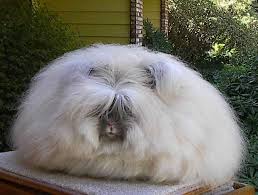
- Angora rabbit wool is considered one of the finest fibers, prized for its softness and fluffiness. Typically mixed with silk, cashmere or sheep’s wool, it is used to make sweaters.

- Cashmere goat wool is extremely soft and tends to be expensive because the combing and shearing of Cashmere goats is very time consuming.


- Cheviot sheep wool is the foundation fiber of the famous Scotch Tweed industry. It is also used for outerwear, socks and needle felting.
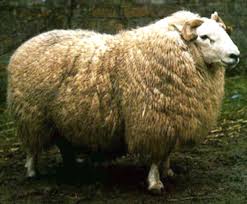

- Columbia sheep wool is known for light shrinkage, softness and length. It is an excellent all-purpose fleece that is soft enough to wear next to the skin.

Click here to read all about leather!
- Dorset sheep produce very white fleece that is strong and free from dark fiber. Dorsets are the No. 1 white-faced breed in the United States.

- Friesian milk sheep are large-framed sheep with white wool that makes lofty, warm quilt batting and is good for needle felting.
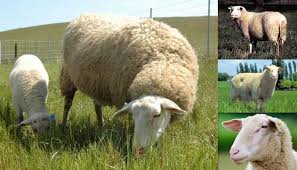

- Hampshire sheep wool is used for hard-wearing elastic yarns, felting and quilt batting and is a good needle felting wool.


- Lincoln sheep grow long, heavy wool used for specialty knitting yarns, upholstery yarns and hand-knitted carpet yarns. It also provides shiny hairpieces for people and dolls.


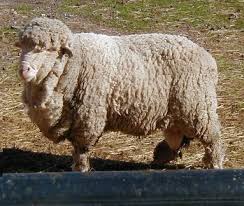
- Merino sheep wool is the finest and softest of all sheep wool. It is used in intense cold-weather applications for its breathability, temperature regulation and moisture control. It is also used for felting of purses, bowls, slippers and scarves.


- Montadale sheep produce fleece popular with hand spinners that is used for sweaters, socks, scarves, hats and needle felting.


- Romney sheep are known for heavy, lustrous fleece that grows up to six inches per year. It is popular for needle felting.


HISTORY OF WOOL:
Clothing and other items made of wool have been found throughout much of the ancient world, from 3,400-year-old Egyptian yarn to fragmentary textiles unearthed in Siberian graves dating from the first century B.C.
Wool has stood in for even more precious fabrics: In 18th-century Norway, when the king forbade the wearing of silk by commoners, farmers opted for imported worsted wool fabric, which had a similar sheen.
HOW DO YOU GET WOOL:
Wool is shaved from the animals for our use of the fibers but also for the comfort of the animals. If they are not routinely shaved it will become over grown, matted, dirty and uncomfortable. The time between shaves depends on the breed of animals and the animal itself.
Click here to read about seeing the quality in a suit before you buy!
HOW TO COLOR WOOL:
1. Choose a Dyepot
The best recipes for dyeing wool all require heat, either heating the dyebath to a simmer with the wool in it, or applying the dye directly to the wool and then steaming to set the dye. You will need a dyeing pot. Unless you are going to restrict yourself to using only food coloring to dye your wool, you will need a special pot just for dyeing in, because textile dyes are not considered safe to use in the same pots in which you prepare food.
Dyepot material
Since aluminum will react with all of the acids used as auxiliary chemicals in the dyebaths used to dye wool, you must not choose aluminum for your dyepot, though you can use it for a steamer.
The best choice will be stainless steel, because it resists all dyeing chemicals (though even stainless steel can be damaged by failing to stir the salt into the water after you add it, to dissolve it thoroughly).
Another good choice is enamel. Enamel-covered steel canning pots are relatively inexpensive. Enamel chips easily, but it can be repaired. You must not use a chipped enamel pot, because the steel under the enamel will affect your dye colors, but it is safe to use a heat-resistant waterproof enamel paint to repair chips in your dyepot, although this is something you should not do with pots that you use for cooking food.
Dyepot size
You should be careful to use a sufficiently large pot for your dyeing. For smooth, solid-color dyeing, whatever you dye should be free to move freely in the water in your dyeing pot. If the material is cramped, you will get uneven results, with darker and lighter regions. Unless you will be dyeing only very small quantities at a time, try to get a pot that is at least three gallons in size, or larger for larger items. p>
Canning jars
An excellent way to dye small quantities of yarn or fabric in different colors is to use quart-sized canning jars. This can also get around the requirement for a non-aluminum pot; if you do all of your dyeing in glass jars, it doesn’t matter what the outer pot is made of. Use a rack to keep the jars off the bottom of the pot, and fill the pot with water to the same level outside the jars as your small dyebaths are within the jars. Cover the pot and heat it until the waterbath surrounding the jars reaches the desired temperature.
Other equipment
A thermometer is handy for making sure your dyebath is at the desired temperature; buy one that is either glass or stainless steel. Don’t use your kitchen thermometers for dyeing, or your dyeing thermometers for cooking. You can buy a thermometer from your dye supplier, a local home brewing supplier (for beer- and wine-making), or a chemical supplies company. It should cover the range from freezing (32°F or 0°C) to boiling (212°F or 100°C).
You will also need measuring cups, spoons, pipettes, or graduated cylinders, long-handled plastic or fiberglass spoons to stir with, jar-lifters for handling quart jars, and probably also some tongs for lifting dyed fiber.
2. Choose your dye
Dyes for Wool and other animal fibers
Acid dyes are the most popular dyes used on wool, and comprise a very wide range of different dyes. Some of the many different available acid dyes include food dyes, Metal Complex (or premetallized) Acid Dyes, Washfast Acid dyes, Acid Leveling dyes, and One Shot dyes. For more information on acid dyes, see About Acid dyes. Fiber reactive dyes such as Procion MX, Cibacron F, and Drimarene K can also be used as acid dyes on wool; see Reactive dyes on protein fibers.
Natural dyes. Many natural dyes work very well on protein fibers, such as wool. Most will require a mordant, such as alum, copper, tin, or iron, so they are not necessarily more on-toxic than synthetic dyes. See the page, About Natural Dyes.
Lanaset dyes. The longest lasting, most wash-resistant, richest of hand dyes available for dyeing wool in the US are the Lanaset dyes. The Lanaset dyes comprise a selection of both acid dyes and fiber reactive dyes that are designed for wool. Unlike other dyes for wool, Lanaset dyes can be washed in hot water without fading badly. They are often difficult to obtain other countries in quantities small enough for hand dyeing.
Vinyl sulfone dyes (vinyl sulphone, if you are British), also known as Remazol dyes, are a type of fiber reacfive dye that is often used in silk painting. Unlike Procion MX dyes, they can be applied to wool under acid conditions as true fiber reactive dyes, rather than as acid dyes; see Vinyl Sulfone Fiber Reactive Dyes. Note that ProChem sells these under the name “Liquid Reactive Dyes”, Dharma Trading Company as “Vinyl Sulphon”, and other suppliers as “Remazol” dyes.
Vat Dyes, such as indigo, can also be used to dye wool and other protein fibers, but the recipe must be modified to avoid pHs high enough to damage the wool. See About Vat dyes
All purpose dyes can be used to dye protein fibers, because they include an acid dye in their mixture. See All Purpose Dyes. The color might be slightly different than expected, and the expense is higher than with other dyes.
3. Find the Right Instructions
The different types of dyes used on wool are not interchangeable. All require a mild acid, such as vinegar, citric acid, ammonium sulfate, or sodium acetate, but not necessarily in the same quantities, and some require additional chemicals such as salt, Albegal SET, or sodium sulfate (Glauber’s salt). Some dyes require a significantly lower (more acidic) pH than others; using a pH that is too low or too high for your specific dye will reduce your success in dyeing. After you choose your dye, find a wool-dyeing recipe that specifies that particular sort of dye. Your dye should come with its specific instructions.
DEALING WITH SHRINKING:
As everyone knows, wool is subject to shrinkage. The only exception to this is chemically-treated wool, such as Superwash or Smartwool. However, the wool fibers do not themselves shrink in length. Instead, when subjected to heat and agitation in the presence of water, the fibers become more and more closely interlocked, with the scales on the fibers acting like the teeth in a ratchet. If you want to prevent felting and shrinkage, you must be careful to avoid agitating your wool while it’s in the hot dyebath. With cellulose fibers, you must stir your dyebath frequently to avoid uneven dyeing, but wool dyes and their auxiliary chemicals are chosen to allow level dyeing without stirring the fiber.
Be careful to avoid sudden temperature changes. Raise and lower the temperature of your wool only gradually. You don’t want to shock your wool.
When dyeing wool that will be used later for intentional felting, use a washfast dye such as the Lanaset dyes. Less washfast dyes may bleed when felted
Click here to read about how a suit should fit!
HOW TO CARE FOR WOOL:
- Empty pockets after every wearing to keep them from bulging or sagging.
- Treat small stains by rinsing them with cold water or seltzer and then blotting them dry with a clean cloth. If the garment is labeled “hand wash,” clean it using your washer’s hand wash or wool cycle with cool water.
- To remove excess water after washing, gently roll the garment in a towel.
- Dry on a flat surface away from direct heat or sunlight.
- When traveling, loosely roll or fold wool garments with tissue paper to keep the fabric’s shape and avoid wrinkles.
- To freshen a wrinkled garment, hang it in a steamy bathroom. A warm iron on the wool or steam setting can also be used.
- Dry cleaning once a season is usually sufficient to keep wool garments in good shape
Fun Facts:
- That itch from your warm winter woolies? Most likely it’s sensitivity to thicker (and coarser) fiber diameter or fiber ends, not a wool allergy, which is practically unknown.
- Besides clothing, wool has quite a few industrial uses, from piano dampers to absorbent pads for those baaaaad oil spills.
- Wool is also biodegradable. It breaks down slowly, fertilizing the plants with a generous nitrogen content of a whopping 17 percent compared with the 6 percent nitrogen in commercial turf products. And it is water-retentive.
- In a seeming paradox, wool can absorb and repel water simultaneously. The outer surface of wool fiber is made up of fatty acid proteins and does not absorb liquid. However, structural features in the fiber’s interior, called salt linkages, can sop up copious amounts of moisture in vapor form.
Wool weights:
The thickness, Pure, high quality, virgin wool is defined as such by the thinness of the thread with which weaving is carried out. The thinner the thread, therefore with a lower micron count, the higher the quality.
DIFFERENT WOOL WEAVES AND FABRICS:
Beaver cloth is a heavy woolen overcoating, napped and pressed down to resemble beaver fur.


Broadcloth is an all woolen or worsted fabric with a velvety feel.

Challis, a light weight soft wool fabric in plain weave, has a printed or woven design or flowers.


Cheviot, usually Scotch wool is a soft, fine wool that is heavier than serge.

Chinchilla cloth is a heavy, spongy woolen overcoat fabric with a long nap that has been rubbed into a curly, nubby finish.

Felt fabric is a compact sheet of entangled, not woven wool or fur fibers. The felt is produced by processing a mat of fibers with moisture, heat, and pressure.


Flannel wool is a soft, lightweight fabric with a nap on one or both sides.


Click here to learn how to make sure your outfit matches!
Gabardine is a tightly woven wool twill with a high sheen. This fabric is excellent for tailoring and wears well.


Glen checks are usually seen in menswear and originated in Scotland. It is characterized by a variety of small, even check designs.


Harris tweed is a hand woven fabric from Scotland with a soft feel.

Herringbone wool is woven in a twill that is reversed at regular spacing, creating a sawtooth line.

Homespun is a loose, strong, durable woolen woven either by hand or machine with a coarse feel.


Lambsdown is a heavy knit fabric that has a spongy fleeced nap on one side.

Linsey-woolsey is a coarse fabric first made in Lindsey, England, of wool combined with flax or cotton.

Loden fabric is a thick, soft, waterproof, windproof, wool used in outerwear that has a characteristic green color.

Melton, a heavy, thick, short napped woven fabric that has been fulled.

Oatmeal Cloth is a durable, soft wool with a pebbled face.

Petersham, a very thick, waterproof woolen coating, usually dark blue, is used for men’s trousers or heavy coats.


Click here to read about being the BEST best man!
Pilot Cloth is a coarse, heavy, stout twilled woolen that is heavily napped and navy blue. Used by seamen.

Sharkskin is woven with warp and filling yarns of alternating white with black, brown or blue.

Tartan is a twilled plaid design, originally Scottish.

Tweed is a rough textured wool, originally homespun and slightly felted. This fabric is sturdy with a mottled color


Conclusion:
Today we went over, what wool is, why its humane it harvest it, the history, how to get it, color it and care for it! We also went over most of the wool fabrics and weaves! If you have any questions please feel free to come into the store!
“THEY HELPED ME MATCH SHIRT AND TIE… I FEEL CONFIDENT.”
MUGISHAAttoreny
“THESE GUYS ARE THE BEST IN TOWN, REAL REAL IMPORTED CLOTHES”
KITAKUYIOffice
I am slide content. Click edit button to change this text. Lorem ipsum dolor sit amet, consectetur adipiscing elit. Ut elit tellus, luctus nec ullamcorper mattis, pulvinar dapibus leo.
John DoeCEO
30 days before wedding Suits Avenue saved my neck, QUALITY and customer care
RobertCEO
The gals made look smart for my job interview..AND i won the position…Thx Suits Avenue
SimonEmployeed
Find us, Follow us, and like us on FACEBOOK for latest fashion Trends…
Click and SHARE…We would love to help your friends look smart…🕺💃
If you have any questions